
Milano Cortina 2026Olympic selections
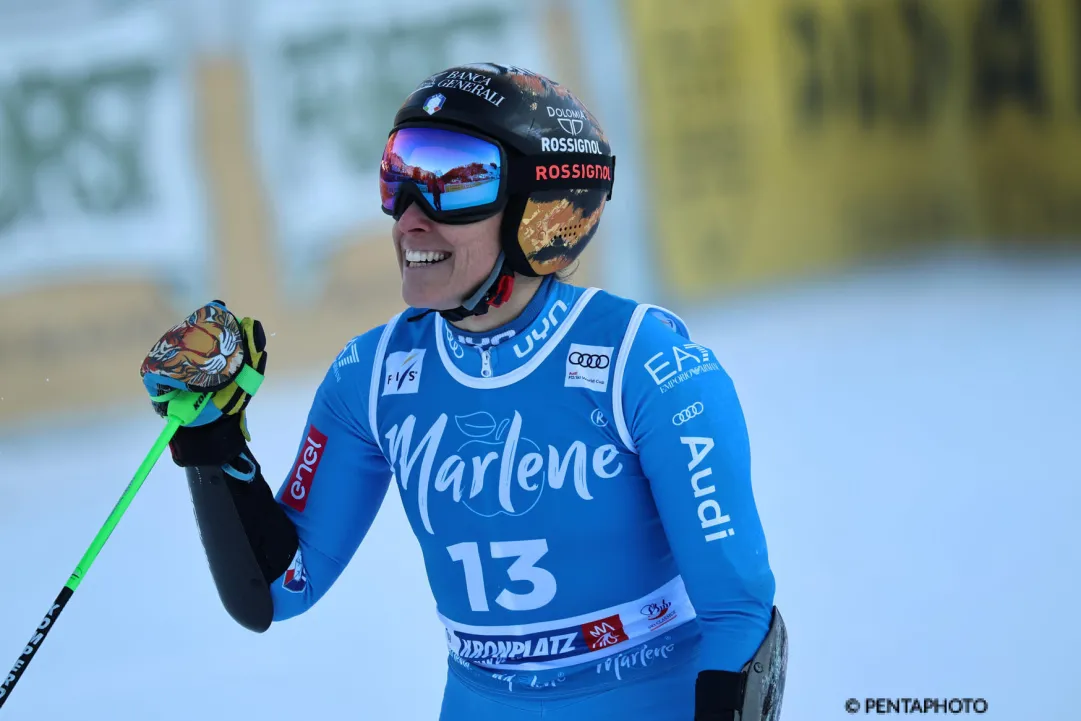

Pentaphoto

The Italian selections are official for all FISI disciplines ahead of Milano Cortina 2026: included are the very young athletes who have just made their World Cup debuts, while there is no room for Mondinelli, Valleriani, Melesi or Bosca. Innerhofer is in. Bionaz and Comola have been left out of the biathlon team, whose leading names include Vittozzi, Wierer (in the final appearance of her career) and Giacomel. Fischnaller is a legend, set for his seventh Olympic participation.
Monday 26 January 2026 16 minutes reading time
One hundred and nine athletes from the FISI disciplines, following the 87 selected for the FISG disciplines, complete Italy’s team for the home Olympic Games.
After Cortina 1956 and Turin 2006, here are the Azzurri (196 athletes is a record) chasing big dreams at Milano Cortina 2026, with 11 days to go until the opening ceremony, which will also feature Federica Brignone as flag bearer and the symbolic athlete of this selection, following her miraculous recovery from the very serious injury she suffered less than 10 months ago.
The “tiger of La Salle” is one of the 11 athletes on the women’s national team, where she is the star alongside Sofia Goggia (with Marta Bassino unfortunately absent after the serious injury suffered at the start of the season; the same applies to Marta Rossetti). Fede, ready for her fifth consecutive Olympic Games, is missing only Olympic gold after the silver medal in the giant slalom at PyeongChang 2018 and the two medals in Beijing 2022—silver in her signature event and bronze in the combined.
Sofia, meanwhile, made history in 2018 with her downhill title, and did so again four years ago, considering her incredible comeback in 23 days to claim silver in the blue-riband event.
Elena Curtoni will be one of the team’s leading contenders in the speed events—especially the super-G—on the Olympia delle Tofane, as will Laura Pirovano, who may perhaps finally claim that long-awaited first podium at the Games. The Delago sisters are also included, with Nicol having just triumphed in Tarvisio and Nadia the defending Olympic bronze medallist in downhill. Lara Della Mea will be the reference point for the slalom and giant slalom group as a whole after the Tarvisian’s excellent season. Asja Zenere earned her giant slalom spot, as did Martina Peterlini for the slalom.
The question concerned the final two available spots: whether to use them for athletes who had achieved some placings, but never better than 18th, like Giulia Valleriani, and 20th place, Emilia Mondinelli’s result yesterday in Spindleruv Mlyn. The technical staff instead decided, clearly with the future in mind, to take the two youngsters who have attracted the most attention in recent weeks with their respective World Cup debuts (where they have yet to score points): Anna Trocker and Giada D’Antonio. The Neapolitan, born in 2009, will be the youngest member of the entire delegation. Alice Pazzaglia and Roberta Melesi have therefore missed out as well.
In the men’s team, with 10 spots available, the lead is taken by the speed specialists who have been achieving excellent results, starting with a totem such as Dominik Paris, facing his final chance to win the long-awaited first Olympic medal of his career, and the phenomenal Giovanni Franzoni, who has exploded in recent weeks and will make his Olympic debut. The major omission is Guglielmo Bosca, for whom two eighth-place finishes in the super-G were not enough to earn a ticket. The Azzurri team also includes Florian Schieder, who has been on the podium this season and will focus squarely on the downhill. Christof Innerhofer will fight for a downhill spot; at 41, he has secured selection for his fifth consecutive Olympic Games, after a high-level winter for the highlander who won two medals at Sochi 2014.
As expected, and all the more so after last Friday’s sixth place in the Kitzbühel super-G, debutant Mattia Casse will be there. At almost 36, the “tractor” has never taken part in an Olympic race. Moving to the technical events, there are Alex Vinatzer and Luca De Aliprandini for the giant slalom, where Pippo Della Vite will not be seen, as well as Tobias Kastlunger, who may also prove useful in the team combined. In the slalom, there will naturally be two pure specialists: Tommaso Sala and, despite not yet having scored World Cup points but having repeatedly impressed with his performances, Emilia-born Tommaso Saccardi, born in 2001.
In biathlon, as expected, Didier Bionaz and Samuela Comola are not among the 10 Azzurri selected. The national team has three extraordinary leading names who will try to make dreams come true in the Anterselva arena: Dorothea Wierer, set for the final challenges of a fantastic career that already saw her win an individual medal at Beijing 2022, Lisa Vittozzi and Tommaso Giacomel.
They are joined by Lukas Hofer, in outstanding form at the start of 2026, Patrick Braunhofer, Elia Zeni and surprise selection Nicola Romanin, who immediately impressed on his return to the World Cup. The other three selected women are Michela Carrara, Rebecca Passler and Hannah Auchentaller.
As for cross-country skiing, with all the events taking place in Val di Fiemme, six men have been selected, led by the eternal and immense Federico Pellegrino, who reached the podium twice in a row in his “signature” Sprint at the two Asian editions, and who will be the group’s beacon alongside Elia Barp, Martino Carollo, Davide Graz, Simone Mocellini and Simone Daprà. The women selected are Caterina Ganz, Federica Cassol, Martina Di Centa, Maria Gismondi, Nicole Monsorno, Anna Comarella and Iris De Martin Pinter.
In the sliding events, staged in Cortina, bobsleigh will try to revive the glories of the past with a superb Patrick Baumgartner as the team’s leading figure, alongside Lorenzo Bilotti, Eric Fantazzini, Robert Mircea and reserve Alex Verginer. The women’s team consists of Giada Andreutti, Simona de Silvestro, Alessia Gatti, Anna Costella and reserve Noemi Cavalleri.
Skeleton has high hopes, with Amedeo Bagnis and home athlete Mattia Gaspari, while the women’s pair is made up of Valentina Margaglio and Alessia Fumagalli. Armin Zoeggeler’s luge team has several top-level contenders, starting with Beijing medallist Dominik Fischnaller, alongside Ivan Nagler and Fabian Malleier in the strongest men’s doubles pairing, as well as Leon Felderer, Emanuel Rieder, Simon Kainzwaldner and Alex Gufler.
Andrea Voetter and Marion Oberhofer are the stars of the women’s doubles, but Verena Hofer has improved enormously and is also raising hopes in the singles, with Sandra Robatscher completing the team.
Back in Val di Fiemme, Nordic combined—with only the men’s events remaining on the Olympic programme from this edition—will feature the eternal Alessandro Pittin, 20 years after Turin 2006 and wearing the bronze medal he won at Vancouver 2010, alongside Samuel Costa and Aaron Kostner. In ski jumping, Italy will rely on Giovanni Bresadola, Alex Insam, Francesco Cecon, Val di Fiemme native Annika Sieff, the leading figure in the women’s team, Martina Zanitzer, Jessica Malsiner and Martina Ambrosi.
All freestyle and snowboard events will take place in Livigno. Starting with skicross, which has exploded in recent years, Simone Deromedis—second in the World Cup overall standings and world champion in 2023, following his fifth-place finish at his Olympic debut in Beijing 2022—will form the men’s quartet with Federico Tomasoni, Edoardo Zorzi and Dominik Zuech. Among the women are Livigno native Jole Galli, who will experience a special thrill competing truly at home, and Andrea Chesi.
One of the most important pieces of news is Flora Tabanelli’s complete recovery. She will return to competition directly at the Olympic Games after the cruciate ligament injury she suffered at the beginning of November, in her freeski events. Italy will also field the phenomenal Modena-born athlete’s brother, Miro Tabanelli, who has great ambitions especially in Big Air, and Maria Gasslitter, fresh from two World Cup finals. Manuela Passaretta will represent the Azzurri in Moguls.
In freesnow, Ian Matteoli will be among the most eagerly awaited men. The Bardonecchia-born athlete, born in 2005, will be joined by Louis Philip Vito III and Marilù Poluzzi.
In parallel snowboarding, the men’s national team boasts a remarkable quartet, with Roland Fischnaller making his seventh Olympic appearance in search of his first medal after another outstanding season in a World Cup led by Aaron March. March will be joined by Maurizio Bormolini, ready to fulfil a dream on his home snow, and Mirko Felicetti. There have been some painful omissions from DT Pisoni’s extremely strong team, including Messner, Coratti and Bagozza. Elisa Caffont and Lucia Dalmasso will lead the women’s team, alongside Sofia Valle and Jasmin Coratti.
Snowboard cross has a star in Michela Moioli, the PyeongChang 2018 champion who then won silver in the mixed team event with Omar Visintin four years ago. The South Tyrolean will also be in Milano Cortina 2026, alongside Lorenzo Sommariva, Filippo Ferrari, Sofia Groblechner and the very young Lisa Francesia Boirai, born in 2008.
Finally, ski mountaineering will make its historic Olympic debut in Bormio. Three Azzurri will take part: Giulia Murada, a medal contender in the Sprint, and the married couple Alba De Silvestro and Michele Boscacci in the mixed relay.
© ALL RIGHTS RESERVED
Social media engagement
Latest in Sport invernali
Klaebo seeks to join Bjoergen at 114 World Cup wins. Mocellini and the Italian women start as outsiders: start list for the Ruka classic sprint
Saturday will see the second day of racing in the Finnish opening triple, with the classic sprint on the programme. Norway are targeting another victory, with Johannes Klaebo the overwhelming favourite (he has Marit Bjoergen's World Cup wins record in his sights). For Italy, the best card to play is Simone Mocellini, followed by Elia Barp and Davide Graz. Among the women, the Swedes are in the front row, but the young Italians will give it a try. Qualifying starts at 8:45 a.m. Italian time (9:45 local time), with the final stages from 11:15 a.m.
267