
Milano Cortina 2026Olympic previews

Newspower.it

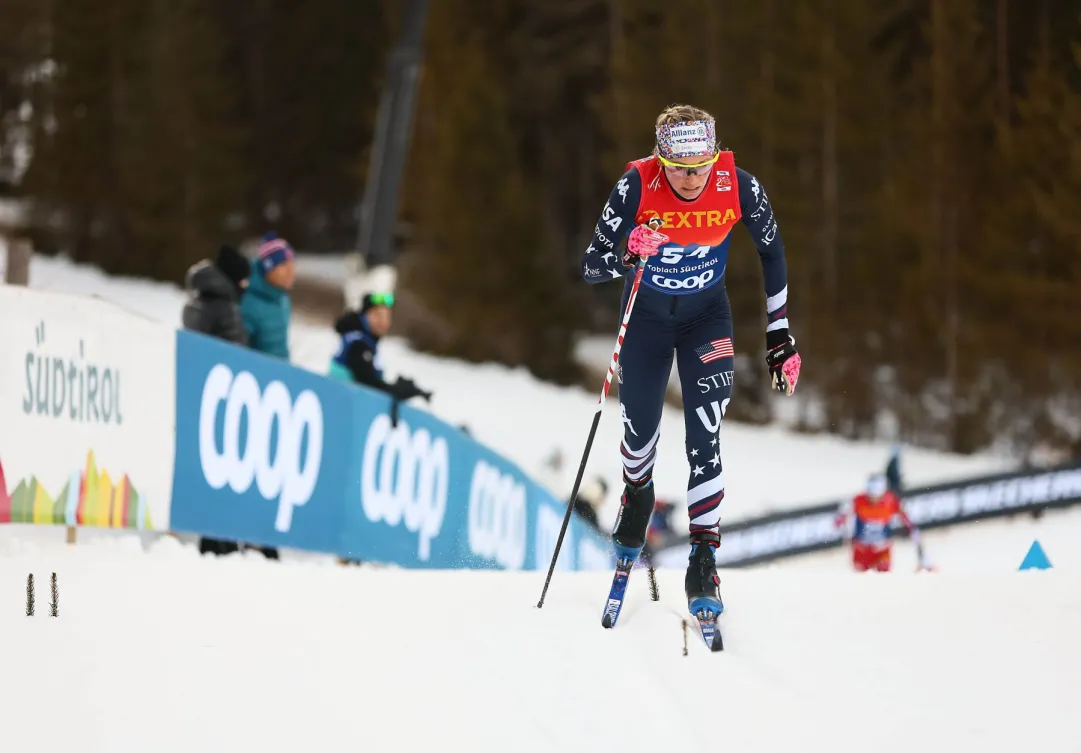
Starting with the women’s events, let’s analyse, race by race, the possible favourites for the cross-country skiing events at the Olympic Games. On the snow in Lago di Tesero, will Sweden manage the feat of winning all six gold medals in six events? It is not an impossible mission, with Jonna Sundling, Frida Karlsson and Ebba Andersson ready to put on a show on the Val di Fiemme course. Jessie Diggins is dreaming of her first individual title (what an opportunity the 10 km freestyle will be...) and watch out for the Norwegians, especially in the distance events. As for Italy, many of the women will be making their Olympic debuts, but they can fight for some excellent placings.
Tuesday 3 February 2026 15 minutes reading time
The cross-country skiing programme at the Milano Cortina 2026 Games will begin on Saturday 7 February, with the women’s skiathlon (10 km classic + 10 km freestyle) starting at 1:00 p.m. The venue for the Olympic events will be the “Fabio Canal” Cross-Country Stadium in Lago di Tesero, in Val di Fiemme, renovated for this major event. Our Olympic analysis of this discipline starts with the women’s events, with a complete overview of every race.
20 KM SKIATHLON: SATURDAY 7 FEBRUARY
It starts immediately with an event where the prediction is wide open. This format, held only once during this World Cup season, saw American Jessie Diggins triumph after a fiercely contested race. At the most recent World Championships, held in Trondheim, Sweden’s Ebba Andersson outsprinted Therese Johaug (who retired at the end of last season and is the reigning Olympic champion in this discipline) in a thrilling finish. Drawing up a list of names, Diggins, Andersson and the other Swedish distance star Frida Karlsson will certainly start among the front-runners; just behind them on the starting grid we find Norway’s Heidi Weng, along with Swedes Jonna Sundling and Moa Ilar.
For the medals, veteran Norwegian Astrid Slind and Austria’s Teresa Stadlober, bronze medallist in Beijing 2022, must also be considered. At that time, the women were still competing over shorter distances (this will be the first Olympics at which the men’s and women’s events will be held over the same number of kilometres). Who will make up the Italian quartet? Caterina Ganz should be Italy’s best card and will be aiming for a top-20 finish. The other three Italians should be Anna Comarella, Martina Di Centa and Maria Gismondi, with Iris De Martin Pinter as first reserve.
SPRINT CLASSIC: TUESDAY 10 FEBRUARY
Sweden can dream of a clean sweep of the podium in this event. The overwhelming favourite is Sundling, the defending champion and world champion at Oberstdorf 2021, Planica 2023 and Trondheim 2025. The other members of the Scandinavian powerhouse will be Maja Dahlqvist, Linn Svahn and one of Johanna Hagstroem or Emma Ribom: this is a team that will try to win all three medals in this format. One of the athletes who has given Sundling and her teammates the most trouble in recent winters is Norway’s Kristine Skistad. She has two wins this season, but could be disadvantaged by the length of the Val di Fiemme course, which will be rather demanding.
Among the athletes chasing the podium, one cannot overlook Finland’s Jasmi Joensuu (winner on this course at the most recent Tour de Ski) and Switzerland’s Nadine Faehndrich. Germany’s Coletta Rydzek and Laura Gimmler should not be underestimated either. For Italy, this will be the event in which there is the greatest hope of achieving a strong result: the quartet will most likely consist of De Martin Pinter (a superb sixth in Oberhof), Federica Cassol (two top-10 finishes this season), Nicole Monsorno and Ganz. Based on their latest results, the two best cards in the pack will be the Belluno-born 2004 athlete and the 25-year-old from the Aosta Valley; the aim will be to try to reach the final, and then who knows—there is no harm in dreaming...
10 KM INDIVIDUAL FREESTYLE: THURSDAY 12 FEBRUARY
It is very difficult to identify an athlete who can be called the pre-race favourite in this event. The 10 km freestyle will be characterised by an entirely open prediction, with many women ready to enter the medal fight. It is impossible not to start with Diggins: the 1991-born athlete from Minnesota, who is close to winning her third consecutive Crystal Globe, sees this event as her greatest hope of securing the individual Olympic gold medal still missing from her honours list, capping an epic career that will come to an end in March on the snow in Lake Placid.
The list of contenders for the podium—and the win—is a very long one: Sweden will certainly field Ilar, Karlsson and Andersson, with the fourth bib contested by the sprinters, while Norway is placing its hopes in Olympic debutant Karoline Simpson-Larsen, as well as Weng and Slind. One surprise could be France’s Leonie Perry, as could the aforementioned Stadlober, Germany’s Helen Hoffmann and Russia’s Dariya Nepryaeva, who will compete under neutral status.
Despite a less-than-ideal build-up due to an illness suffered at the beginning of January, Italy could also have an important card to play: Lazio-born 2004 athlete Maria Gismondi has recorded a sixth-place finish in this format this season and, on a tough course like Lago di Tesero, could genuinely aim for a top-10 result. There are many question marks over the other three Italians who will take part, with three-quarters of the line-up still uncertain.
4x7.5 KM RELAY: SATURDAY 14 FEBRUARY
Another exciting Scandinavian battle is in prospect, following the spectacle in Trondheim 2025, with Sweden and Norway ready to fight for this title. Both line-ups are extremely competitive. Sweden will have a wide range of options (on paper, the quartet should consist of Andersson, Karlsson, Ilar and Sundling), while Norway will field Weng, Slind, Simpson-Larsen and a fourth skier chosen from Julie Drivenes and Kristin Fosnaes.
The fight for bronze is wide open, with Finland led by Johanna Matintalo, alongside veterans Kerttu Niskanen and Krista Parmakoski. Germany will also try to defend its reigning silver medal (Russia, the defending champion, is absent), but Victoria Carl’s exclusion for doping is a major blow and will make the task even more difficult for the Germans. Italy’s line-up should already have three certainties (De Martin Pinter, Ganz and Gismondi), with one leg still to be assigned, most likely to Anna Comarella or Martina Di Centa.
TEAM SPRINT FREESTYLE: TUESDAY 18 FEBRUARY
As in the individual sprint, Sweden is once again ready to win the title in this format at a major event. The story began at the 2019 World Championships in Seefeld, continued in Oberstdorf 2021, at the Beijing 2022 Games, and at the World Championships in Planica 2023 and Trondheim 2025. In the last four editions, the leading figure has always been Sundling, who will try to win a second Olympic title after her victory four years ago in China.
The favourite to partner Umea-born 1994 athlete Sundling is Dahlqvist, but an official decision will be made in the days before the race. If the gold already appears assigned before the start, the fight for silver and bronze is wide open: the two nations that have performed best in this discipline behind Sweden are Germany, with the pairing of Coletta Rydzek and Laura Gimmler, and Finland, with Jasmi Joensuu and Johanna Matintalo.
Norway still has a question mark over Skistad’s partner, who will most likely be either Milla Andreassen or Ingrid Aabrekk, while it remains to be seen who will team up with Jessie Diggins for the United States (she won gold in this format at PyeongChang 2018 and silver with Julia Kern at the most recent World Championships). Switzerland, the reigning world bronze medallist, should also be watched, with the tandem of Faehndrich and Anja Weber.
Based on the latest results and what we saw in Goms, the Italian pairing should consist of De Martin Pinter and Cassol, but Monsorno and Ganz cannot be completely ruled out. A decision, as with many other teams, will be made in the days before the race, and Italy will certainly start as an outsider in a format that has often produced surprises.
50 KM MASS START CLASSIC: SUNDAY 22 FEBRUARY
The final day of the Milano Cortina 2026 Games will see the first women’s 50 km in Olympic history. The pre-race favourites are once again from Sweden, with Karlsson and Andersson ready to battle for gold. Norway’s Weng and Slind are in the second tier (Slind is a specialist in long-distance classic marathons), while Diggins starts slightly further back. In a gruelling 50 km, incidents and surprises could be commonplace: Finland’s Niskanen, Parmakoski and Matintalo, Austria’s Stadlober and Switzerland’s Nadja Kaelin should also be watched.
Germany’s Katharina Hennig is coming off a difficult season, but showed signs of a revival in Goms and is always dangerous over the longest distances. As for the Italians, there is still no certainty over who will take part in the final event of the Olympic cross-country skiing programme: on paper, Ganz, Gismondi, Comarella and Di Centa should be selected, but the final decision will depend on their form after two weeks of racing.
© ALL RIGHTS RESERVED
Social media engagement
Most read in Sport invernali
Fede, the shock announcement: Brignone retires. “My leg hurts too much, I’ve decided to end my career. I’ll open one last starting gate”
In a video released by FISI, the Italian champion announced that she had decided to call it a day: the two days on skis in Cervinia did not give her the answers she had hoped for, and Federica will compete in one final race to say goodbye to everyone. The most successful woman in the history of Italian skiing is leaving the sport.
15