
Snowboardingparallel giant slalom

GEPA Pictures


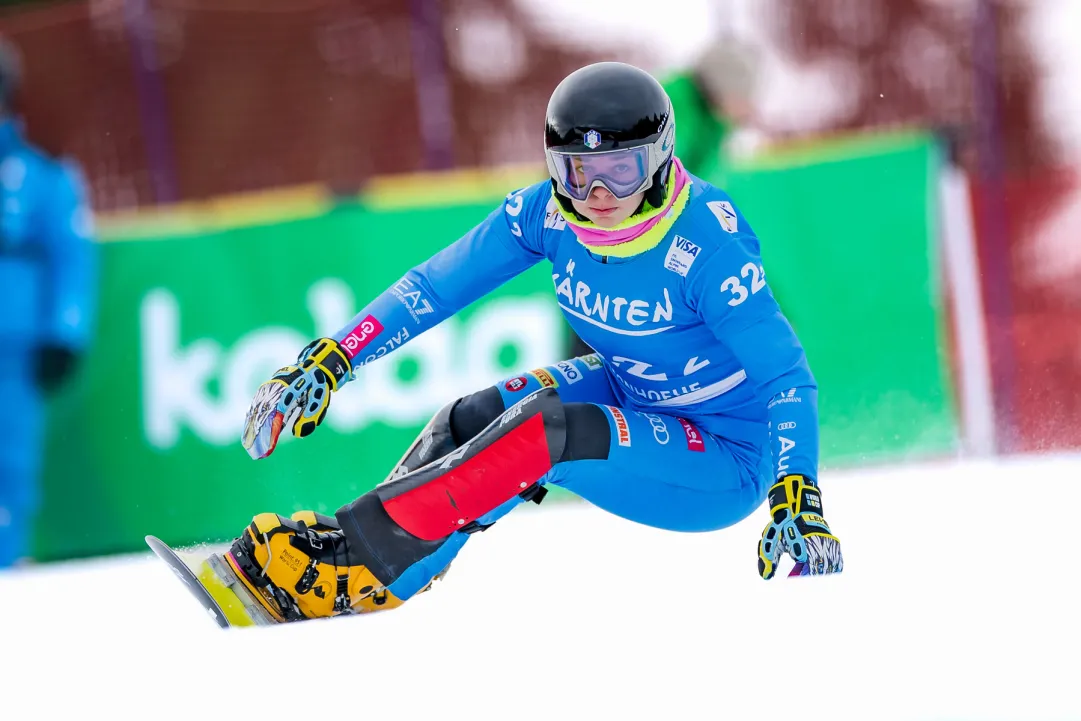
Snowboard: the Olympic giant slalom in Livigno produces a series of stunning surprises, from Ledecka’s elimination—she missed out on the hat-trick after going out in the quarter-finals—before her compatriot’s triumph, to an all-Belluno small final in which Caffont had to settle for 4th place. Huge disappointment for the men’s national team after dominating the season: world champion Roland Fischnaller was eliminated before reaching the medal rounds, as was Felicetti, while Bormolini was cruelly beaten in the round of 16 by Karl himself.
Sunday 8 February 2026 4 minutes reading time
One medal for an extraordinary movement, but there is no hiding the fact that, from the early afternoon in Livigno, Italy’s outstanding alpine snowboarding team had expected more than the bronze—albeit a wonderful one, won by Lucia Dalmasso amid the tears of a champion who has been a reference point for the women’s team for years.
Everything happened in the Olympic PGS in Livigno, starting with Ester Ledecka missing out on a third consecutive gold after the Asian editions. She had also dominated the morning qualification ahead of compatriot Zuzana Maderova, who would go on to triumph by beating Sabine Payer in the final. Payer had eliminated the Prague champion in the quarter-finals, while the final for a place on the podium was an all-Belluno affair, with Dalmasso coming from behind to beat Caffont. Elisa had lost to Maderova in the semi-finals, while Lucia had been beaten by Payer after winning the all-Italian round-of-16 derby against Jasmin Coratti by just 6 hundredths. Sofia Valle, meanwhile, went out in qualifying.
Then came Benjamin Karl’s legendary second gold in the men’s event, complete with the Austrian superstar’s wild, shirtless celebrations after crossing the finish line in the final against surprise Korean contender Sangkyum Kim. In the quarter-finals, Kim had delivered the blow that rocked the Italian powerhouse: the elimination of Roland Fischnaller.
At his seventh Olympic appearance (at 45!), never previously on a five-ring podium but arriving here as the favourite after what he had shown during the season—as reigning world champion and after a fearsomely dominant qualification—the captain of this superb national team, which had also swept all before it in the 2025/26 World Cup, made a mistake at the crucial moment and missed out on the medals in the final Olympic opportunity of his career. Mirko Felicetti also bowed out in that round, beaten by Slovenia’s Mastnak, who was then denied in a photo finish in the small final by Bulgaria’s Tervel Zamfirov, the bronze medallist. In the round of 16 came the cruel disappointment for Livigno local Maurizio Bormolini, who, in his home event and with a career-defining opportunity at stake, went out by 3 hundredths against Karl himself, while World Cup overall leader Aaron March had been beaten by Mastnak.
© ALL RIGHTS RESERVED
Social media engagement
More details
Video
Eurosport, Sunday 8 February 2026Latest in Sport invernali
Klaebo seeks to join Bjoergen at 114 World Cup wins. Mocellini and the Italian women start as outsiders: start list for the Ruka classic sprint
Saturday will see the second day of racing in the Finnish opening triple, with the classic sprint on the programme. Norway are targeting another victory, with Johannes Klaebo the overwhelming favourite (he has Marit Bjoergen's World Cup wins record in his sights). For Italy, the best card to play is Simone Mocellini, followed by Elia Barp and Davide Graz. Among the women, the Swedes are in the front row, but the young Italians will give it a try. Qualifying starts at 8:45 a.m. Italian time (9:45 local time), with the final stages from 11:15 a.m.
20