
Milano Cortina 2026Olympic works

Roby Trab

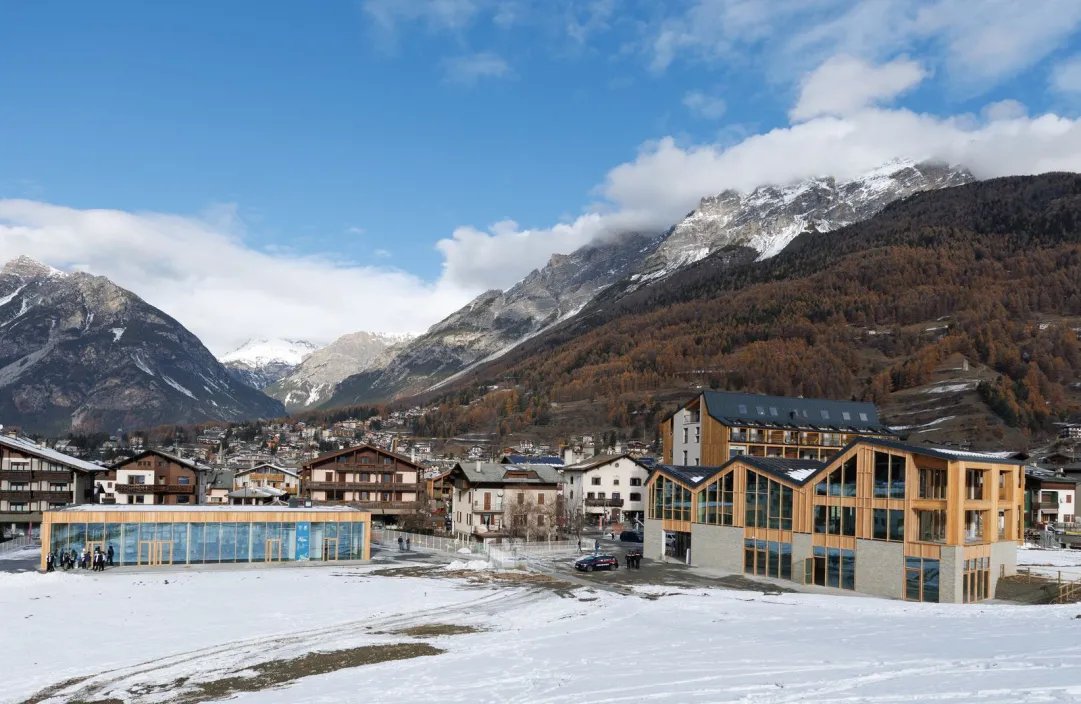
The legendary Stelvio course will host the men’s events in the premier discipline of the winter sports landscape. At the foot of one of alpine skiing’s most iconic courses, the venue has been renovated, with capacity increased to 7,000 and new Family & Hospitality Lounge areas. A project set to leave a tangible legacy for Bormio and the entire ski area. The first Olympic medals will be awarded on Saturday, February 7, in the downhill, and these slopes will also host the historic debut of ski mountaineering.
Monday 29 December 2025 11 minutes reading time
Just over a month before the start of the Milano Cortina 2026 Olympic Games, Bormio is ready to inaugurate the five-ring event with one of the most eagerly awaited fixtures in men’s alpine skiing. The downhill on February 7 will officially open the Olympic programme, bringing back into the spotlight a course that for more than forty years has represented one of the toughest proving grounds on the international circuit.
On the Stelvio, all eyes will be on Italian speed ace Dominik Paris, a six-time downhill winner and once a super-G winner on this course, as he takes on the other big names in world speed skiing, starting with the Swiss Marco Odermatt and Franjo von Allmen.
All the men’s alpine skiing races will take place on the Stelvio course, with the finish area transformed into a true snow stadium. The redevelopment work focused in particular on the infrastructure for spectators, with new permanent and temporary grandstands able to accommodate up to 7,000 spectators and provide uninterrupted views of the decisive stages of the competitions.
The Stelvio Olympic Ski Center was designed to meet the needs of athletes, teams and staff during the Games, while also expanding the range of services for spectators and the sporting community throughout the year. Key features include the Family Lounge, an area of approximately 300 square metres overlooking the final section of the course and able to accommodate up to 2,000 spectators, and the Hospitality Lounge areas, dedicated to hosting delegations and institutional guests.
Great attention has also been paid to architectural and environmental aspects: the building has been constructed to NZEB (Nearly Zero Energy Building) standards, with an oriented photovoltaic system and power supplied by a biomass plant, in line with the latest energy sustainability criteria. This choice places the venue within a vision of responsible, long-term territorial development. The project was funded entirely by the Lombardy Region, with a total investment of 12.9 million euros, and was carried out by CAL – Concessioni Autostradali Lombarde.
But the Stelvio is not only the Olympic stage of the present: it is a course that tells more than forty years of alpine skiing history. Opened in 1982 in preparation for the 1985 World Championships, it has since become a permanent fixture on the men’s World Cup calendar, gradually building a reputation based on demanding gradients, constant changes of pace and sections that offer no respite. Winning in Bormio has always carried particular significance, because the Stelvio is unforgiving and rewards only the most complete athletes, those able to combine power, precision and an understanding of the terrain.
The last major event hosted by the Stelvio was the 2005 World Championships: on that occasion, the course once again proved itself worthy of the biggest events, delivering highly selective races and top-level spectacle. The 2005 World Championships marked an important moment in the Stelvio’s recent history, confirming its full maturity as a major-event course and strengthening its status as an absolute reference for speed events, comparable to true alpine skiing temples such as Wengen and Kitzbuehel.
The start gate of the Valtellina course is positioned at an altitude of 2,225 metres, a detail that influences the athletes’ approach from the very first metres, as they must enter the race immediately with no room to settle in. From the outset, the course presents a sequence of technical sections and spectacular passages that have built its reputation as a demanding and complete track. Among the most delicate points is the Salto degli Ermellini, one of the first real tests of courage and control, followed by the Canalino Sertorelli, a narrow, steep section that demands absolute precision in line choice. The smallest errors on this stretch can compromise the entire run.
The truly decisive sections, however, come in the middle and final parts of the course. The Carcentina, with its irregular profile and constant changes in gradient, puts athletes’ ability to maintain speed and stability to the test. The Stelvio finishes with the very long Salto di San Pietro, one of the most iconic passages on the entire World Cup circuit: a section requiring perfect timing, power and impeccable energy management, often decisive for the final outcome of the race. It is precisely this succession of technical passages, jumps and changes of pace that makes the Stelvio a course offering no respite and that has always selected only the most complete interpreters of speed skiing.
In preparation for the Games, one of the project’s key elements was the new programmed snowmaking system, supported by the construction of a dedicated reservoir. This strategic infrastructure is designed to ensure optimal course conditions and greater reliability throughout the ski season, further enhancing the venue’s functionality beyond the Olympic event.
From February 6 to 21, 2026, the Stelvio course will be the setting not only for alpine skiing races, but also for the Olympic debut of ski mountaineering, a rapidly growing discipline for which the Valtellina area offers particularly favourable natural conditions. The expansion of the programme confirms Bormio’s central role within the Winter Games and its historic vocation for snow sports.
Designed to remain fully operational in the post-Olympic period, the Stelvio Olympic Ski Center represents a structural and sporting legacy for the area: a modern, functional venue destined to host international events and support competitive and tourism activities in the years ahead. The project further consolidates Bormio’s position among the world’s leading alpine skiing destinations.
Video : Two new facilities inaugurated in Bormio for Milano-Cortina 2026
© ALL RIGHTS RESERVED
Social media engagement
More details
Video
Two new facilities inaugurated in Bormio for Milano-Cortina 2026
Regione Lombardia, Monday 1 December 2025Latest in Sport invernali
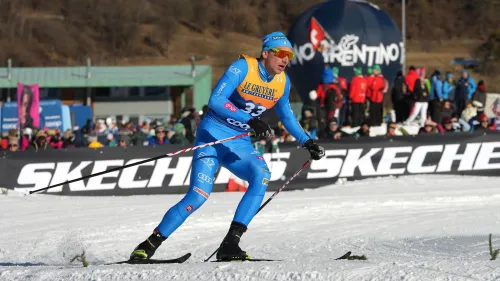
Klaebo seeks to join Bjoergen at 114 World Cup wins. Mocellini and the Italian women start as outsiders: start list for the Ruka classic sprint
Saturday will see the second day of racing in the Finnish opening triple, with the classic sprint on the programme. Norway are targeting another victory, with Johannes Klaebo the overwhelming favourite (he has Marit Bjoergen's World Cup wins record in his sights). For Italy, the best card to play is Simone Mocellini, followed by Elia Barp and Davide Graz. Among the women, the Swedes are in the front row, but the young Italians will give it a try. Qualifying starts at 8:45 a.m. Italian time (9:45 local time), with the final stages from 11:15 a.m.
16