
BiathlonOlympic history
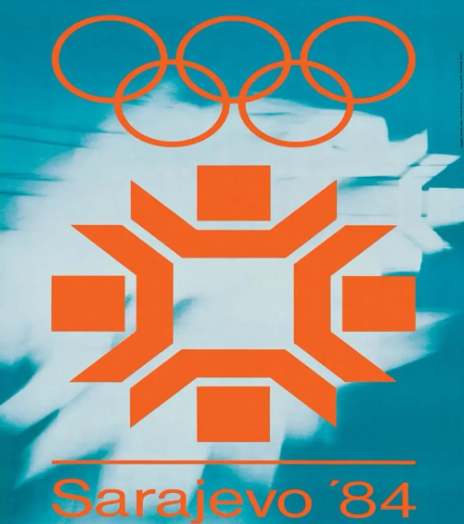


After the 1980 Moscow Summer Olympics, in 1984 the Winter Olympics were also held for the first time (and history would show, the last) behind the Iron Curtain. At its 80th session in 1978, the IOC awarded the organisation to the Yugoslav city of Sarajevo: here is how the three events on the programme unfolded.
Friday 9 January 2026 6 minutes reading time
The Biathlon programme remained unchanged from the previous edition, with the two individual events (20 km and Sprint) and the 4x7.5 km relay. After starring at the Lake Placid Games, East German Frank Ullrich became the dominant figure on the world scene in the following seasons, but in 1983 his wife’s sudden death from illness led him to reflect on his future and decide to end his career at just 26. He was forced to continue racing for another season and in Sarajevo was East Germany’s flag bearer at the opening ceremony, but his physical and psychological condition was not what it had been in his best years.
Over the previous two seasons, Norway’s Kvalfoss had emerged, having won the world title in the Sprint in both of the preceding seasons, while the GDR school had produced nineteen-year-old Frank-Peter Roetsch, who had finished second in the 20 km the previous year behind Ullrich.
In the 20 km, which traditionally opened the Olympic programme, West German Peter Angerer prevailed, having already made his mark in the Lake Placid relay. The 24-year-old Bavarian made just two mistakes and recorded the second-fastest skiing time to win the Gold medal by a minute and a half over Roetsch, who was held back by a third penalty at the final shooting range. Eirik Kvalfoss had to settle for the Bronze medal, despite recording the fastest skiing time, after incurring five penalties. As expected, Ullrich was not up to his usual standard and finished fifth. The race also saw the Olympic debut of 21-year-old Andreas Zingerle from Anterselva, who finished ninth with four penalties.
Three days later, Kvalfoss took his revenge in the Sprint despite two shooting errors and the resulting two penalty loops. Angerer reached the shooting range later and, after going 5/5 prone, had the opportunity, with another 5/5, to double his Olympic title haul, but he made a mistake and the penalty loop cost him the Gold medal, leaving him with Silver, eight seconds behind his rival. The Bronze medal went to 23-year-old East German Matthias Jacob, who was able to capitalise on a perfect performance at the shooting range.
Although, for the first time since Biathlon was introduced to the Olympic programme, the Soviet Union had been unable to place any biathlete on the podium, the relay extended its streak of consecutive Olympic victories. It was not the usual walkover seen on other occasions; Vasilyev and Kashkarov gave the Soviet quartet a lead of around thirty seconds over East Germany halfway through the race, but Shalna endured a disastrous leg with two penalty loops and Jacob made up around twenty seconds. Everything seemed set for a changing of the guard in the final-leg duel between nineteen-year-old Bulygin and the experienced Frank Ullrich. The Soviet made no mistakes, while the German had to use three spare rounds and his skiing pace was not sufficient.
The Soviet Union raced towards its fifth consecutive Olympic title, while East Germany collapsed and finished fourth, overtaken by Silver medallists Norway and Bronze medallists West Germany.
20 km Individual
- Angerer Peter (GER)
- Roetsch Frank-Peter (DDR)
- Kvalfoss Eirik (NOR)
10 km Sprint
- Kvalfoss Eirik (NOR)
- Angerer Peter (GER)
- Jacob Matthias (DDR)
4 x 7.5 km Relay
- Soviet Union
- Norway
- West Germany
© ALL RIGHTS RESERVED
Social media engagement
Latest in Sport invernali
Klaebo seeks to join Bjoergen at 114 World Cup wins. Mocellini and the Italian women start as outsiders: start list for the Ruka classic sprint
Saturday will see the second day of racing in the Finnish opening triple, with the classic sprint on the programme. Norway are targeting another victory, with Johannes Klaebo the overwhelming favourite (he has Marit Bjoergen's World Cup wins record in his sights). For Italy, the best card to play is Simone Mocellini, followed by Elia Barp and Davide Graz. Among the women, the Swedes are in the front row, but the young Italians will give it a try. Qualifying starts at 8:45 a.m. Italian time (9:45 local time), with the final stages from 11:15 a.m.
35