
Sports EventsFISI elections

FISI Trentino

The new president—who succeeds Tiziano Mellarini, who is set to run for a seat on the national council—and the members of a key federation body in the winter sports landscape have been elected. With 61% of the vote, Bonvecchio prevailed over Raffaella Podetti.
Saturday 25 July 2026 8 minutes reading time
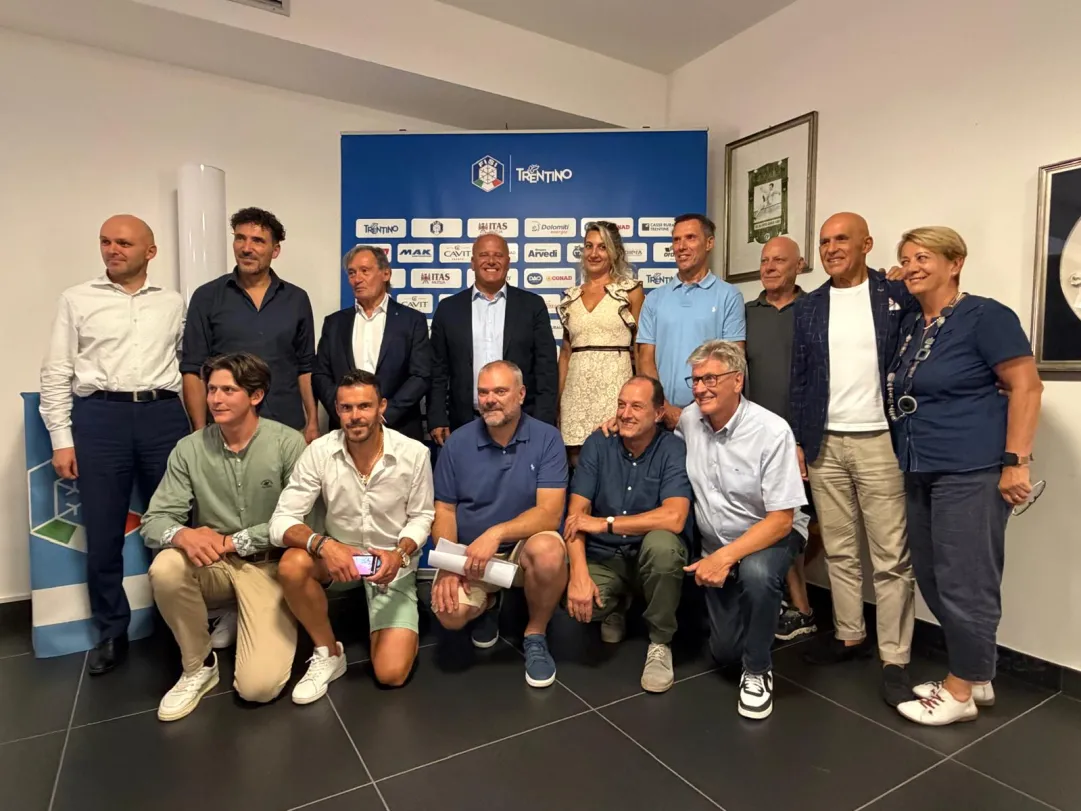
Mauro Bonvecchio, 58, from Trento and a journalist by profession, is the new president of the Trentino Committee of FISI. Co-owner of an agency that played a leading role in communications at the 2006 Turin Olympic Games and Milano Cortina 2026, he has also served as press office manager for all the Alpine skiing and skicross World Cups held in Val di Fassa, as well as the 2019 Junior Alpine Skiing World Championships, the 2013 Universiade and many other outdoor events.
Bonvecchio was elected at Sala Rusconi in the CONI building in Trento, receiving 4,575 votes, or 61.17%, compared with the 2,571 votes received by his rival for leadership of the regional committee, Raffaella Podetti, who secured 34.38% of the vote.
The new head of FISI Trentino, who also spent 30 years as head of communications and external relations for the provincial federation, is therefore the eleventh president of a movement that has been active for 93 years. He succeeds Pio Antonio Callari, Camillo Chier, Fabio Conci, Benedetto Bertamini, Franco De Pilati, Nino Barnaba, Franco Prezzi, Giuseppe Giovanelli, Angelo Dalpez and Tiziano Mellarini.
Alongside the Trentino journalist, the new Council—which will remain in office for the next four-year term, ending with the Alpes 2030 Winter Olympic Games—will comprise seven lay councillors, two athlete councillors, one technical councillor and an auditor. Specifically, the following were elected as lay councillors: Marco Peterlini (5,179 votes), Stefano Stelzer (5,152 votes), Francesco Da Villa (4,714 votes), Romano Masé (4,493 votes), Greta Andreoli (4,364 votes), Claudio Zanetel (4,133 votes) and Alessandro Rondina (3,806 votes). Outgoing councillor Stefania Colombo was not elected, with 3,314 votes, along with Leonardo Bernard, with 3,195 votes, and Ruggero Carbonari (3,104 votes).
Thomas Bonelli, with 851 votes, and Bruno Debertolis (824 votes) were elected as athlete councillors. The third candidate, Werner Krause, was not elected after receiving 575 votes.
Walter Nave, the only candidate for technical councillor, was elected after receiving all 404 votes, while Luigi Seppi was reappointed as sole auditor, securing nearly 70% of the vote, equal to 5,182 votes, against Davide Fiore’s 1,914.
Happy and enthusiastic about beginning a new chapter after his election, Mauro Bonvecchio said: “I want to thank all the ski clubs that turned out in large numbers for this election, demonstrating the vitality of the winter sports movement, which has more than 8,000 members and 89 ski clubs operating across the region in the 12 disciplines practised in Trentino.
These have been weeks of many meetings with the various clubs, which will be at the heart of my work as an executive over the coming years, together with the athletes, around whom projects will be developed to promote our talent and help the many young skiers grow.
I would also like to extend special thanks to outgoing president Tiziano Mellarini. We will support him in his candidacy for the Federal Council, in the hope that he can be our ambassador in Milan for the next four-year term.”
What work does he intend to undertake during his term? Bonvecchio replied: “I cannot wait to establish a new path with the new Council, which is made up of dynamic people and includes several particularly experienced figures whom I would like to promote. I will convene it as soon as possible, after the Federal Council has ratified the outcome of today’s Assembly and we have held a handover meeting with the outgoing president.
My term will not be based on continuity. Instead, I will try to bring an innovative and personal vision to the organisational structure, including the various disciplines, involving sector managers in Council meetings even if they were not elected, while the specialist committees will be reduced and given broad autonomy.
The two most important challenges are engaging in dialogue with schools to facilitate arrangements for student-athletes, including relaunching the Ski College, perhaps with the involvement of external consultants from the education sector, and continuing discussions with lift companies to guarantee training slopes in all of Trentino’s ski areas, perhaps also identifying dedicated race courses. Balance, passion and enthusiasm will be the key words for this new adventure.”
© ALL RIGHTS RESERVED
Social media engagement
Latest in Sport invernali
Klaebo seeks to join Bjoergen at 114 World Cup wins. Mocellini and the Italian women start as outsiders: start list for the Ruka classic sprint
Saturday will see the second day of racing in the Finnish opening triple, with the classic sprint on the programme. Norway are targeting another victory, with Johannes Klaebo the overwhelming favourite (he has Marit Bjoergen's World Cup wins record in his sights). For Italy, the best card to play is Simone Mocellini, followed by Elia Barp and Davide Graz. Among the women, the Swedes are in the front row, but the young Italians will give it a try. Qualifying starts at 8:45 a.m. Italian time (9:45 local time), with the final stages from 11:15 a.m.
2