
Alpine SkiingMilan Cortina 2026
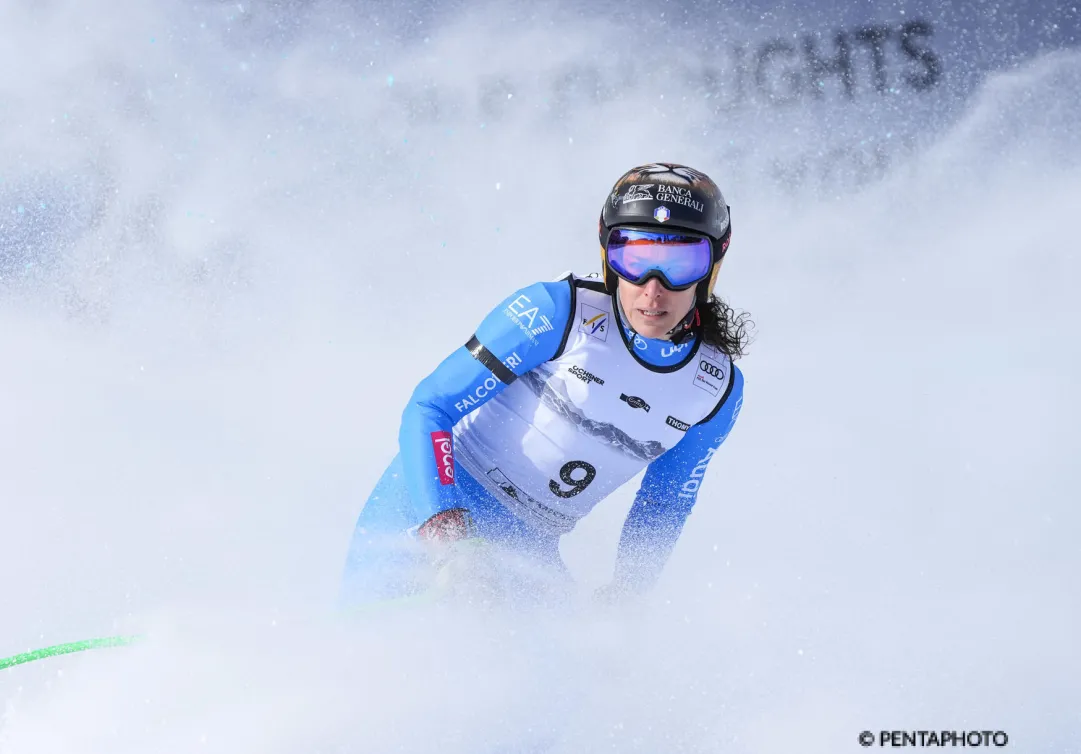

Pentaphoto

Federica will arrive in Cortina on Tuesday, followed by Thursday’s training run and six athletes competing for the four bibs for Sunday’s challenge. Speaking to Rai Radio 1, the former national team slalom skier confirmed that her daughter feels much less confident—from the training sessions on the Olympia delle Tofane to the super-G in Crans-Montana—than in giant slalom, which “is the only race she will definitely compete in at the Games.” Regarding D’Antonio’s selection, she added: “It could backfire on her; I don’t agree with the choice because other girls deserved it more.”
Monday 2 February 2026 8 minutes reading time
There is a major question mark for Italy concerning the first women’s alpine skiing event at the upcoming Olympic Games: the highly anticipated downhill scheduled for Sunday (11:30 a.m.) in Cortina.
It concerns Federica Brignone, who will only understand after the training runs whether she can be competitive for a medal in the first event of a Games that the La Salle champion has managed to save with her extraordinary recovery from the terrible injury she suffered 10 months ago, but with an obviously makeshift preparation that offers few guarantees, especially in speed events.
Fede has said several times that she feels less pain on longer skis, but at the same time the confidence to push “because it is the discipline that comes most naturally to me” comes only from giant slalom. Her return in the San Vigilio di Marebbe race was therefore at an extremely high level, with a sixth-place finish in which she was far from out of contention at the top—namely against the current benchmarks, Scheib, Rast, Hector and Shiffrin.
The week of training in Cortina, right on the Olympic slopes, was not particularly positive, and the reigning World Cup champion arrived in Crans-Montana, where the downhill was subsequently cancelled, not at her most confident. She finished 18th in the super-G, which did not satisfy her at all, as she openly stated.
On Thursday, weather permitting, the first of the three training runs for the Olympic downhill is scheduled. Only after the training sessions will we—and Fede herself—understand the situation, while the coaching staff will also have to untangle a complicated selection matter. If Nicol Delago, Sofia Goggia and Laura Pirovano are essentially certain of having a bib on Sunday, the fourth ticket will be contested between Brignone and Nadia Delago, who—quite apart from being the reigning Olympic bronze medallist, which certainly is not what will “weigh” in the decision—is definitely arriving in Cortina in good condition. With Elena Curtoni guaranteed a place in the super-G, it is difficult for the Valtellina skier to re-enter the running for the downhill.
Federica Brignone’s situation was discussed by someone who knows her better than almost anyone: her mother, Ninna Quario, who spoke this morning via video link to the programme “Radio anch’io sport” on Rai Radio 1. She confirmed that “if the first giant slalom was very encouraging, the approach to speed events was somewhat less so, from the training run to the super-G in Crans-Montana, because Fede realised that she is still behind, especially in terms of confidence.
She will go to Cortina tomorrow and then do the training runs to assess how she feels and whether to attempt the race. Last year she had an incredible downhill season, winning the World Cup, but it is precisely the discipline in which she returned latest and the one in which she is finding it hardest to get back up to speed. There are more risks; you really have to be ready and well trained—you cannot improvise. So the only certainty is that she will compete in giant slalom.”
The former slalom skier from the “Valanga Rosa” in the late 1970s and early 1980s continued: “Federica’s motivation for being at these Olympics was also to carry the flag, one of the driving forces that made her work even harder. I believe she would have done it anyway after the accident; her first objective was to recover and then focus on competition. She accelerated the timetable; according to everyone, it was almost a miracle.”
Quario also commented on the selections of the young Giada D’Antonio and Anna Trocker, although the question concerned only the 2009-born skier from San Sebastiano al Vesuvio. “I do not want to cause controversy, but I disagree – she said firmly - This girl has tremendous talent and a fantastic future; she has shown that she is strong technically and mentally.
But she does not have the credentials to be selected for the Olympics, and it could even backfire; in the races she has contested against other girls from the European Cup team, she has never beaten them. Why her and not a girl born in 2002? Sport is life’s greatest example of meritocracy. Perhaps she will surprise us later, but honestly, I do not agree with this choice.”
© ALL RIGHTS RESERVED
Social media engagement
Downhill Female Milano-Cortina (ITA)
 JOHNSON Breezy
 AICHER Emma
 GOGGIA Sofia
The injured champion
Monday 9 February 2026
the injured champion
Monday 9 February 2026
Lindsey's ordeal
Sunday 8 February 2026
women’s downhill
Sunday 8 February 2026
women’s downhill
Sunday 8 February 2026
women’s downhill
Sunday 8 February 2026Latest in Sport invernali
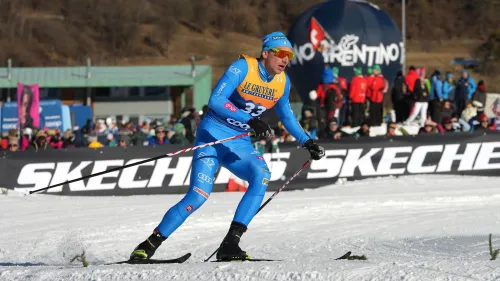
Klaebo seeks to join Bjoergen at 114 World Cup wins. Mocellini and the Italian women start as outsiders: start list for the Ruka classic sprint
Saturday will see the second day of racing in the Finnish opening triple, with the classic sprint on the programme. Norway are targeting another victory, with Johannes Klaebo the overwhelming favourite (he has Marit Bjoergen's World Cup wins record in his sights). For Italy, the best card to play is Simone Mocellini, followed by Elia Barp and Davide Graz. Among the women, the Swedes are in the front row, but the young Italians will give it a try. Qualifying starts at 8:45 a.m. Italian time (9:45 local time), with the final stages from 11:15 a.m.
295