
Alpine SkiingWomen’s World Cup


Pentaphoto

Outgoing OESV secretary general Christian Scherer explains the reason behind the real surprise in the World Cup calendars published last Thursday: the downhill and super-G scheduled at the beginning of the year on the “Karl Schranz”, which will probably move to Méribel. In 2025, Brignone claimed her first downhill victory ahead of a sensational Blanc, on one of the most technical courses on the circuit. We will see whether it returns in 2028 or gives way to Zauchensee.
Saturday 9 May 2026 5 minutes reading time
Many fans wondered about the reasons behind St. Anton’s withdrawal from its eagerly awaited women’s World Cup races, which, alternating with Altenmarkt-Zauchensee, were scheduled to take place on January 9–10, 2027, with a downhill and a super-G.
It was surprising that the OESV, after asking the Salzburg resort to host the races for a second consecutive year and receiving a “no” for logistical reasons, ultimately gave up the stage altogether, “handing” it to the FIS. It will probably go to the French federation for Méribel’s return to the top-level circuit eleven years after the 2015 Finals, although the host nation for the event is not yet officially confirmed.
Austria would have staged six consecutive races, following the technical events at the new Gosau venue (December 28–29) and the night races in Flachau, which will open the competitive calendar year on January 4–5.
Christian Scherer, the outgoing secretary general of the Austrian Ski Federation, explained through the OESV’s channels that St. Anton had to raise the white flag, despite remaining in all the provisional calendars until last Thursday, because of tourism-related problems at the Arlberg resort during that post-Christmas holiday period as well, and therefore a lack of accommodation on the second weekend of January. “We asked for the races to be postponed by one week so they could go ahead as scheduled, but the FIS gave us a negative response.”
In any case, the following weekend is already packed, as Cortina, from January 15 to 17—with two training days on Wednesday and Thursday—will host two downhills and a super-G.
It is a shame, in any event, not to have the “Karl Schranz” on next season’s World Cup calendar. We will then see whether St. Anton or Zauchensee will host Austria’s speed event in the heart of the 2027/28 winter season. On the last occasion here, in January 2025, Federica Brignone claimed her first downhill win (she then repeated the feat almost immediately in Garmisch, after winning in Cortina for another first at a venue, although that one came in the super-G on the Olympia delle Tofane), setting her sights on the discipline’s crystal globe as well. Malorie Blanc was sensational on her debut in the premier discipline and, starting with bib 46, finished second, just seven hundredths behind the Valdostan.
The very young Swiss skier denied Laura Pirovano the joy of her first podium (14 months later, she took it all back…), finishing fourth behind Ledecka as well, while the following day’s super-G saw Lauren Macuga claim her first World Cup victory, ahead of future world champion Stephanie Venier, with Brignone third, ahead of Vonn.
© ALL RIGHTS RESERVED
Social media engagement
Latest in Sport invernali
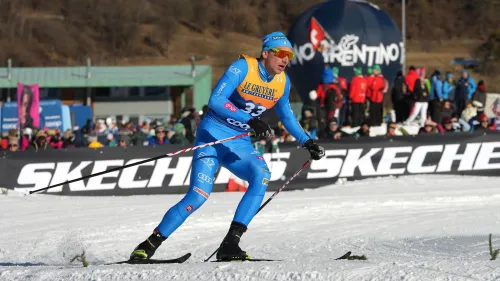
Klaebo seeks to join Bjoergen at 114 World Cup wins. Mocellini and the Italian women start as outsiders: start list for the Ruka classic sprint
Saturday will see the second day of racing in the Finnish opening triple, with the classic sprint on the programme. Norway are targeting another victory, with Johannes Klaebo the overwhelming favourite (he has Marit Bjoergen's World Cup wins record in his sights). For Italy, the best card to play is Simone Mocellini, followed by Elia Barp and Davide Graz. Among the women, the Swedes are in the front row, but the young Italians will give it a try. Qualifying starts at 8:45 a.m. Italian time (9:45 local time), with the final stages from 11:15 a.m.
2