
Alpine Skiingthe intervention
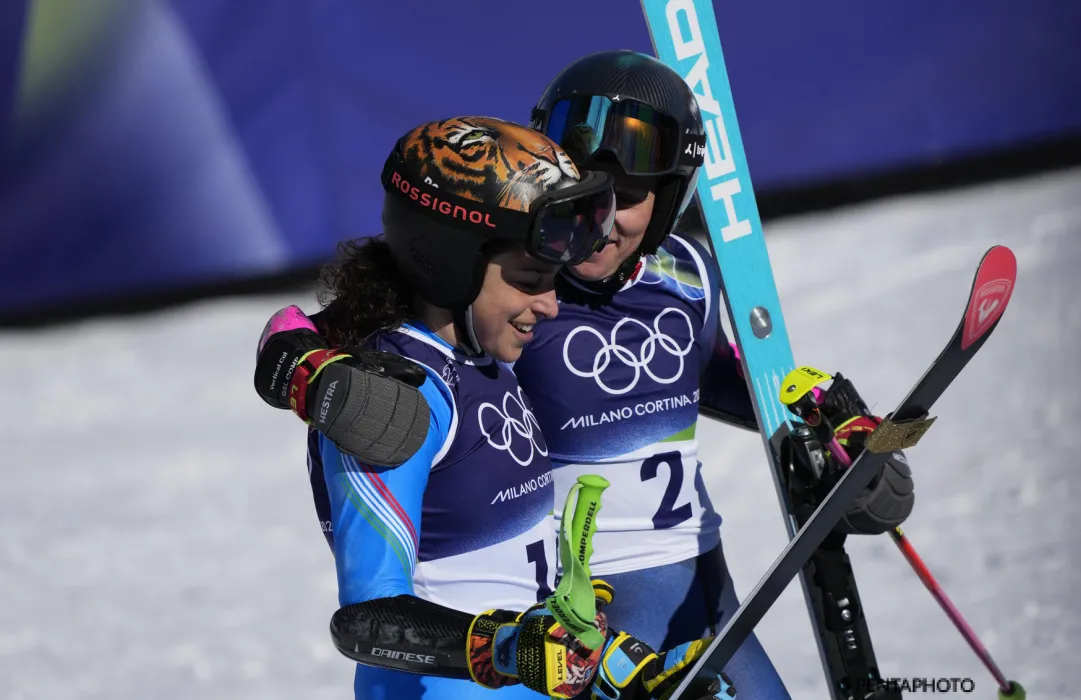

Pentaphoto

Yesterday evening, the 2022 Olympic giant slalom champion (silver in Cortina behind Brignone) spoke about a very important issue during an event held in Almedalen, on the island of Gotland. "Even at the élite level, we have a quarter of the resources available to the top countries in skiing. I made my debut in 2009, and since then things have become even worse: politics and the business world must take action to prevent our young athletes from being unable to make it".
Thursday 25 June 2026 11 minutes reading time
An important, determined statement from the true leader of a movement that she will continue to represent next season (as will Anna Swenn Larsson, who will continue for at least one more winter).
Sara Hector has been making Swedish history in recent years, a symbol of a movement that is unquestionably struggling, especially when it comes to recruiting future talent. The giant slalom specialist, who won the last World Cup race in the discipline at Spindleruv Mlyn and finished on the podium again in the discipline standings she dreams of winning, Olympic silver medallist for Milano Cortina 2026 after taking gold in Beijing 2022, wanted to offer an explanation during an event to which she was invited on Wednesday evening in Almedalen.
The venue on the island of Gotland, which separates Sweden from Latvia, saw the 1992-born skier from Sandviken analyse all the problems that young skiers, as well as athletes who have reached a certain point in their competitive careers, have to face for purely financial reasons. “It’s an important issue that needs to be discussed,” Sara began; she published the speech in full on her website. “Being an élite athlete in Sweden is too difficult compared with many other countries. I’m here in Almedalen today specifically to discuss this subject.
I have many friends who struggle to get by with so few financial resources that they have to ask their parents for help in order to continue practising their sport.
Competing for Sweden in alpine skiing means competing with around a quarter of the financial resources available to other nations such as Norway, Germany, the United States, Switzerland and Austria.
I competed in my first World Cup race in 2009. Since then, the conditions for progressing as a skier in our country have deteriorated. There are fewer days of training on snow and fewer athletes have the chance to be selected because of the lack of resources. I grew up in a family with two teacher parents and three athlete children; I don’t think I would have made it if I had grown up in today’s society.
My parents did everything for us and for our sport; even back then we were at the limits of what was possible, whereas today I wouldn’t stand a chance! Is it really impossible to become an élite athlete without wealthy parents?”.
Going into detail, Hector explained: “As many as 4 out of 10 élite athletes among those who apply for the Swedish Olympic Committee’s “Top and Talent” support live below the subsistence threshold. I know the situation in alpine skiing well; it’s even tougher for us: those who do not receive SOK support find themselves in critical conditions.
And yet Sweden is the country that wins the most medals in women’s Olympic team events, but the excellent results achieved risk making it difficult for future athletes to emerge unless politics and the business world give greater priority to sport. I’m incredibly grateful for the success I’ve enjoyed in recent years, which has obviously also benefited my financial situation, but what would have happened if I hadn’t made it?
Being an élite athlete already involves considerable pressure, but is it right that in Sweden the pressure should be such that most determined and talented people are driven to leave sport because the conditions are too prohibitive? If that were the case, we would no longer have role models and sport would end up playing an increasingly marginal role in society.
During my journey towards Olympic gold, my financial situation was difficult for many years. I know exactly how hard it can be, and the Alpine Skiing Federation’s funds are not sufficient to compete at the highest level. I’m immensely grateful for the basic support provided by the Federation itself together with its partners, and equally grateful to my personal sponsors (including the Friuli Venezia Giulia region, since Sara and Team Sweden often train on Monte Zoncolan, ed.).
Without them, I would not have been able to compete with athletes of the calibre of Mikaela Shiffrin, Lara Gut, Federica Brignone and all the others”.
The 34-year-old specialist in the wide gates concluded: “Despite this, I have finished among the top three in the World Cup giant slalom standings in four of the last five seasons. All of this was possible thanks to the companies that believed in me and to the creation of valuable partnerships that benefited everyone. I’m proud of that, but how did we achieve these results in women’s alpine skiing? I believe much of the credit goes to motivated coaches, capable of making great efforts and equipped with excellent contacts, who guaranteed us athletes ideal working conditions. Without them, what would have happened?
Nor should we forget the support of the SOK (Swedish Olympic Committee), which made a decisive contribution to winning the medals. However, it too has limited resources and is forced to choose between athletes from summer and winter sports, sometimes leading to periods of stagnation in athletic development. Many people abroad struggle to understand the situation. They say: “But Sweden certainly doesn’t have financial problems”. That’s true, but perhaps the problem lies in the culture surrounding the funding of élite athletes.
Change is necessary! Think of how many young people are inspired to strive to learn new technical movements, how sport helps prevent mental distress, provides a social environment and instils confidence in the future. We must come together and fight for all of this.
The reality is that many talents quit too soon, without managing to fulfil their potential. I believe that, if we want to continue winning medals with future generations too, we need to change the prevailing culture regarding the priorities of politics and the business world”.
© ALL RIGHTS RESERVED
Social media engagement
Latest in Sport invernali
Klaebo seeks to join Bjoergen at 114 World Cup wins. Mocellini and the Italian women start as outsiders: start list for the Ruka classic sprint
Saturday will see the second day of racing in the Finnish opening triple, with the classic sprint on the programme. Norway are targeting another victory, with Johannes Klaebo the overwhelming favourite (he has Marit Bjoergen's World Cup wins record in his sights). For Italy, the best card to play is Simone Mocellini, followed by Elia Barp and Davide Graz. Among the women, the Swedes are in the front row, but the young Italians will give it a try. Qualifying starts at 8:45 a.m. Italian time (9:45 local time), with the final stages from 11:15 a.m.
2