
Alpine SkiingFarewell to the great champion

Swiss-Ski

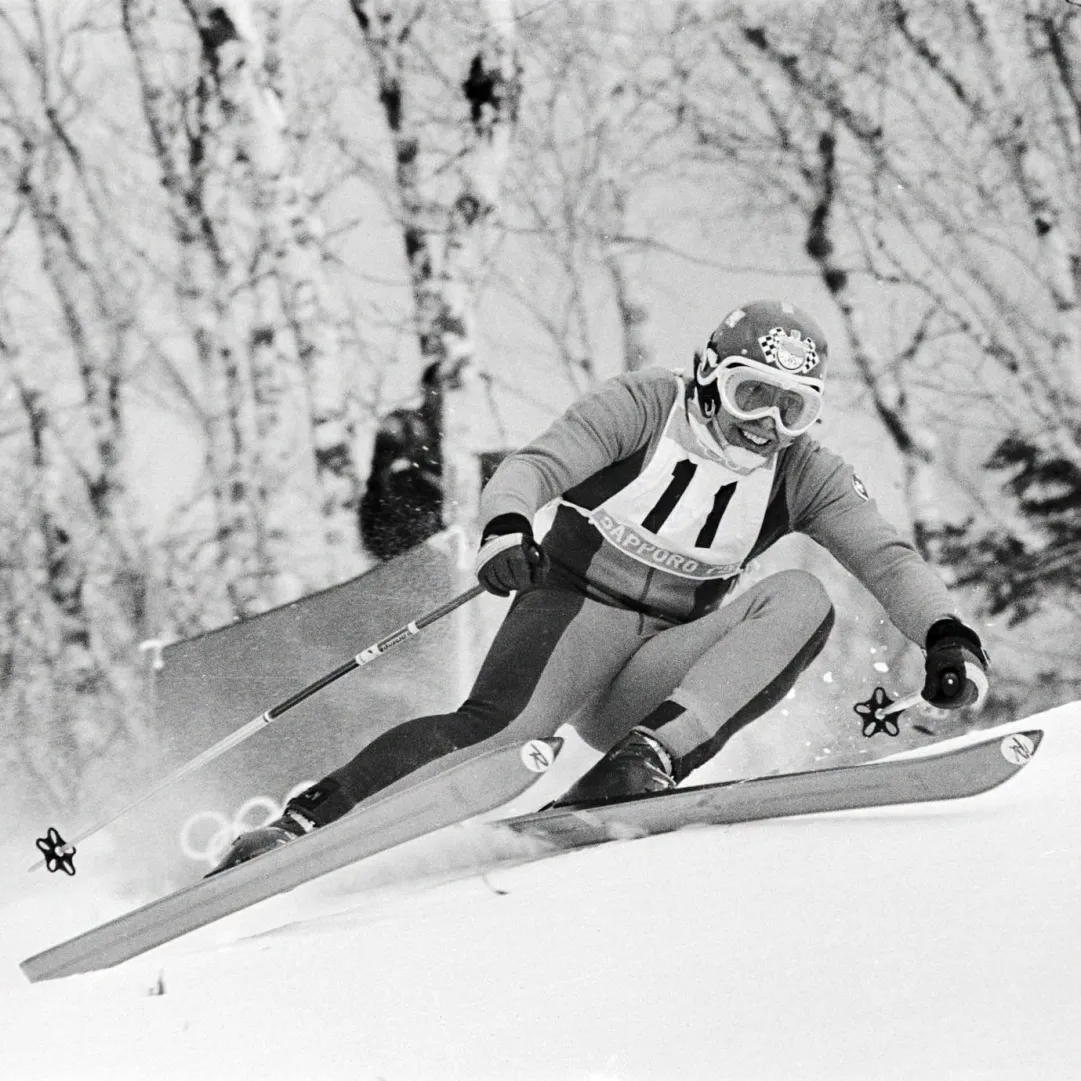
The day after the death of the fantastic speed specialist from Val de Bagnes (the son of an Italian mother and a Valais father), Swiss-Ski paid tribute to one of the greatest downhill racers in history, who had been battling two tumours since 2024. A meteoric career, concentrated over three seasons, yielding an Olympic silver medal, eight World Cup victories and two crystal globes in the premier discipline, before the accidents suffered in Val d’Isère, which led to one of the iconic sections of the Oreiller-Killy being named after him: the “Bosse à Collombin”.
Saturday 11 July 2026 9 minutes reading time
On Friday evening, the sad news broke of the death of Roland Collombin, the unforgettable speed specialist who wrote splendid pages in the history of top-level skiing in the 1970s, taming the Streif twice and winning a total of eight World Cup races, always in downhill, with two crystal globes in the premier discipline and the Olympic silver medal from Sapporo 1972 (which also counted as a world championship medal), finishing just behind his compatriot and great rival, Bernhard Russi.
Today, the Swiss ski federation paid tribute to Collombin (it is regrettable that the FIS forgot about him on its website and social media channels), remembering him not only for his exceptional sporting career, albeit a very brief one at the highest level, but also for the spirit that always distinguished him. In 2024, he discovered that he had to undertake the toughest battle of his life, overcoming throat cancer before being diagnosed with liver cancer as well.
Swiss-Ski writes, in its own words: “If Bernhard Russi was the nation’s idol, the ideal son-in-law, Roland Collombin was the wild and carefree character, the “Valais bon vivant” who enjoyed life to the fullest both on and off the slopes. A madman, in the positive sense of the term, unpredictable at any time of day, a joker and an enfant terrible at the same time.
He regularly provided material for the tabloids and did not mind being called the John McEnroe of skiing”.
Raised in Val de Bagnes, the 1951-born Swiss downhill racer, the son of an Italian mother and a Valais father, was the most “wayward” of all the successful skiers Switzerland had ever produced, and he openly admitted it himself, describing himself as lazy.
At the 1972 Games in Japan, the silver medal he won at just 20 years of age, behind Russi, came as a surprise; even before his first World Cup podium, which came with his victory in Val Gardena in December of that same year, he was temporarily arrested by the police after having a drink with ice hockey player Jacques Pousaz, as the two athletes had got involved in a “prank” that ended in a brawl.
At times – the Swiss federation continues in its statement – Collombin gave the impression that racing was merely an adventure for him, but this impression was misleading, because the Valais native played and bluffed with his image as a lazy man. On one occasion, looking back, he said that he had always been aware that anyone who wanted to succeed had to train, and that he had always known when it was time to roll up his sleeves. Russi, his rival and friend, was certain that Roland worked as hard as everyone else.
The fact that the sporting career of this talented, fearless and carefree daredevil ended with a still-enviable record was mainly due to health reasons. Collombin’s career spanned three seasons; at the end of 1974, a spinal injury following a crash in Val d’Isère forced him to take a year off.
Twelve months later, he crashed again at exactly the same point on the course now known as the “Oreiller-Killy”, and that section in the second part of the Savoyard downhill was named after the magnificent Swiss specialist. The “Bosse à Collombin” will remain forever; unfortunately, on that occasion Roland fractured two vertebrae, was practically paralysed for two days and had to end his career (it was December 1975) at just 24 years of age.
Collombin himself considered his victory in Wengen at the beginning of 1974—the first Swiss triumph in the quintessential home race in 20 years—and his two wins in Kitzbühel (in 1973 and 1974, the years of his two World Cups) his greatest successes. He saw his silver medal in Sapporo as a lost gold, despite arriving in Japan with seventh place as his best result on the top circuit and without any particular expectations. He explained that he had panicked after posting surprisingly fast times in training…
After his early retirement from professional sport, the Valais champion remained true to himself. First he took a long break, then he devoted himself to other dreams, such as spending an entire summer working in an alpine pasture and turning his hand to catering, wine production, hospitality, and the trading of beverages and wines.
He also ran the “Le Streif” bar in Martigny. While working in his hometown of Versegères, he met Sarah, a French-Canadian woman whom he later married and with whom he had two children. In 1989, Roland narrowly escaped death in a head-on car crash (for which he was not responsible), and just eight years ago he said that he went on mountain outings with his wife almost every day, happier and healthier than ever. This was before the health problems that took him from us, towards the final descent of a full life.
© ALL RIGHTS RESERVED
Social media engagement
SCARPONI, SCELTI DAI LETTORI
MAXISPORT
HEAD - raptor 60 bambino
102 €
2