
Alpine Skiingthe interview
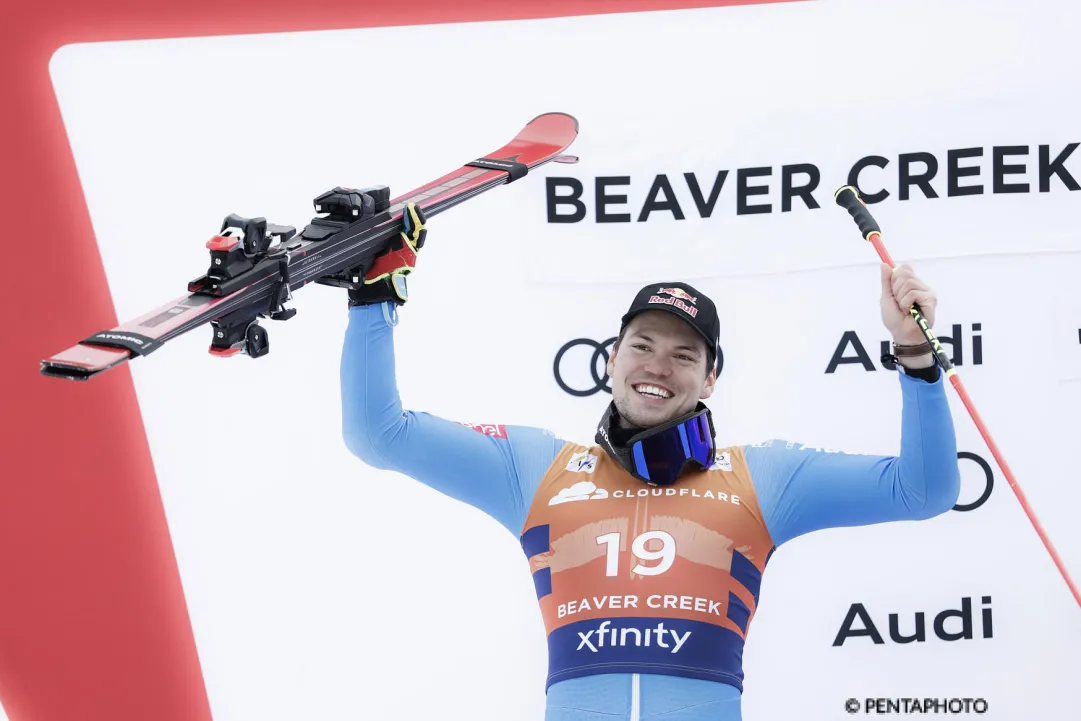

Pentaphoto

Speaking to “sportnews.bz”, the Val Gardena skier reveals that although he did find his first giant slalom podium in Beaver Creek, he suffered greatly from January onwards, including the Olympic disappointment. Now he is training in Argentina with the new staff and, on the possibility of competing in super-G, says: “Only once I return to my level in the technical events, thereby reaching 500 points in the overall standings, will I be able to try it. Yes, mentally, the final part of last season was extremely difficult.”
Friday 21 August 2026 9 minutes reading time
Alex Vinatzer is coming off an especially complicated winter, primarily because of the huge disappointment he experienced at the home Olympic Games, but also in the World Cup after things had started brilliantly in December with his first giant slalom podium: second in Beaver Creek, behind only his majesty Marco Odermatt.
Having flown to Ushuaia a few days ago together with his national-team teammates from the technical events, the 1999-born skier from Selva Val Gardena opened up to sportnews.bz colleague Leo Holzknecht. Following coach Mauro Pini’s departure immediately after the five-ring event, and with the new programme led by Prosch and Blardone alongside Bergamelli, Alex addressed the subject without any issues in the interview, conducted on the sidelines of one of the many training sessions at the Mulin da Coi centre together with his coach Elia Berti. Here is what the man who remains the slalom and giant-slalom team’s reference point had to say.
The criticism was immense—also because of the expectations surrounding a young man who has been expected for years to claim his first World Cup victory—especially after his lacklustre slalom run in the Olympic team combined, when Italy were dreaming of the title following Giovanni Franzoni’s winning downhill run. “I stopped reading what is written on social media,” Vinatzer admits. “These days I spend 10 minutes a day on Instagram and invest my time differently.”
On the giant slalom, which may have given him even more satisfaction than slalom in recent seasons, he says: “I have always loved this discipline, but since things were going so well in slalom, it was difficult to fit giant slalom into my training. And I have to say that my old equipment did not help; since I switched to Atomic skis, things have progressed fairly quickly.
Of course, the higher you climb in the rankings, the more difficult it becomes, but after gaining the necessary experience I managed to make the podium. I hope it continues like this in the future as well.”
Returning to Milano Cortina 2026, the Val Gardena skier explains: “It was rather tough, especially after the Olympics. This was reflected in the results of the final World Cup races as well, because if you want to be competitive at such a high level, you have to be 100% in every respect.
I was particularly tired and mentally exhausted; I only recovered from everything in June. Honestly, I now feel ready and motivated again. The preparation and the first days on snow have gone well, but these were difficult months.”
Asked whether, looking back now, he would change anything: “It is always difficult to say,” replies the 26-year-old Italian. “Everything went very well until December. After New Year’s, however, we drifted somewhat away from our path and tried to do… too much. The pressure increased, I made mistakes in a few races and then the Olympics arrived. So I would definitely do one or two things differently starting in January.”
On Mauro Pini’s early departure as head of the technical events within the men’s national team: “It was unpleasant. You place your complete trust in that person and when they suddenly leave, it is almost as if your girlfriend had left you.
Not only is it difficult to recover from something like that, it is also complicated to approach a new person with the same level of trust. It is no coincidence that the best athletes consistently rely on the same coach for years. The new staff? So far we have only had two training camps, during which we approached things very calmly.
Alexander Prosch is my main point of reference. I know him well because he also coached me in the European Cup group. He is South Tyrolean like me, and it is easy to talk and exchange views with him; we agree on the technical goals to be achieved and the mentality to adopt ahead of the races.
In Argentina, we have to understand what works well for me and what does not.”
Alex continues: “Winning a World Cup race is what I am missing and what I want most right now. This fierce desire for success has helped me a great deal in my career, but at the same time it has cost me important races because of an excessive inclination to take risks. For the new season, I am trying to distance myself somewhat from this stubbornness.
That does not mean I will settle for less, because winning remains the ultimate goal. But I am trying to focus on other aspects, such as technique, and I am curious to see where all this will take me.”
Many have been asking Vinatzer for some time to take up super-G as well. In reality, the idea had always existed as a prospect, even when he was 20 or 21, with an eye to the overall standings, but for now it has remained in the drawer. What are his thoughts on the third discipline? “I do not think it will be part of my programme for now; I do at most seven training sessions in this discipline each year.
And when I do, I am not bad at it, but until I have 500 points in the overall World Cup standings—which would allow me to start with bib number 31—it makes no sense. During the winter I do not have time to try to reduce my FIS points in the European Cup, so the better my performances in the technical events, the greater the chances that you will then see me in super-G.”
© ALL RIGHTS RESERVED
Social media engagement
Most read in Sport invernali
Fede, the shock announcement: Brignone retires. “My leg hurts too much, I’ve decided to end my career. I’ll open one last starting gate”
In a video released by FISI, the Italian champion announced that she had decided to call it a day: the two days on skis in Cervinia did not give her the answers she had hoped for, and Federica will compete in one final race to say goodbye to everyone. The most successful woman in the history of Italian skiing is leaving the sport.
2