
Alpine SkiingHi Matteo
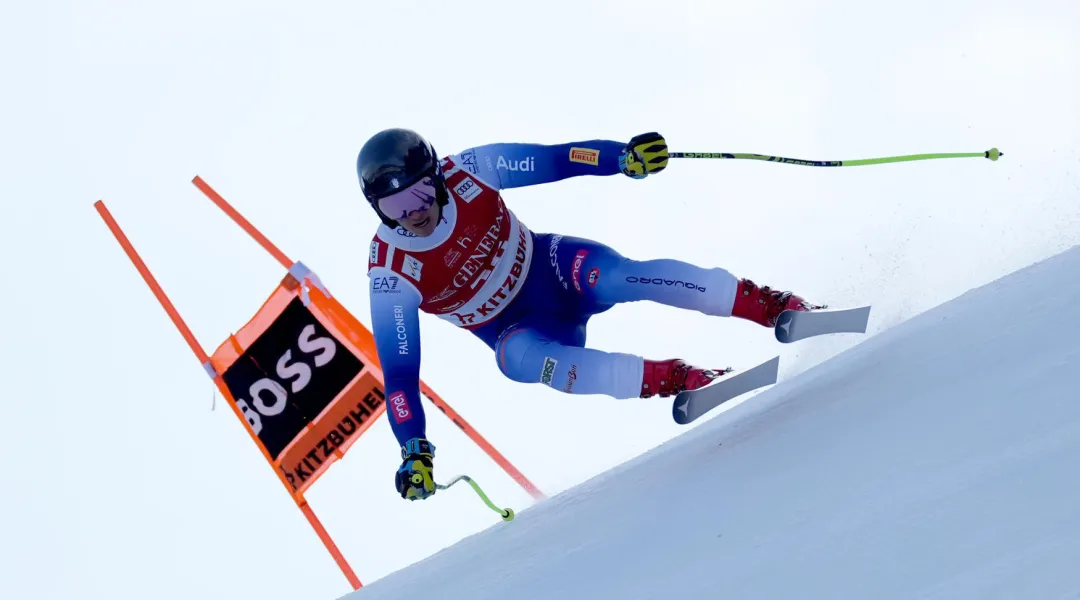

Pentaphoto

President Roda, in addition to announcing a full-day suspension of all federation activities next Tuesday (when Matteo Franzoso’s funeral will be held in Sestriere) as a sign of mourning, convened the Council to take concrete action as soon as possible on an extremely sensitive issue. Here is what emerged and the proposal that will be brought before the FIS.
Friday 19 September 2025 7 minutes reading time
President Flavio Roda and the Federal Council met this morning in an extraordinary session to put forward a series of concrete proposals and launch immediate action in support of athletes regarding the safety of training slopes, just days after the tragedy of Matteo Franzoso’s death.
Shortly after the statement issued by the FIS this morning, the federation’s headquarters on Via Piranesi announced that it intends to take concrete steps immediately. It had already announced that, for the funeral of the Ligurian speed skier, scheduled for Tuesday 23 September in Sestriere, all federation activities will be suspended for the entire day as a mark of respect.
“It is clear that safety standards during training need to be upgraded immediately, to ensure that athletes can carry out their work with complete confidence and rely on all the standard equipment already in place in the World Cup – reads the FISI statement issued today. It is equally clear that this proposal must be implemented by identifying a limited number of slopes (at least for speed events) on which to work effectively and with the utmost attention, in order to provide training terrain where athletes can be sure that every type of assistance is available.
The proposal is divided into two parts: an international component, which will be submitted to the Council of the International Ski and Snowboard Federation within its remit, and a component concerning Italian territory, which falls under FISI’s jurisdiction.
At international level, several speed slopes dedicated to training must be identified for all alpine skiing national teams. The proposal could involve a couple of slopes in the Southern Hemisphere for summer training, and a number of slopes in Europe and North America for autumn/winter training. The costs of making training slopes safe at international level must be covered by the FIS. By way of example, and without being exhaustive: the slope must have international homologation; A, B and C safety nets must be installed according to the same criteria used in the World Cup; a full medical service must be available; helicopter rescue must be provided; escape routes and any obstacles must always be checked; the surface must be maintained as it is for World Cup races; athletes must wear all the safety equipment required on the top circuit; and so on.
Once the slopes have been identified and made completely safe, national teams from all countries must be required to organize training only on those slopes, according to a shared calendar. The slopes used for training in the technical events must also guarantee the same safety standards.
At national level, the same parameters must be applied to speed training slopes in Italy. Here too, several slopes located in different regions must be identified and used exclusively for the training of all teams involved in competitive activities: from the national teams to regional committee teams, sports group teams and ski club teams.
The safety equipment required on these slopes must be exactly the same as that required on international training slopes. The costs of making these slopes safe will be covered by the Italian federation, with support from the Ministry of Sport. In this case too, everyone will be required to train only on the identified and secured slopes. This proposal specifically concerns training slopes, but there are many aspects of alpine skiing involved in a radical evolution of athlete safety: from equipment and protective gear to a series of technical details that improve athletes’ performance on the slopes and are often tested during training.
With a view to improving training conditions and pursuing ever-greater safety, equipment and protective-gear manufacturers should also embark on a process of analysis and research into technical solutions that can guarantee better conditions for athletes at every level. In particular, the analysis should focus on skis and edge-preparation equipment”.
© ALL RIGHTS RESERVED
Social media engagement
Most read in Sport invernali
Fede, the shock announcement: Brignone retires. “My leg hurts too much, I’ve decided to end my career. I’ll open one last starting gate”
In a video released by FISI, the Italian champion announced that she had decided to call it a day: the two days on skis in Cervinia did not give her the answers she had hoped for, and Federica will compete in one final race to say goodbye to everyone. The most successful woman in the history of Italian skiing is leaving the sport.

77