
Alpine Skiing2027/28 World Cup

2023 Getty Images

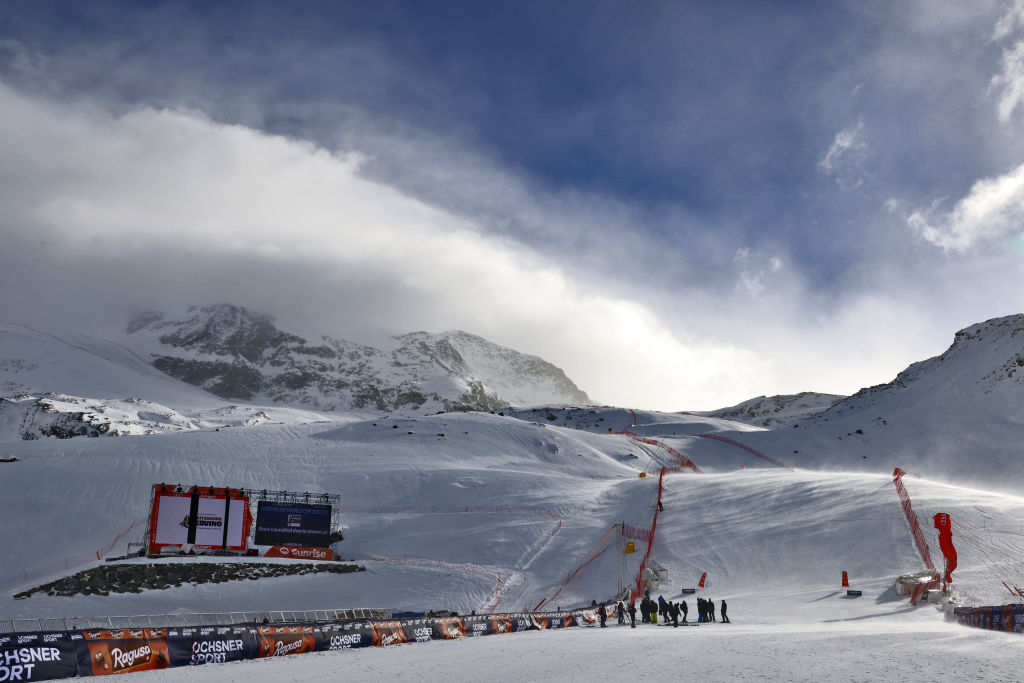
According to sources cited by the Swiss newspaper, the World Cup event in the shadow of the Matterhorn has been included in the provisional calendar for the 2027/28 season, although there are some concerns within the FIS about the timeline, with Hannes Trinkl himself suggesting a one-year postponement. Under the direction of Franz Julen, who saw the races on the "Gran Becca" fall through in 2022 and 2023, preparations are under way for an event already endorsed by Switzerland’s speed specialists.
Monday 12 October 2026 7 minutes reading time
The idea of a men’s World Cup downhill on the Gornergrat has been discussed for some time and, given that the race would be held at the end of the season on the glacier, unlike what was planned for the “Matterhorn Cervino Speed Opening”, which was completely cancelled at the beginning of November for two consecutive years (between 2022 and 2023, including all the races scheduled for the women’s circuit), there is full confidence that everything will go ahead for a speed event initially intended for the men in March 2028.
According to a report published today by “Blick”, the FIS’s inclusion of the event on Swiss snow, unlike the speed event on the “Gran Becca” that would have hosted the first historic cross-border races finishing on Italian territory, is a done deal in the provisional 2027/28 World Cup calendar. Construction work on the course is to be completed by next autumn, with the first official training sessions in January of the following year and a European Cup test event in February.
It all began when, in spring 2024, the man who launched and led the “Speed Opening” project, namely Franz Julen, CEO of Zermatt Bergbahnen (the resort’s lift company in the canton of Valais), found that the event in the shadow of the Matterhorn had been removed from the following season’s programme, despite a duly signed contract. At that point, his brother Max ordered a halt to the national teams’ training sessions on the Theodul Glacier. The move was seen as a kind of retaliation, but also as leverage to secure the possibility of organising World Cup races again in the future.
This went as far as handing over the sporting management rights for Zermatt’s pistes to Swiss-Ski in 2025, for a decidedly substantial sum (reportedly tens of millions of francs), with the then FIS president, Johan Eliasch, assuring Julen that the Swiss resort would be included in the World Cup calendar in the future, with a completely redesigned course on the Gornergrat.
Nothing has changed under the new era led by Alexander Ospelt: the agreement has been signed, and Zermatt is working at full speed under Franz Julen’s guidance to stage that downhill (with the exact programme still to be determined) in the second half of March 2028, on a 3.2-kilometre course designed by Didier Défago, with Pirmin Zurbriggen acting as consultant. Zurbriggen is also an ambassador for a project in which his son Elia serves as race director.
Last August, as the Swiss newspaper also reconstructs, Julen presented the plan to Switzerland’s speed specialists, from Franjo von Allmen to Marco Odermatt. “If the organisers in Zermatt manage to realise it exactly as planned, we will witness a truly spectacular race in March 2028,” said the three-time Olympic champion from the most recent Games. “These days, it is by no means a given that someone will commit so much to organising a World Cup race, as the organisers in Zermatt are doing. I am incredibly grateful for this and am looking forward to another event in Switzerland,” declared the winner of the last five overall crystal globes.
Within the FIS, however, some are pushing for a solution aimed at 2029, thus postponing the event by a year so as not to rush the schedule, which Hannes Trinkl, the person in question, considers too tight. For the man who has been in charge of the men’s World Cup speed events for years, as well as a former downhill world champion, more thorough testing of the project would be advisable, as he has made clear to those directly involved in internal meetings.
Swiss-Ski and the Zermatt organisation, for their part, consider the January and February 2028 tests sufficient. Urs Lehmann, who returned to the FIS after Ospelt’s election (the long-standing president of the Swiss Ski Federation and later CEO of the International Federation), added: “Everyone has recognised the enormous potential of the Gornergrat downhill, but for me it is also important not to rush, but to do everything properly.
If there is anyone capable of meeting the high expectations by 2028, it is Franz Julen’s team in Zermatt”.
© ALL RIGHTS RESERVED
Social media engagement
More details

Most read in Sport invernali

Fede, the shock announcement: Brignone retires. “My leg hurts too much, I’ve decided to end my career. I’ll open one last starting gate”
In a video released by FISI, the Italian champion announced that she had decided to call it a day: the two days on skis in Cervinia did not give her the answers she had hoped for, and Federica will compete in one final race to say goodbye to everyone. The most successful woman in the history of Italian skiing is leaving the sport.

345