
Alpine Skiingthe interview

Gabriele Facciotti

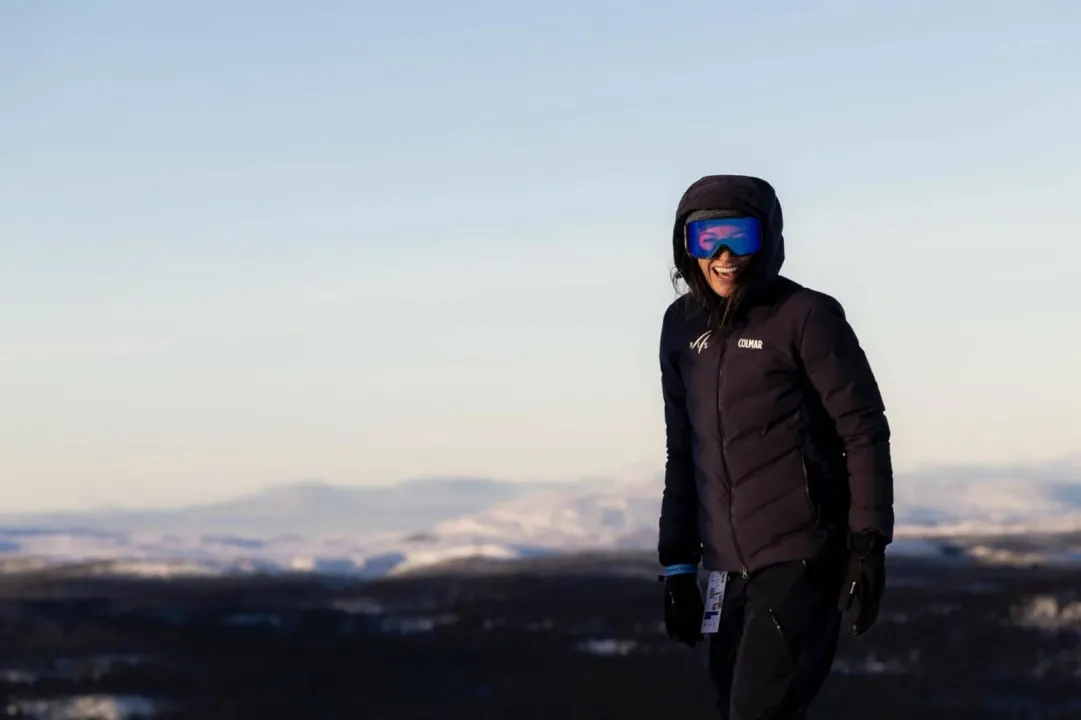
A versatile skier who competed at the Junior World Championships and then, while still very young, made one World Cup appearance (at the Lienz weekend that marked the beginning of Lara Gut’s adventure, and Federica Brignone’s too), before embarking on a career in communications, the professional from Veneto spoke about various topics. She is now head of external relations at the FIS.
Saturday 11 July 2026 16 minutes reading time
A former Italian national team athlete behind many FIS communication projects, she has built an important career in the delicate field of PR after a career on skis.
Giulia Candiago has worked inside the International Federation for years. The FIS dedicated a feature to her, presenting the ideas of the former highly promising versatile skier who made her debut at the 2006 Junior World Championships and then earned a chance in the World Cup. That would remain her only appearance in the top circuit, on 29 December 2007 in the Lienz slalom—the day after the debuts of two athletes who would become among the greatest in history, Federica Brignone and Lara Gut-Behrami (for whom she later became press officer).
A winner in the European Cup in 2007, in the Davos super-G, Giulia retired while still very young, in 2010, after a serious ankle problem and her departure from the national team. She immersed herself in her studies and opened the door to the world of television, working as a commentator for Sky and then on projects with RAI and Infront, before joining the FIS as media coordinator for the World Cup and now head of external relations.
“My motto? Try everything; sometimes discovering what you don’t want is just as valuable as discovering what you like.”
Candiago held a role that had not previously existed within the governing body of skiing, a position ranging from documentaries to podcasts and involving various figures, from athletes to television commentators. In the latest episode of the FIS series dedicated to female coaches and graduates of the FIS Women Lead Sports programme, the professional from Veneto reflects on how to build something from scratch and, above all, on the qualities she would recommend to every young person. “Every job I’ve done has taught me something, starting with being an athlete, even though at the time I didn’t consider it a job: it came naturally to me,” Giulia explains. “I’ve never been someone with a rigid career plan: I let instinct guide me and pursued the opportunities that truly inspired me.
When I stopped skiing, I completed a master’s degree, which really helped me understand what life was like outside professional sport.”
The former Italian team athlete’s career is founded on a very clear principle: “I always knew I wanted to work in sport, although at first I struggled to find a job because I was in England and finding work in this sector there was not easy.
I’ve always been rather stubborn and thought, “No, I want to work in the sports sector at all costs and I’ll try as many things as possible”; so, once I decided that something was not right for me, I looked for what might be right, always happy to challenge myself. If you move too quickly from one role to another, you don’t always have the opportunity to leave a real mark. It takes time to first be an athlete, then work in television, gain experience with Swiss-Ski as Lara Gut-Behrami’s press officer, where we created campaigns together, and then become a media coordinator for the FIS.”
Her relationship with athletes is fundamental: “I think I have an excellent understanding of their needs, which are always my main priority, but I try to find common ground between their needs and those of broadcasters, federations and sponsors. My goal is not to satisfy everyone—that’s impossible—but to understand each person’s priorities and find solutions that enable the entire system to function as well as possible.”
But what exactly does the role of head of external relations involve? “When I started, this profession did not exist, so there was no path to follow.
At first it intimidated me a little, then I realised that it was also a great opportunity. I could help define the role, develop projects that had not existed before and broaden my perspective. I really enjoy creating something from scratch and bringing different people together around a shared idea; one of my main projects last year was the documentary “On the Edge”, which I coordinated on behalf of the FIS throughout the season.
At the same time, I had the opportunity to launch “Your Sporting Voice”, a media training programme designed to help young athletes develop confidence and authenticity in front of the media. Together with the ongoing work on the World Feed, the development of podcasts in three disciplines and our broader digital and communications strategy, these projects have really helped me broaden my perspective.
Within the FIS, the situation is incredible and varied because every discipline has a very different culture, and adapting to each of them is fascinating.”
When Candiago is asked whether a recurring theme in the interviews with colleagues from the Women Lead Sports programme is cultural difference, Giulia confirms: “That’s exactly right, and you can’t impose rigid guidelines; it wouldn’t work. You can draw inspiration and ideas from other disciplines, but each one has its own culture, priorities and way of communicating. With this project, coordinated by course director Gabriela Mueller Mendoza, the most interesting thing was that we were a group of women with different backgrounds, personalities and levels of seniority.
One of the most important lessons I learned was that everyone, regardless of their role or experience, has moments of insecurity; we are all human beings with thoughts and feelings.”
There is no shortage of obstacles for women within federation structures: “Yes, it is still a male-dominated world, that is clear, but when I look at the FIS now, there are women—although not many—in leadership positions. I would point out that not many of them have families; this is another issue and is probably also linked to the way we live, with a generally lower birth rate because the economic situation is becoming increasingly difficult.
I was born in an era when my mother could stay at home because a single salary was enough: that is no longer the case, and the fact is that today, if you want to compete, or let’s say reach a certain position, you need support behind you. The challenge is not being capable, but having the right support system around you.
Leadership and parenthood should not be incompatible, but making them coexist still requires the right context, both professionally and personally.
In this respect, Kirsty Coventry (President of the IOC) is a great source of inspiration, because she has two children and ran for the presidency while pregnant; she completed the entire process during and after her pregnancy. In Scandinavia, for example, having children is encouraged and you have all the support you need; in Italy, from what I have seen, things are not exactly ideal in this regard, and maternity leave is five months, while even finding a nursery place is difficult.”
Her advice to young people on communication? Here it is: “Give visibility to others; that is what I am most passionate about and what motivates me most, because helping people discover the human stories behind elite sport is wonderful.
Every athlete has a unique journey and, if we manage to tell these stories well, fans will connect with sport in a completely different way. Every story deserves to be told, not just the most famous ones. The projects I have worked on, whether documentaries or podcasts, have given me a great deal of motivation because I love what we do and think we are privileged to be able to showcase the fantastic world of winter sports. So be curious; it is essential, always be curious!
You may be afraid, but try anyway: there is always time to say, “No, this isn’t for me.” Curiosity has probably been the most important driving force in my career.
Every opportunity I have had came from my willingness to ask questions, listen and try new things. I would encourage young people, especially young women, not to wait until they feel completely ready. Keep learning and don’t be afraid to step outside your comfort zone.
Also, although I don’t know whether it is a skill that can be developed, try to be socially intelligent, because this allows you to understand the people you are speaking to better, learn about their background and stories, and understand where they are coming from. For me, curiosity and social intelligence are truly important. I remember being invited to a school round-table discussion and, when I spoke about these topics, I received spontaneous applause. I thought, “Wow, I didn’t expect that,” but perhaps I had touched on some valid points.
Teenagers today are always glued to their phones, but perhaps through sport, spending time outdoors and taking part in outdoor activities, they could learn a great deal. Sport teaches you to better understand the environment you are in.”
© ALL RIGHTS RESERVED
Social media engagement
Latest in Sport invernali
Klaebo seeks to join Bjoergen at 114 World Cup wins. Mocellini and the Italian women start as outsiders: start list for the Ruka classic sprint
Saturday will see the second day of racing in the Finnish opening triple, with the classic sprint on the programme. Norway are targeting another victory, with Johannes Klaebo the overwhelming favourite (he has Marit Bjoergen's World Cup wins record in his sights). For Italy, the best card to play is Simone Mocellini, followed by Elia Barp and Davide Graz. Among the women, the Swedes are in the front row, but the young Italians will give it a try. Qualifying starts at 8:45 a.m. Italian time (9:45 local time), with the final stages from 11:15 a.m.
2