
Alpine Skiingthe interview
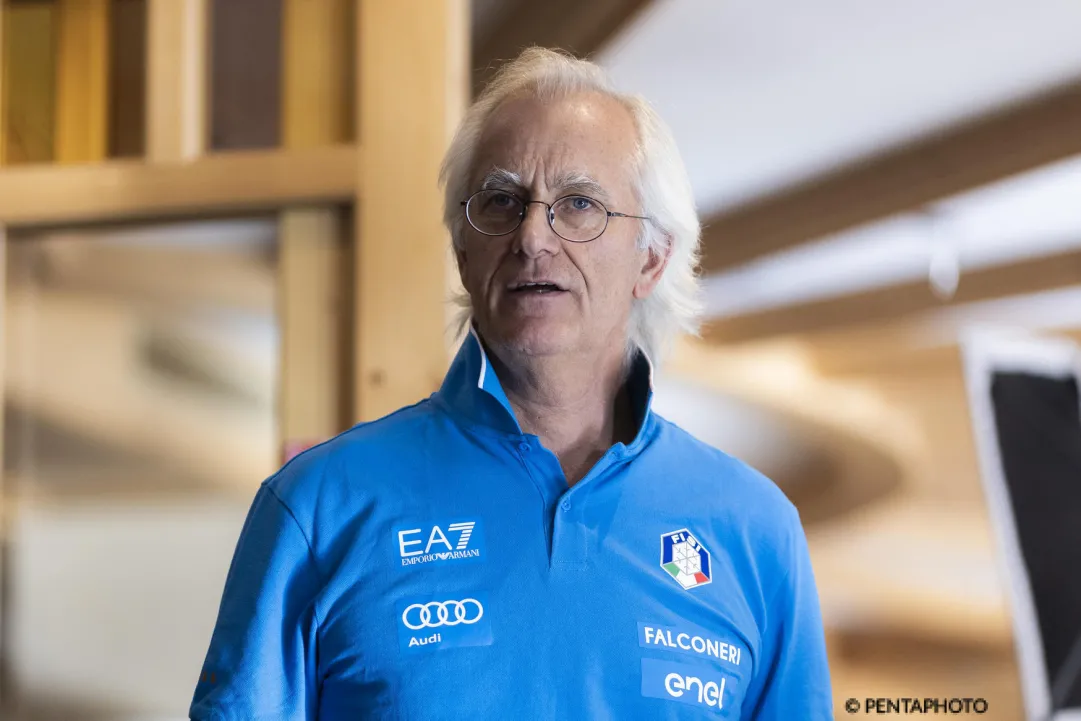

Gabriele Facciotti

Interviewed by Enrico Cattaneo for "Dribbling", on the sidelines of the Soelden opening event, the technical director of the women's national team spoke in particular about climate change and the work being done to make the sport sustainable. "Artificial snow has improved tremendously, including for the tourism sector. It is true that we use a lot of energy to produce it, but the same applies to many other areas, and the ski industry can move forward by doing things sensibly".
Wednesday 29 October 2025 4 minutes reading time
There are a thousand issues on the table when it comes to the future of skiing. Safety is undoubtedly the “hottest” topic in this historical period, but climate change and the sustainability of such a particular discipline remain extremely sensitive issues.
Before the Soelden races which, last weekend on the Rettenbach Glacier, opened the 60th edition of the World Cup, Gianluca Rulfi discussed the matter in detail with Enrico Cattaneo, who interviewed the technical director of the Italian women's national team for Rai Sport in an interview broadcast as part of the programme “Dribbling”.
The Piedmontese coach, who has won simply everything in recent years at the helm of the new “Pink Avalanche”, began his analysis by talking about the Rettenbach and its evolution: “A great deal of work has been done to level the area here in Soelden. You can see a different shape compared with what the glacier normally looks like; by now, all that remains is the leftover section where there used to be ice, with rocks and glacial moraine”.
What can be done at lower altitudes than those of glacier races? “Skiing adapts, and we have managed to do what Mother Nature cannot guarantee all the way through,” Rulfi replied. “Despite the green zealots, snow is made, and the water is not lost. We use energy, but there are systems for recovering it, so this industry, which creates many jobs, can continue. We may not be in perfect health, but when I think that energy is used to do everything, including cooling houses in summer, I do not see why we should not be able to make snow in winter”.
There has also been progress in the production of artificial snow itself: “It has improved a lot, and tourists can ski on it very well too, which was difficult in the past. Clearly, there are costs involved. For athletes, things have changed because the snow is highly performing, and perhaps the equipment has become so advanced and difficult to use—because the snow is more compact—that things have been taken to a certain extreme”.
Confidence for the future? According to the Italian technical director, “change is happening and we are not deniers, but human beings are made to adapt, and we are doing so as well as possible, sensibly”.
© ALL RIGHTS RESERVED
Social media engagement
Most read in Sport invernali
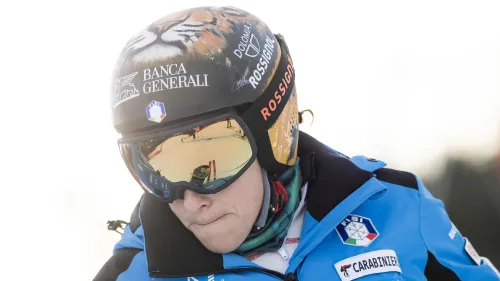
Fede, the shock announcement: Brignone retires. “My leg hurts too much, I’ve decided to end my career. I’ll open one last starting gate”
In a video released by FISI, the Italian champion announced that she had decided to call it a day: the two days on skis in Cervinia did not give her the answers she had hoped for, and Federica will compete in one final race to say goodbye to everyone. The most successful woman in the history of Italian skiing is leaving the sport.
34