
Alpine Skiingcurrent affairs
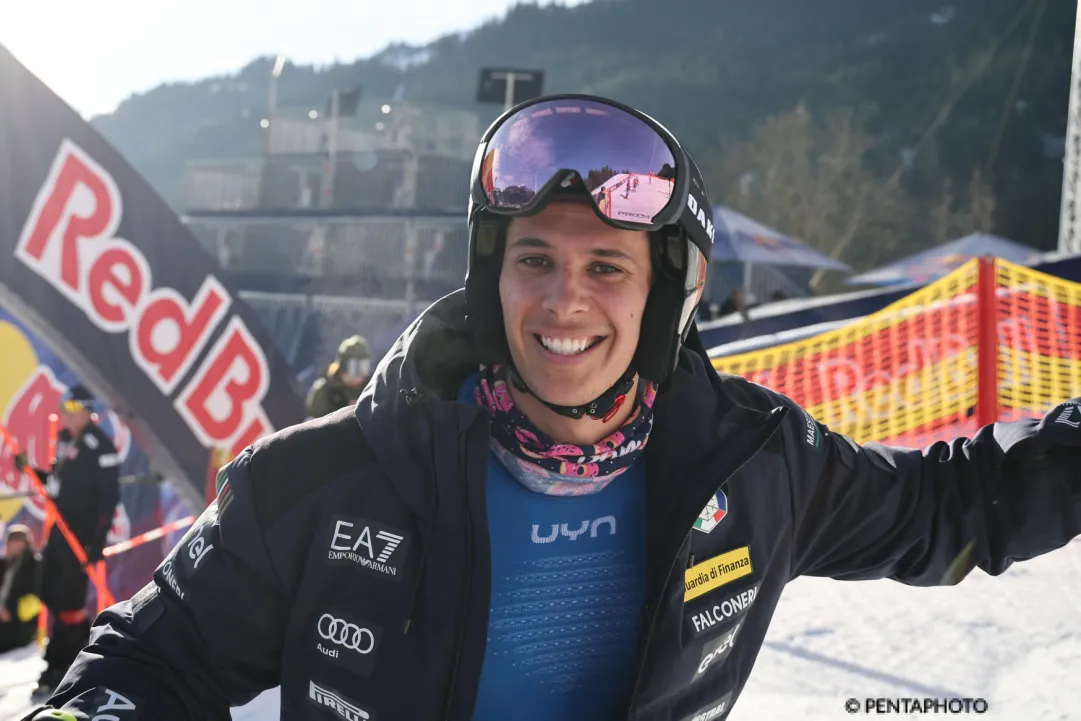

Pentaphoto

During the final episode of the year of "Road to Milano Cortina 2026", an important in-depth discussion on the issue, to prevent the tragedies of Matilde Lorenzi and Matteo Franzoso from happening again. Hosted in the studio by Sabrina Gandolfi, here are the views of Adolfo Lorenzi, Alessandro Garrone, Karen Putzer, Paolo De Chiesa, Xavier Jacobelli and lawyer Francesco Persio.
Tuesday 30 December 2025 14 minutes reading time
A veritable panel on safety, a programme almost entirely devoted to the most sensitive issue in the current affairs of elite skiing, following what we have experienced in recent years.
This is what Rai wanted to produce during the final episode of the year of “Road to Milano Cortina 2026”, involving many important guests in the studio brilliantly hosted by colleague Sabrina Gandolfi; from the voice of skiing, Paolo De Chiesa, to journalist Xavier Jacobelli, with Karen Putzer and Alessandro Garrone, president of Sci Club Sestriere, who in recent months mourned two stars, Matilde Lorenzi and Matteo Franzoso, after watching them grow in the organisation he has led for more than two decades.
Joining remotely were the father of “Mati”, Adolfo Lorenzi, and lawyer Francesco Persio, who in 1969, at just 12 years of age, suffered a very serious skiing accident and has devoted his life to the issue of safety.
“I have chaired S.C. Sestriere for 21 years, an organisation that Paolo also led”, said Garrone, referring to De Chiesa, at the start of his contribution. “We had these two extraordinary youngsters, Matilde and Matteo, and for them and all the athletes who ski, we have been working for some time, hoping that the regulations will keep pace with us. The equation is extremely complicated, I want to make that clear, because the operators of the facilities are involved, along with a thousand variables, and because there is a need to keep this sport moving forward in a country like ours, the richest in mountains, while safety must be the primary consideration.
The risk must be controlled, and work needs to be done on everything from athletes’ equipment to piste protection; I want to stress one point: it is clear that, in terms of obligations, competition is still considered completely differently from training, and that is not logical given that there are many more runs and courses precisely in preparation for the competition itself. It is more dangerous, and I do not understand why safety equipment such as cut-resistant suits and airbags should not have to be worn. The issue of costs is neither minor nor easy, but sustainable solutions can be found”.
Karen Putzer, one of the emblematic athletes of Italian skiing around the turn of the millennium, spoke about how the sport has changed since her era: “I have always loved speed. I know very well that as an athlete you are programmed to go as fast as possible and take risks. The issue is broad and we will never have absolute safety, but what I see as having changed is at least the athletes’ ability to have a say. It is absolutely a good thing that they are involved in the discussion” (also referring to Mikaela Shiffrin’s comments after the Semmering slalom, ed.).
I still remember that when I was racing, you could not say anything if the course was too difficult and you did not feel comfortable with it. The equipment? The problem is that there is still no discussion about changing the ski; it seems that next spring the FIS wants to intervene on ski boots. Speeds are now astonishing, and the difference is that skis used to be more difficult to turn, so you went more slowly in every discipline. In addition, you were accustomed through the European Cup to racing in extremely difficult conditions, whereas now most courses are perfect and that kind of situation is also missing”.
During the programme, an interview conducted by Simone Benzoni in recent days with Johan Eliasch was also broadcast. The FIS president described safety as “my absolute priority. I am convinced that much more can be done, and that is why we are working hard on specific projects. First and foremost, technology, with more advanced helmets, airbags and piste preparation, from danger spots to compressions and shaded areas. I assure you that we will do everything we can”.
“The tragedies of Matilde and Matteo forced skiing to stop” said Paolo De Chiesa, who will be our guest this evening on NEVEITALIA (from 18:30 with “Ghiaccio Verde”) to explore the issue further. “The Lorenzi case tells us that the minimum safety requirements were not met on that glacier; the course was too close to the edge of the piste, bordered by a wall of hard snow with the drop-off immediately alongside it. Unfortunately, skiing did not stop after 28 October 2024. If it had, the second tragedy, that of Matteo Franzoso, probably would not have occurred, had safety on training pistes been regulated.
These are two youngsters who died while training with the national team. The fence Matteo hit (during the speed racers’ training session at La Parva, Chile, last 13 September) would not have been there, or it would have been adequately protected, rather than with two nonexistent nets. And we know only too well that current equipment can betray you at any moment”.
Lawyer Persio analysed the principles governing safety. In February, he will publish a full manual containing all FIS and FISI regulations, published by Minerva and entitled “Sciare Sicuro”. “There can be no setting aside a culture of safety. The rules are those relating to Decree 40 of 2021, and the first fundamental principle is to enable skiers to ski safely along the entire route, with protection provided by the facility operator.
This is a general concept concerning all skiers, in the context of the current situation stemming from the first intervention in 2003 through a specific law (Italy is the only country in the Alpine region to have introduced it), which made clear the urgency dictated by the high number of accidents: 40,000 a year, compared with 3 million skiers.
At government level, we intervened with a commission, introducing compulsory insurance, as well as helmet requirements and much more”.
Adolfo Lorenzi, who lost Matilde 14 months ago, soon launched the ambitious Matilde Lorenzi Foundation project with his family. One year after his daughter’s death, he announced that the Bolzano Public Prosecutor’s Office was reopening the case: “We issued that statement (at the end of October, ed.) and we believe this step was necessary for two reasons”, he stressed live yesterday evening. “To honour Matilde, given the way things had been left, and because the foundation of our Foundation is to develop and improve safety for athletes during training.
That is the aspect that has been left behind; there are no regulations whatsoever. We started from a blank sheet of paper and believe it is possible to create a culture that is lacking, from instructors and coaches to piste operators, through specific training and the use of safety equipment”.
Xavier Jacobelli, a journalist with decades of experience at various levels, explored the issue of the investigation being reopened, analysing the defence memorandum submitted and showing that there had been “inconsistencies in the initial investigation, such as failing to hear some witnesses, including Matilde’s second coach; failing to carry out an autopsy; failing to seal off the accident site; and not even obtaining the video of the impact. How is all this possible?”.
“We are not expecting anything extraordinary”, Adolfo Lorenzi replied, “only for clarity to be brought to what happened and for the causes to be established. We are not looking for culprits; we believe that the public prosecutor’s office is now doing an excellent job, with the first evidentiary hearing.
Matteo Franzoso’s death caused us immense pain. To us, he was a member of the family, who grew up alongside Lucrezia at Sci Club Sestriere, and even now was always ready to share our activities with the Foundation. What saddened us was that the Matilde Lorenzi Foundation did not arrive in time. We now have eight people working full-time on the project launched with the Polytechnic University of Turin in collaboration with the Polytechnic University of Milan. We will not stop”.
© ALL RIGHTS RESERVED
Social media engagement
Latest in Sport invernali
Klaebo seeks to join Bjoergen at 114 World Cup wins. Mocellini and the Italian women start as outsiders: start list for the Ruka classic sprint
Saturday will see the second day of racing in the Finnish opening triple, with the classic sprint on the programme. Norway are targeting another victory, with Johannes Klaebo the overwhelming favourite (he has Marit Bjoergen's World Cup wins record in his sights). For Italy, the best card to play is Simone Mocellini, followed by Elia Barp and Davide Graz. Among the women, the Swedes are in the front row, but the young Italians will give it a try. Qualifying starts at 8:45 a.m. Italian time (9:45 local time), with the final stages from 11:15 a.m.
30