
Alpine Skiing2026/27 World Cup

GEPA Pictures

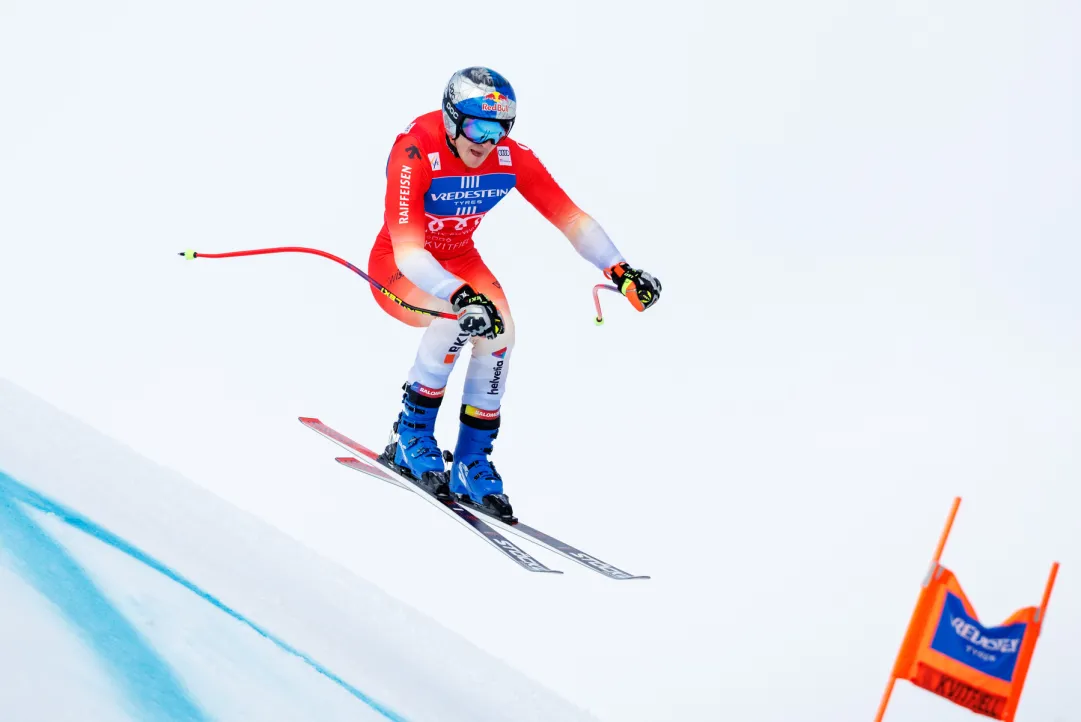
Complete calendars for an incredibly intense season are available on our website, with the World Championships at Crans-Montana scheduled for the first half of February: the traditional start on the Rettenbach on 24–25 October, followed by a host of comebacks (those of Bormio and Cortina are a given, as are Beaver Creek for the women and the Chamonix slalom for the men) and plenty of Italy, including the latest addition of Val di Fassa to confirm “La VolatA” among the 40 women’s races. We certainly won’t be missing a thing.
Thursday 16 July 2026 12 minutes reading time
There will be no fewer than 83 races in the 2026/27 World Cup, so on the day marking the countdown to “-100” days until Soelden, let’s analyse the calendars for both circuits, starting with the one that will open the season on Saturday 24 October with the giant slalom at the Austrian opener—the women’s circuit, which will feature 40 races in total.
There will be 12 giant slaloms, 10 slaloms, 9 super-Gs and just as many downhill races. After the race on the Rettenbach glacier, the slaloms in Levi (a great classic) on 14 November and Gurgl on the 21st will be confirmed, before the World Cup returns to Killington after a year’s break. At the “Superstar”, there will be two technical events (28–29 November), followed by the Canadian giant slaloms in Mont-Tremblant (5–6 December) and the speed-event opener at Beaver Creek.
From 11 to 13 December, following the 2024 experiment, the women will once again compete on the magnificent Birds of Prey course in two downhills and a super-G, while in Sankt Moritz there will be two super-Gs and a giant slalom from 18 to 20 December. The calendar year will then close with the Courchevel slalom, rescheduled for 22 December, and the new venue of Gosau (giant slalom and slalom on 28 and 29 December). The Austrian resort effectively replaces Lienz in what will subsequently be an alternating arrangement with Semmering.
In Salzburg state, during the great nights in Flachau, 2027 will begin with two technical events (including the new giant slalom on the course associated with Hermann Maier) on 4–5 January. Then comes the Val di Fassa weekend, which was added at the very last moment following the huge success of the 2026 edition of the speed races on “La VolatA” at Passo San Pellegrino. The venue will host a downhill and a super-G on Saturday 9 and Sunday 10 January.
Italy will be the main protagonist once again, with four more races in succession. Following the Olympic event, Cortina returns with a treble on the Olympia delle Tofane: two downhills and a super-G from 15 to 17 January, followed by the now-established and extremely demanding giant slalom on the “Erta” in San Vigilio di Marebbe on Tuesday 19 January. Jasna will then reappear, three years after its last staging, with the technical events at “Vlhova’s home” on 23–24 January, followed by those in Kranjska Gora, brought forward ahead of the Crans-Montana World Championships.
After the winter’s central event, the circuit will remain in Switzerland, as Lenzerheide returns to the calendar with two super-Gs on 20–21 February. Garmisch-Partenkirchen will host two downhills (27–28 February), followed by Soldeu, now a venue with plenty of space on the calendar, this time with a giant slalom and slalom on the “Avet” on 6–7 March. There remains a very small question mark over the facilities still to be completed in Narvik, listed as the final venue (and test event for the 2029 World Championships), with a downhill and super-G on 12–13 March, before the Sun Valley Finals.
The circuit will return to Idaho just two years after the conclusion of the 2024/25 World Cup, the one in which Federica Brignone won her second title. The two training days for the downhills will take place on 18–19 March, followed by the races on Saturday 20 March; the super-Gs are scheduled for Sunday 21 March, then, after a rest day, the women’s giant slalom on Tuesday 23 March, the men’s event the following day and the slaloms bringing the season to a close on Thursday 25 March.
The men’s World Cup calendar? There are 43 races scheduled (10 giant slaloms, 13 slaloms, 10 super-Gs and 10 downhills), beginning in parallel with the women’s circuit in Soelden (the men will start on Sunday 25 October), then moving on to Levi (slalom on 15 November) and Gurgl (Sunday 22 November), before heading to Copper Mountain, thousands of kilometres from Killington, for the confirmation of the first of the two US venues, with a super-G on 28 November and a giant slalom on the 29th.
Beaver Creek will once again feature a four-race programme, weather permitting in Colorado: from 3 to 6 December, two downhills, a super-G and the closing giant slalom are scheduled.
Then come the great Alpine classics, with the technical races in Val d’Isère (12–13 December) on the magnificent “Face de Bellevarde”, while the Italian slopes also exude history. The Saslong will again host a super-G and downhill on 18–19 December, followed on Sunday 20 December by the legendary giant slalom on the Gran Risa. Alta Badia will once again stage the slalom on Monday, just over 48 hours before the same discipline’s night race in Madonna di Campiglio, scheduled for 23 December for the unique spectacle of the 3Tre.
2026 will close with a downhill and super-G in Bormio (28–29 December, with training beginning on the 26th), less than a year after the Olympic races on the Stelvio. Attention should be paid to the two-month advance for the giant slalom and slalom on Kranjska Gora’s Podkoren-3 course: in Slovenia—where the dates so close to New Year have prompted some discussion and controversy—the races will take place on 2–3 January, followed by the Adelboden weekend with two more technical events at the temple of the “Chuenisbärgli”.
This is the most eagerly awaited period of the season, with the Wengen (15–17 January) and Kitzbühel (22–24 January) triptychs retaining the same programme: in succession, for the Swiss and Austrian stops, super-G, downhill and slalom. Schladming will then confirm its double night race on 26–27 January, with giant slalom and slalom on the Planai.
Before the World Championships, the Chamonix slalom returns to the calendar on 30 January, while the post-Crans-Montana schedule will be all about speed: a triple weekend comprising Garmisch-Partenkirchen (20–21 February), Saalbach (27–28 February) and Kvitfjell (6–7 March), always with the downhill before the super-G. Åre will then effectively replace the women’s stop during this period of the year, hosting giant slalom and slalom on 13–14 March ahead of the overseas Finals.
Mikaela Shiffrin and Marco Odermatt will respectively chase their seventh and sixth overall Crystal Globes—the Nidwalden native aiming for a sixth in a row, following in Hirscher’s footsteps toward the record of eight—but they will not lack challengers.
© ALL RIGHTS RESERVED
Social media engagement
More details

Tourist information
Canazei, Campitello di Fassa, Alba di Canazei, Vigo di Fassa, Pozza di Fassa, Passo Pordoi
SCARPONI, SCELTI DAI LETTORI

MAXISPORT
HEAD - raptor 60 bambino
102 €

2