
Alpine SkiingCurrent affairs

GEPA Pictures

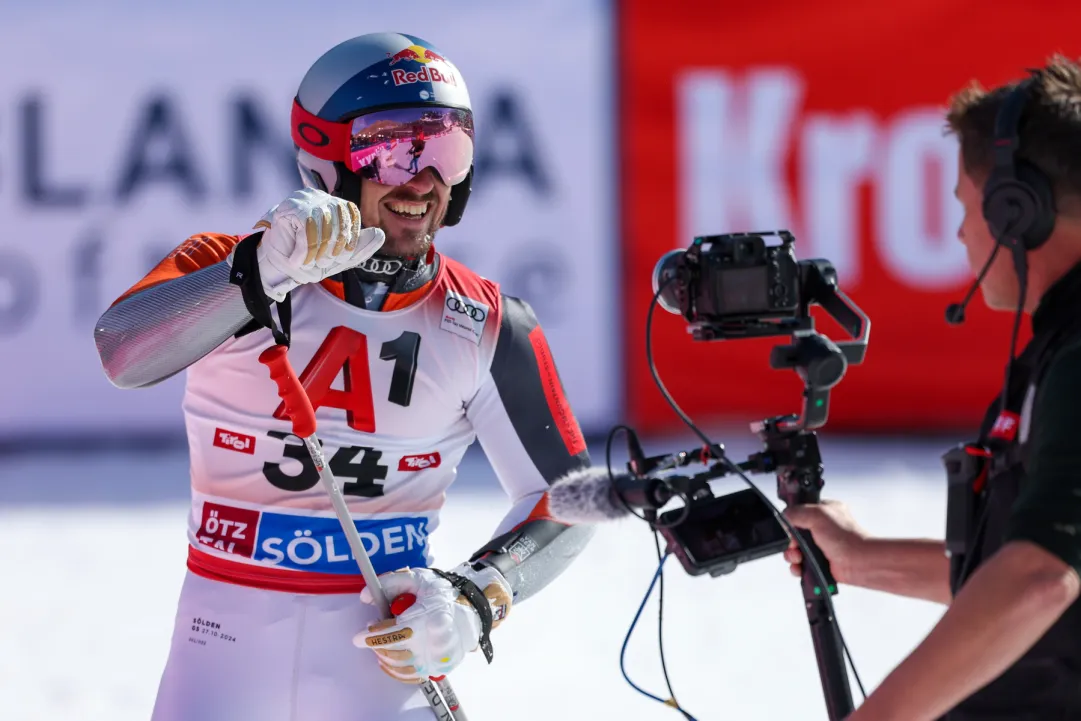
At today’s Council meeting in Geneva, the International Ski Federation set aside the possibility of holding an “additional” World Championships as early as 2028, while only the official stamp was missing on the granting of the wild card for Hirscher (and for Vonn, whom we will not see in 2026/27). Details have emerged of the worrying financial situation of the “governing body” of world skiing.
Thursday 1 October 2026 9 minutes reading time
Expected and perhaps even predictable decisions, but ones that were officially stamped during today’s long session in Geneva.
The FIS Council approved a series of matters at the end of the autumn meetings in the Swiss city, beginning with the delicate issue—discussed by several parties, with various unfavourable opinions—of potentially introducing an additional edition of the World Championships for the various disciplines every four-year cycle, thereby having a World Championships event every year except during the Olympic winter.
As expected, everything has been postponed until 2032, meaning there will be no World Championships as early as 2028: “The International Ski Federation Council assessed the feasibility of organising a pilot edition of the Additional World Championships as early as 2028,” the FIS statement reads. “For this assessment, members were presented with a feasibility study commissioned by FIS from an external consultant.
The analysis concluded that the timing of bringing the event to market, being too late, would have entailed risks to the quality of execution and limited its potential to generate value. In light of this result, the Council decided to abandon the idea of including an event of this type in the 2027/2028 calendar.
The same study reinforced the idea that winter sports could generate value and expand their reach by filling the gap in the global sporting calendar represented by even-numbered years, namely those without the Olympic Games. The FIS Council therefore reaffirmed its intention to continue exploring the possibility of filling this space with a major global event starting in 2032.”
There was then a detailed discussion of the disastrous accounts of the “governing body” of winter sports, with the legacy left by the Eliasch administration causing enormous concern, as already highlighted in the run-up to last June’s election in Belgrade, when Alexander Ospelt defeated the tycoon who had led FIS from 2021 to 2026 by just one vote. “At the beginning of the week, the new leadership presented the National Ski Associations (NSAs) with a complete and transparent report on the federation’s current financial situation,” the statement reads. “FIS President Alexander Ospelt and Secretary General Urs Lehmann (who is serving in this role on an interim basis until March 2027, ed.) presented the report together with Jean-Philippe Rochat, FIS Treasurer, and Martti Uusitalo, a member of the FIS Finance Committee and the FIS Council’s Financial Review Working Group.
The report not only provided member associations and other stakeholders with an updated picture of FIS’s financial situation, but also outlined the key factors that contributed to developments in recent years, as well as the measures planned to stabilise the federation’s financial position, namely to significantly reduce costs and generate additional revenue.
The data presented show that FIS remains solvent and debt-free, but also that the financial trajectory inherited from the previous administration is unsustainable. Between 2021 and 2025, for example, FIS’s net assets fell by 47%, from 81 million Swiss francs to 43 million. “FIS is at a critical juncture that requires immediate and decisive action,” Ospelt said on the matter. “The Council has approved all the necessary structural and financial measures, which are now being developed and implemented together with the National Federations and other partners.
The objectives are clear: to restore financial discipline, rebuild financial sustainability and protect the long-term future of FIS and the global winter sports ecosystem.”
There is also now official confirmation on the wild card issue, awaited above all for Marcel Hirscher’s return to racing. He meets the requirements, as does Lindsey Vonn, although we will not see her in 2026/27; in any case, she had already achieved results that meant she would not need to use the possibility of starting with bib 31 in every race. The detailed conditions have been approved under which athletes holding a wild card, according to the current World Cup rules (namely the Salzburg-born skier, who has competed for the Netherlands since 2024, and the American, together winners of twelve overall Crystal Globes), will be able to compete in 2026/27, starting immediately after the top 30.
Finally, there is Nordic combined, which FIS wants to safeguard after its exclusion from the 2030 Olympic Games. New ideas to be tested as early as this winter are based on six key principles. Specifically: cross-country skiing and ski jumping should ideally take place at a single venue; a total duration of around 60 minutes; the competition divided into heats with a final; the first athlete to cross the finish line is the overall winner; ski-jumping points remain relevant through to the final; and simpler rules with a more straightforward judging system.
© ALL RIGHTS RESERVED
Social media engagement
Latest in Sport invernali
Keisinger comes from behind to beat Maier, Amedeo Bagnis 6th in the skeleton World Cup opener in Altenberg
On the German track (without Olympic champion Weston), the Austrian was beaten by Felix Keisinger, with fellow home racers Nydegger and Jungk finishing 3rd and 4th. A solid performance from Piedmont native Bagnis; the women’s race is on Saturday. Mattia Gaspari takes a European Cup podium in Lillehammer.

486