
Alpine Skiingthe interview

2023 Getty Images

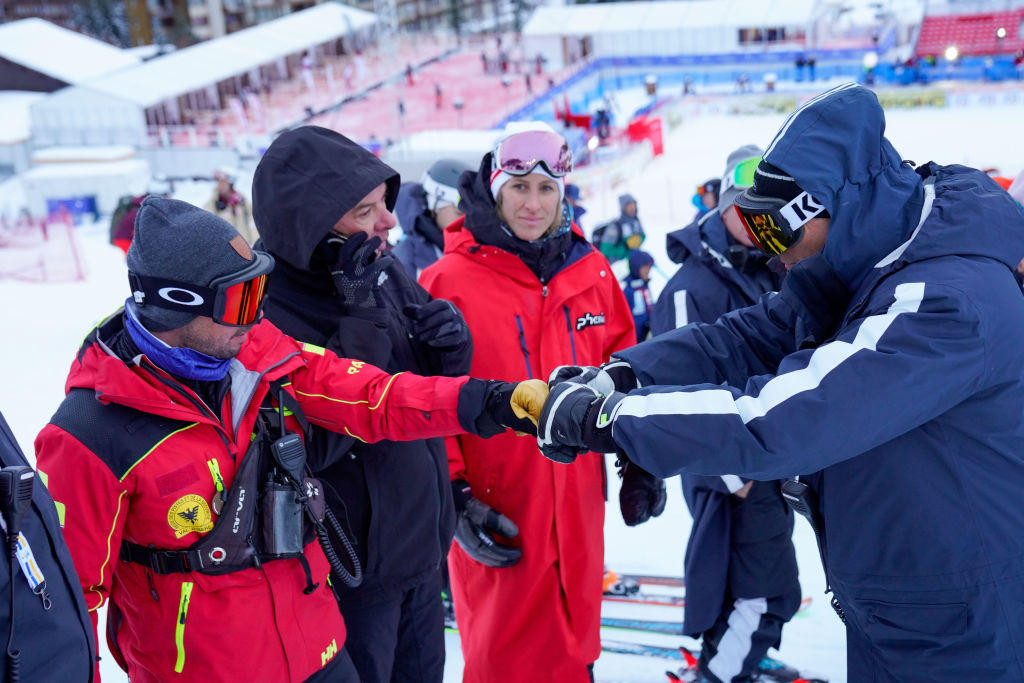
A double interview with the heads of the major circuits: the South Tyrolean, who leads the men’s side, discusses the issue of safety in depth, while the Tarvisio native (at the helm of the women’s circuit since 2019) highlights the great success of the team combined event, which will also debut at the Milano Cortina Games.
Thursday 20 November 2025 12 minutes reading time
The Italian race directors speak during the Olympic season, by now two leading figures in the alpine skiing world.
On one side is Markus Waldner, the long-standing head of all the men’s races; on the other, Peter Gerdol, who came from the European Cup to lead the top women’s circuit. FIS interviewed them on the same topics to take an in-depth look, as the World Cup enters the heart of the season and heads to Gurgl next weekend before flying to North America, at the key issues affecting elite skiing.
Copper Mountain is something of the major new addition this season, with two men’s races (November 27–28, super-G and giant slalom) followed by the women’s events on Saturday 29 and Sunday 30, with giant slalom and slalom. “It is important for us to have additional races in the United States,” Waldner said regarding the Colorado resort’s return to the World Cup. “With the loss of the speed weekend in Lake Louise, we missed a key event for the speed specialists at the start of the season.
Since everyone travels to Beaver Creek, adding Copper Mountain to the calendar made perfect sense. Even more so because all the teams are there anyway to train, and holding a super-G and a giant slalom at this stage also helps balance the disciplines.”
“It is a new and exciting venue for us at World Cup level,” Gerdol added on the subject of Copper, “even though it is a traditional training site for the teams and has hosted Nor-Am events for a long time. We will go there this season because Killington is taking a year off to renew its chairlift and snowmaking system. We are confident that the organizers will put on fantastic races during Thanksgiving week (Thursday, November 27, ed.). Setting up an event of this kind is hard work, but we are certain they will do an excellent job.”
In the autumn, following the tragedy of Matteo Franzoso’s death, safety was at the top of the agenda during the various meetings at FIS headquarters. A plan was added—with the homologation of training slopes remaining the crucial issue—to measures already adopted, such as the mandatory use of airbags and cut-resistant base layers, as well as the ban on rigid shin guards.
What was the reasoning behind these changes? According to Gerdol, “safety has always been, and remains, FIS’s highest priority in alpine skiing. The measures introduced this season are the result of several years of discussion and development. The airbag system, for example, was ready last year, but it will become mandatory only from this season onward in World Cup and European Cup speed events.
Similarly, cut-resistant base layers have been in preparation for some time and, since most manufacturers are now able to supply compliant products, their use has become mandatory. Some federations have introduced them for national-level races as well. The regulations concerning tibial protection are part of a long-term project, since they also affect ski-boot design—for example, boot height. We are currently assessing how to better define ski boots in terms of technical specifications, which will form the basis for the next step.
From next year onward, we expect to implement more comprehensive rules on this matter.”
“We have been working for many years to improve safety, but perhaps in the past the issue was not addressed with the same openness as it is today,” Waldner stressed. “Everyone wants a safer sport and, given the number of accidents and injuries we have seen, our goal is to constantly find better solutions and equipment to reduce the risks.
Airbags, for example, have been under development for a very long time. Many athletes already use them in training and competition. Over the years, the system has evolved through thousands of data points, helping refine the algorithm so that the airbag activates at the right moment. Now that the product has reached a high level of reliability, it has become mandatory from this season onward: an important step forward.
Of course, technology will continue to evolve. Regarding cut-resistant base layers, we have seen more and more athletes suffer serious cuts after accidents, even though such injuries can easily be avoided. This measure is one of the simplest yet most effective steps toward improving safety. A clear example was Kilde’s accident in Wengen two years ago: he was not wearing the base layer, and the cut to his calf was severe. As for rigid shin protection, the issue is more complex.
The current equipment setup is extremely aggressive, and this has caused several dangerous accidents. When the skis unexpectedly catch an edge at high speed, it is almost impossible to recover. The aggressiveness of the setup involves many elements, and experts need more time to assess the situation, propose new solutions and work with ski manufacturers to update the regulations governing materials.
But such changes cannot happen overnight: ski companies invest enormous amounts of time and money in their products, so any adjustment requires planning. That said, removing external rigid protectors was an immediate and realistic step, since they are not an integral part of the boots or skis, but rather an additional component. Removing them helps reduce overall aggressiveness and improve safety.
These three steps are, we hope, only the beginning. Safety remains FIS’s absolute priority. Without healthy athletes, our sport cannot exist.”
Waldner and Gerdol said they were confident about the preparation of everything connected with the Olympic races. After all, the venues in Bormio (for the men) and Cortina (for the women) are long-standing World Cup stops. Milano Cortina 2026 will also feature the new team combined event, already seen at last February’s World Championships in Saalbach. What do the race directors think? “It is a competition format that was a great success at the World Championships, and we were very pleased with the outcome,” Gerdol analyzed. “It confirmed our expectations: many top-level athletes showed interest in competing after the decision to replace the Alpine Combined with the Team Combined following Beijing 2022.
Both technical-event specialists and speed specialists are always enthusiastic about fighting for a medal, and we believe this format is well suited to major events.”
“I think it is a fantastic format,” Waldner said in turn. “What we saw in Saalbach was very positive: athletes, fans and the media enjoyed themselves. Bringing together skiers with a high level of technical ability makes the event exciting and unpredictable. It will be fascinating to see how each federation forms its pairs and who wins the first Olympic gold medal in this discipline. I believe everyone is motivated to secure a place in this new event.”
© ALL RIGHTS RESERVED
Social media engagement
Latest in Sport invernali
Hector to open the Killington giant slalom, with Scheib third, followed by Rast and Shiffrin: 11 Italians to start, led by Della Mea
The start list for today’s giant slalom on the "Superstar" (first run at 3:30 p.m. CET, second at 6:30 p.m.), in conditions expected to be challenging and with the last winner in Vermont wearing bib 1, while Moltzan will start sixth in red after her teammate, who is seeking her first victory in this race following the accident two years ago. Overall leader Lara Colturi, on a course set by her father Alessandro, has bib 9, while Della Mea has drawn 13. After the technical break will come Goggia (16), making her season debut, and Zenere (bib 18), with Bassino bib 29 and Pirovano and Trocker following outside the top 30.
46