
Nordic SkiingVal di Fiemme

Newspower.it

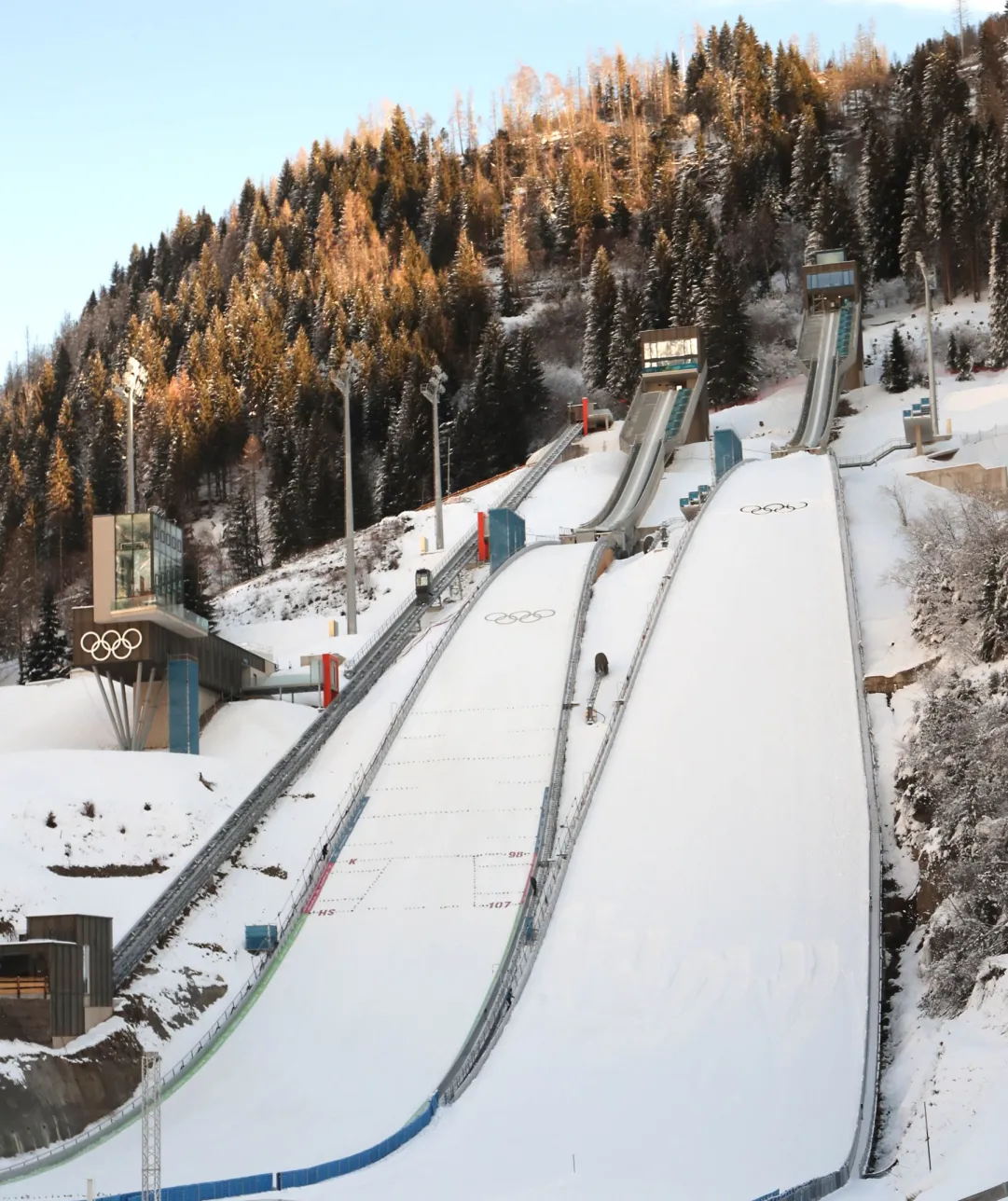
The Trentino valley, which will play a leading role in the Nordic events at the Milano Cortina 2026 Games, is also deeply disappointed by the IOC’s decision regarding a historic discipline. The World Cup will take place between Predazzo and Lago di Tesero in December, while the Youth Olympic Games will be held there in 2028, continuing the five-ring legacy. From Friday, the Italian ski jumpers will be training on the hills at the Giuseppe Dal Ben stadium.
Thursday 9 July 2026 9 minutes reading time
The decision taken by the IOC last Tuesday to exclude Nordic Combined from the programme of the 2030 Winter Olympic Games in the French Alps has caused deep dismay throughout the skiing world. The position taken by the International Olympic Committee has met with firm opposition from the FIS, FISI and an entire movement that regards this discipline as one of the historic pillars of winter sports.
The shock is even greater in Val di Fiemme, an area that for decades has represented one of the world capitals of Nordic Combined and which, just a few months ago, successfully hosted the discipline’s final Olympic events. There was also hope here of finally seeing the women’s event make its Olympic debut, having already featured on the World Cup and World Championship calendars. Instead, the IOC has chosen the opposite path: removing the entire discipline from the Alpes 2030 programme.
Yet the figures tell a different story. In a recent statement, the International Ski and Snowboard Federation highlighted that last season the social media channels dedicated to Nordic Combined reached more than 80 million people, an increase of 262% compared with the previous year. Interactions almost doubled, reaching 1.8 million, while followers increased by 50%, surpassing 112,000. During the Olympic Games, with the events held in Val di Fiemme, and despite not benefiting from the most favourable weekend time slots, content dedicated to the discipline reached 12.1 million users, generated more than 200,000 interactions and attracted over 3,000 new followers.
Val di Fiemme, faithful to the commitments made in the name of the Olympic legacy, is nevertheless looking ahead. From 11 to 13 December, it will host three days of men’s and women’s World Cup competition, showcasing the new Olympic ski-jumping hills in Predazzo and the Lago di Tesero Cross-Country Stadium. A legacy that the IOC has always identified as one of the fundamental objectives of organising the Games, and which Val di Fiemme and Trentino continue to turn into reality. “The IOC’s decision really hurts,” stresses Pietro De Godenz, president of Nordic Ski Val di Fiemme, “especially those of us who have always believed in, and will continue to believe in, Nordic Combined.
There has been a great deal of talk about avoiding white elephants, and we have always followed this path: the Olympic ski-jumping hills in Predazzo, the result of major investments by the Autonomous Province of Trento, will continue to operate by hosting international competitions and training camps. First, we were denied the chance to see women’s Nordic Combined at the Games; now we discover that the last Olympic medals in this discipline will be those awarded in Val di Fiemme. It is a truly bitter prospect.”
Federation president Flavio Roda, who was recently re-elected to the FIS Council, had also spoken harshly in recent days about the IOC’s decision (HERE on NEVEITALIA for the analysis), but the decision carries even greater weight when one considers the historic importance of Nordic Combined, which has featured continuously at the Winter Olympic Games since the first edition in Chamonix in 1924.
On that occasion, the programme included Nordic skiing (cross-country, ski jumping and Nordic Combined), the military patrol—an ancestor of biathlon—figure skating and speed skating, bobsleigh and curling as a demonstration sport. Alpine skiing would enter the Olympic programme only in 1936. After more than a century of Olympic history, the exclusion of Nordic Combined therefore represents an unprecedented rupture. “The IOC has ignored history,” concludes Pietro De Godenz, “with a decision that we consider profoundly wrong.
Val di Fiemme will nevertheless continue to do everything within its power to support and promote this discipline. We hope that the International Olympic Committee will reconsider its position and return Nordic Combined to the programme of the Salt Lake City 2034 Games.”
Val di Fiemme’s commitment does not end with the World Cup, which is part of a multi-year project. In 2028, the area will host the Dolomiti Valtellina Youth Olympic Games (YOG), where Nordic Combined will feature as usual, for both men and women.
For Val di Fiemme and Trentino, the Olympic legacy is not a slogan but a concrete commitment that continues to live on every day—one that, however, the IOC seems not to recognise at all.
In the meantime, from Friday 10 to Tuesday 14 July, the Italian ski jumpers will return to training in Predazzo: on the hills at the Giuseppe Dal Ben stadium, under coaches Martin Bayer and Sebastian Colloredo, Alex Insam, Giovanni Bresadola, Francesco Cecon and Maximilian Gartner will be hard at work.
© ALL RIGHTS RESERVED
Social media engagement
Latest in Sport invernali
Klaebo seeks to join Bjoergen at 114 World Cup wins. Mocellini and the Italian women start as outsiders: start list for the Ruka classic sprint
Saturday will see the second day of racing in the Finnish opening triple, with the classic sprint on the programme. Norway are targeting another victory, with Johannes Klaebo the overwhelming favourite (he has Marit Bjoergen's World Cup wins record in his sights). For Italy, the best card to play is Simone Mocellini, followed by Elia Barp and Davide Graz. Among the women, the Swedes are in the front row, but the young Italians will give it a try. Qualifying starts at 8:45 a.m. Italian time (9:45 local time), with the final stages from 11:15 a.m.
2