
Nordic Skiing2025/26 World Cup

Newspower.it

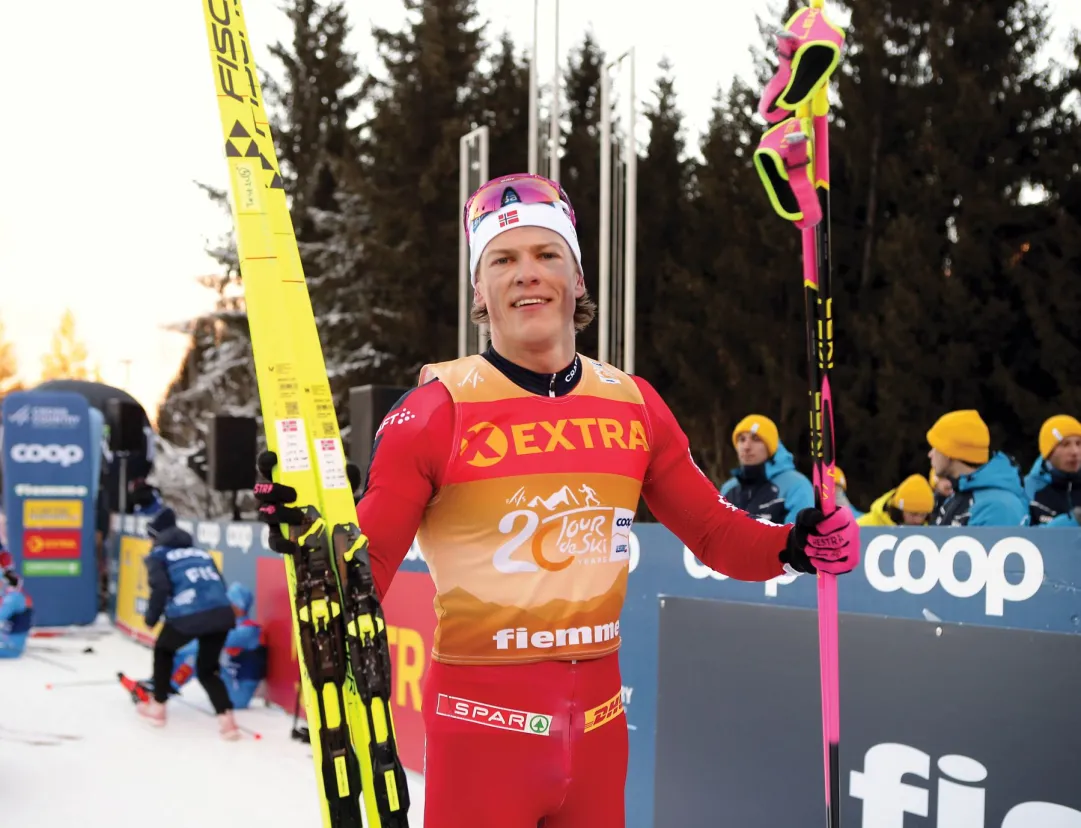
Another season was marked by Norwegian dominance (unfortunately, an expected outcome), with Johannes Klaebo as the undisputed star, literally winning everything, from his sixth overall Crystal Globe to the sensational five-ring clean sweep in Lago di Tesero. Only three times did the Viking powerhouse fail to claim victory, and we are delighted to remember the last of them, as it delivered an emotional final triumph to Chicco Pellegrino. An extremely positive winter for the Italian cross-country team, which, together with France and Savelli Korostelev, tried in some way to challenge Scandinavian supremacy.
Thursday 26 March 2026 11 minutes reading time
The 2025/2026 men's World Cup was yet another Norwegian show, much like what happened throughout the entire Olympic cycle that led to the Milano Cortina 2026 Games. Needless to say, Russia's prolonged absence once again paved the way for the Scandinavian powerhouse to establish this apparently unassailable monopoly.
Without a doubt, the MVP was Johannes Hoesflot Klaebo, who, following his feat of winning six gold medals in six events at the 2025 Trondheim World Championships, also dominated the Olympic competitions on the snow of Lago di Tesero, with six victories in as many events. In addition, J.H.K. swept aside the competition in every round of the top circuit, winning the overall World Cup (the sixth of his career, equalling Bjorn Daehlie's record), the sprint World Cup (his eighth) and the distance World Cup.
The victory tally stopped at fifteen, and had it not been for his disastrous fall in the Drammen sprint, he would most likely also have overtaken Marit Bjoergen in the all-time ranking of World Cup victories in Olympic winter sports (Klaebo currently has 113 wins, while his compatriot has 114), already before next season, which, barring spectacular setbacks, will be the one in which he sets this new record.
In the sprints, a discipline almost completely cannibalised by the Norwegian superstar over the past decade, only the two on-course "defeats" in Davos and Drammen stand out, both following falls. To understand even better just how dominant this athlete was—he also, of course, won the 2026 Tour de Ski—it is enough to look at the statistics for the ratio between victories and events contested: Klaebo took part in 24 individual events, winning 15 of them, for a percentage slightly above 62%, an astonishing figure.
Norwegian supremacy was even more embarrassing this season when the entire calendar is taken into account: only three athletes outside the Scandinavian dream team managed to stand on the top step of the podium. Frenchman Lucas Chanavat in the Davos sprint, American Gus Schumacher in the much-criticised 5 km heat mass start at the Tour de Ski, and, of course, Italy's leader Chicco Pellegrino in the Lake Placid sprint. Out of twenty-eight individual events, therefore, twenty-five victories went to the Norwegians: after Klaebo, clearly out in front with fifteen wins, we find Einar Hedegart, also boasting an extraordinary victories-to-starts ratio, with three, followed by two wins each for Mattis Stenshagen and Martin Nyenget, and one victory apiece for Harald Amundsen, Lars Heggen and Ansgar Evensen.
Norway monopolised not only the top spots, but also every other place on the podium: of the eighty-four available top-three finishes, only twenty-one were achieved by athletes from other nations. Italy played its part in this particular ranking thanks to the three podium finishes—including last Saturday's extraordinary victory—by the 1990-born skier from Nus, who had already come close to winning the skating sprints in Davos and Oberhof. This season, nine different nations reached the top three at least once in a World Cup event.
The only teams that tried, albeit unsuccessfully, to trouble the Norwegians were France (especially at the Games, with a deluxe-version Mathis Desloges capable of winning three silver medals) and Italy. The improvement of the Italian team in the distance events is undeniable, with Elia Barp, Davide Graz and Martino Carollo raising the performance level considerably, recording numerous top-10 finishes and also narrowly missing the podium, with the 2002-born athlete from Belluno in the 10 km classic at Oberhof.
In Pellegrino's farewell winter, capped by two Olympic bronze medals in the relay and team sprint, won alongside the teammates mentioned above, the progress of the future leaders of the Italian cross-country team can only make us optimistic about the coming seasons. It is also worth noting the return of sprinter Simone Mocellini to an excellent level, coming close to returning to the podium.
The United States enjoyed a positive season, with a victory and a podium finish for Gus Schumacher, as well as the Olympic medals won by Ben Ogden, one of them alongside the Alaskan born in 2000. In the sprints, we saw the first top-three finishes for promising Czech Jiri Tuz and Austrian Benjamin Moser, who are increasingly appearing near the top of the rankings. It was a winter to forget for Sweden, with an invisible William Poromaa and Edvin Anger suffering a crisis during the two weeks of Olympic competition.
The sole bright spot was Anton Grahn, who managed to secure two sprint podium finishes, while Alvar Myhlback, who became the youngest athlete ever to reach the podium in the top circuit, somewhat lost his way in the second half of the season after an excellent start.
A separate mention goes to Russian Savelii Korostelev, who competed as a neutral athlete after returning to international competition following the FIS's opening-up at the beginning of December. The 2003-born athlete from Perm managed to reach the podium already (after an Olympic 4th- and 5th-place finish), taking 3rd place in the 10 km classic in Lahti, and showed that he can comfortably compete with his Norwegian rivals. His age is on his side and, considering his very limited international experience, he has enormous room for improvement, which will probably bring him closer to Klaebo in the coming seasons.
His performances show how different cross-country skiing could have been over the past four years had the Russian team been present. The hope—which becomes less and less firmly held as time passes—is that the Russians, with Alexander Bolshunov at the forefront, can return to the tracks next winter, increasing the spectacle in a sport where, unfortunately, in recent seasons we have witnessed veritable Norwegian championships (just look at the top eight in the Holmenkollen 50 km).
Of course, the FIS will also have to find attractive solutions, perhaps reintroducing some pursuit races and eliminating tedious mass starts that are decided predictably over the final 2 km, or entirely anonymous events such as the heat mass start experiment. The coming months will certainly be decisive for the future of this discipline in many respects.
© ALL RIGHTS RESERVED
Social media engagement
Most read in Sport invernali
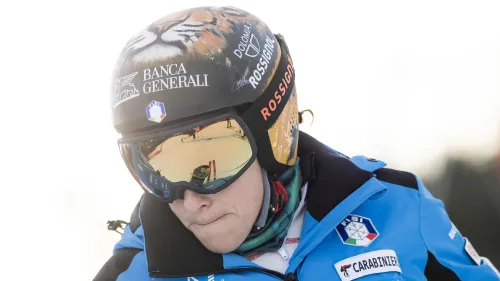
Fede, the shock announcement: Brignone retires. “My leg hurts too much, I’ve decided to end my career. I’ll open one last starting gate”
In a video released by FISI, the Italian champion announced that she had decided to call it a day: the two days on skis in Cervinia did not give her the answers she had hoped for, and Federica will compete in one final race to say goodbye to everyone. The most successful woman in the history of Italian skiing is leaving the sport.
2