
SwitzerlandCableway Finance
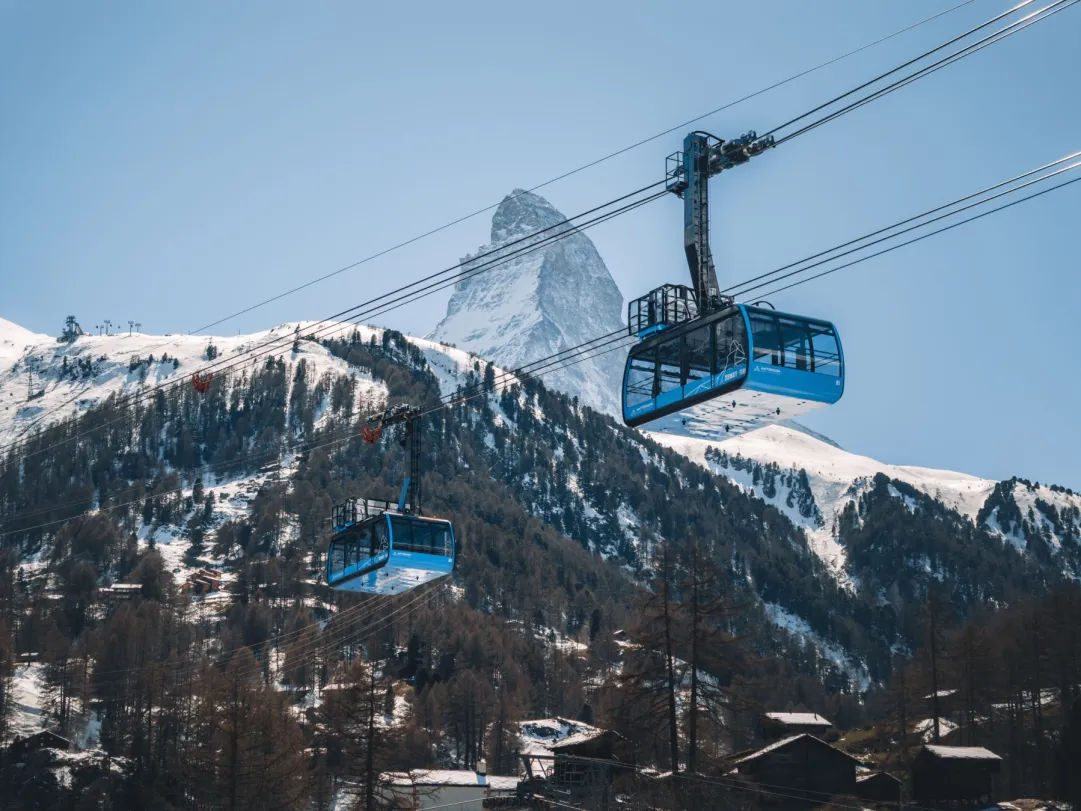

Zermatt Bergbahnen

The association representing Swiss cableway companies has drawn up a provisional assessment of the season’s performance through 31 March 2026. Despite a 4% decline compared with the particularly high visitor numbers recorded last winter, attendance was up 11% against the average of the last five seasons.
Thursday 9 April 2026 7 minutes reading time
The mild, snow-poor start to winter posed a real challenge, especially for smaller resorts. The decline in skier numbers compared with last winter was particularly evident up to mid-January, at -14%. The second half of the season, which was more favourable in terms of snow conditions, instead saw the overall decline in first-time entries limited to -2%.
March was characterised by sharp contrasts: the first third of the month was spring-like and mild. Conditions changed in the second half of the month, with heavy snowfall allowing many resorts to extend the season. However, the number of first-time entries in March was 11% lower than in the same month of the previous year. In addition to the weather, the differing holiday calendar also had an impact, as this year the holidays took place largely in February.
An analysis of visitor numbers by altitude for the current season confirms the expected trends: winter was particularly challenging for ski areas below 1,500 m above sea level, which recorded an average 7% decline in attendance compared with the reference period. Areas between 1,500 and 2,000 m above sea level were down 5%. Destinations above 2,000 m above sea level remain close to the previous year's level, with a slight decline of 1%.
This analysis also confirms regional differences. Regions with high-altitude ski areas are showing a performance in line with last winter, while those at lower altitudes are experiencing a decline. At the end of March, for example, Valais was at the same level as the previous winter, 2024/25, while the ski areas of eastern Switzerland recorded an average decline of 10% (further details in the image below).

Adverse weather conditions during the March weekends had a particularly marked impact on ski areas near major cities, which depend heavily on day visitors. An analysis of customer profiles in the individual regions shows that resorts with a majority of guests staying in accommodation or with a balanced customer mix managed to maintain the previous year's level (-0.2%), while resorts catering mainly to day-trippers recorded a 5% decline.
Although the comparison with the previous year shows an overall decline in visitor numbers, the season's overall outcome is positive compared with the five-year average, which also includes a winter marked by the pandemic (but with less strict restrictions than in Italy). First-time entries were 11% above this average. However, significant regional differences can be seen: while eastern Switzerland recorded a 2% increase, growth reached 22% in Ticino.
According to Berno Stoffel, director of Swiss Cableways, investments in snowmaking were crucial in ensuring a smooth start to the season and limiting the decline in visitor numbers. The abundant snowfall in February and March, meanwhile, made a significant contribution to the appeal of the offer in the second half of the season.
While many winter destinations end the season between the end of March and Easter or the following weekend, some resorts will continue operating beyond the end of April. At the beginning of May, Swiss Cableways will announce the final visitor figures for the entire winter season.
© ALL RIGHTS RESERVED
Social media engagement
Most read in Regioni
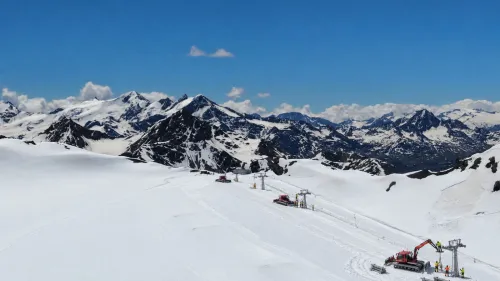
Passo dello Stelvio: the new Geister 1 and 2 ski lifts open today
After more than three years of waiting and a challenging construction project on the glacier, the two ski lifts replacing the previous installation, which operated until July 2023, opened today. The opening of the slopes and lifts at Passo dello Stelvio is currently scheduled through 1 November.
2