
SwitzerlandCableway Finance

YouTube

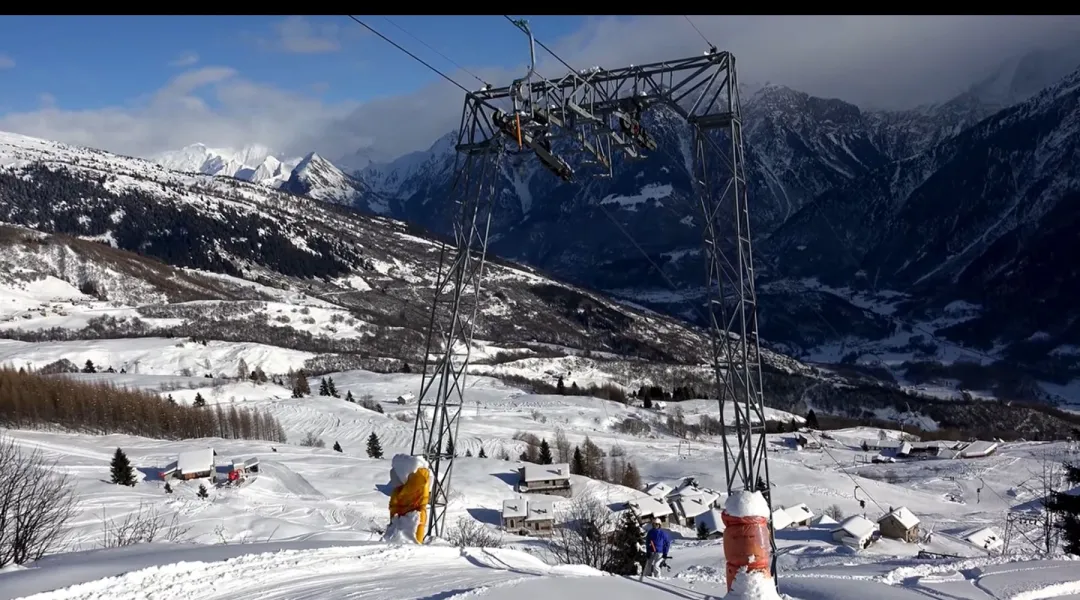
The resort in the Blenio Valley is one of Ticino's major ski areas. For over 20 years, its operations have been guaranteed by the commitment of the Municipality of Acquarossa and the Amici del Nara, a group of small shareholders who support the resort through their volunteer work. This major commitment does not conceal the uncertainties surrounding the future: snow is often scarce, while the investments needed to modernise the lifts and snowmaking systems are considerable. The documentary retraces the history of the resort, from the enthusiasm of the 1960s and 1970s to the events of today.
Wednesday 14 January 2026 7 minutes reading time
The documentary, broadcast as a first showing last Sunday in the Storie programme of RSI - Radiotelevisione svizzera italiana, provides a picture shared by many other Alpine ski resorts located between 1,000 and 2,000 metres. Following the heavy snowfalls and enthusiasm of the 1960s and 1970s, declining precipitation and competition from larger, more easily accessible ski areas have progressively put the resort under pressure. For 20 years, following the latest bankruptcy of the operating company, it has survived thanks to the constant financial support of the Municipality of Acquarossa and the commitment of Amici del Nara SA, the operating company, in which the shareholders and members of the Board of Directors work alongside the employees, providing their services free of charge and on a voluntary basis. This commitment to the area guarantees the ski resort's economic survival and preserves its role as a driving force for the socio-economic development of the Blenio Valley, as well as its function as a meeting and gathering place for its visitors.
The operation of the lifts guarantees the survival of the mountain huts scattered across the various high-altitude alpine pastures: kept in full working order, during the peak season they provide accommodation for a significant number of people.
The development of Nara's lift infrastructure began at the end of the 1960s and, within a few years, took on its current configuration, spread across two hubs. The first is Cancorì, which can be reached by the first chairlift ascending from Leontica and where the Lagunc and Fontanelle surface lifts, as well as the beginner's conveyor lift, are located. From Cancorì, a second chairlift reaches the 2,000-metre-high Alpe di Nara, where a second surface lift is located. The ski area also has three refreshment facilities managed by Amici del Nara.
The development project for the ski area was supposed to be more extensive, incorporating a major real-estate and hotel investment, but it was halted in 1975 following the large avalanche that broke away from Pizzo Caslett during the night between 5 and 6 April. The event caused five deaths and left two people injured, who were rescued after surviving for 15 hours under the avalanche. The second chairlift and several buildings were also extensively damaged and completely destroyed.
In recent years, Nara has survived thanks to the passionate commitment of Amici del Nara and the financial support of the Municipality of Acquarossa, which, also thanks to additional subsidies from the Canton of Ticino, has made it possible to keep the lifts operating both in winter and summer.
The future, however, remains uncertain: the investments needed to modernise the lifts, which have now been operating for half a century, are considerable and will require further financial commitment from public authorities. Added to this is the lack of a state-of-the-art snowmaking system: a major investment that would allow the resort to open more regularly, generating a steadier and more consistent flow of revenue and providing greater opportunities to recover its annual fixed operating costs.
In recent years, the resort has also launched a strategy of extending its activities beyond the winter season by creating a network of summer mountain-bike trails. At present, however, the routes are little used and the revenue generated so far has not made a significant difference.
As explained by Matteo Milani, President of Amici del Nara, keeping Nara operational is fundamental to the vitality of the peripheral areas of the Canton of Ticino, and the hope is that a way will be found to ensure its sustainable and lasting development, avoiding its closure.
© ALL RIGHTS RESERVED
Social media engagement
Most read in Regioni
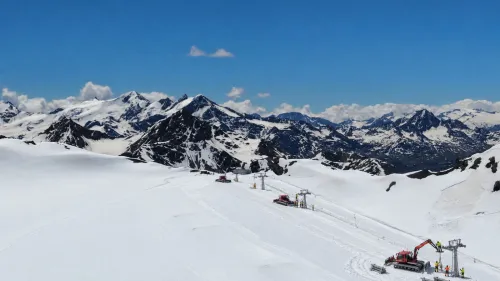
Passo dello Stelvio: the new Geister 1 and 2 ski lifts open today
After more than three years of waiting and a challenging construction project on the glacier, the two ski lifts replacing the previous installation, which operated until July 2023, opened today. The opening of the slopes and lifts at Passo dello Stelvio is currently scheduled through 1 November.
14