
TourismCableway Finance

ANEF

“Vertical Rhythm: the mountain system in motion”. At the heart of the discussions at the assembly, held on 17 October, were the growth of summer tourism, the role of snowmaking as a strategic resource and constructive dialogue with institutions for an increasingly sustainable and competitive mountain environment. In this latter area, anticipation is growing for the imminent publication of the rankings for the 2024 Cableway Lift Facilities Fund, through which the Ministry of Tourism will award non-repayable grants for new investment projects in the Italian mountains.
Monday 20 October 2025 18 minutes reading time
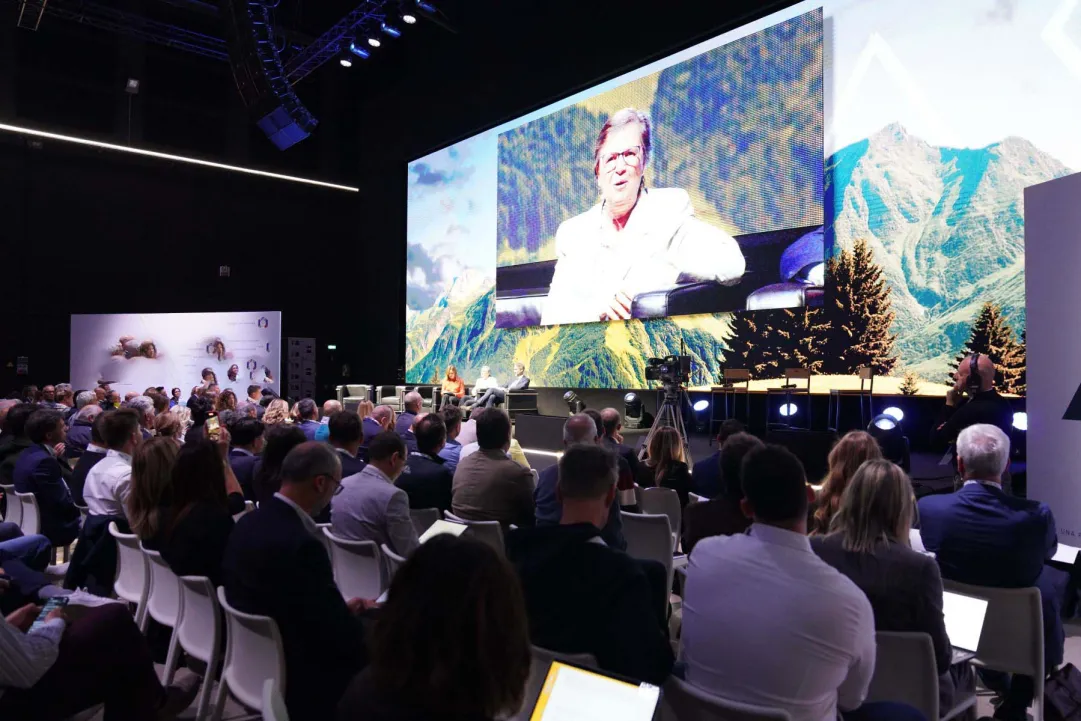
Ten years after her first assembly as president, Valeria Ghezzi opened the ANEF General Assembly – National Association of Cableway Operators for 2025 in Milan, as part of the Apreski - Milano Mountain Show event and just a few months before the Milano-Cortina 2026 Olympic Games.
«This year we chose Milan because it is the city of energy and movement, an engine for the country just as cableway facilities are for the mountains», Ghezzi said, adding: «Moreover, our decision to take part in Apreski means becoming part of a genuine international forum that brings different worlds into dialogue and creates cross-pollination between winter sports, alpine tourism, culture, entertainment, science and innovation. A platform created at a crucial moment, just a few months before the Olympic and Paralympic Games, which presents the mountains as a living, competitive and sustainable ecosystem».
Positive results for the 2024-2025 season
Despite the challenges linked to weather and climate change, the 2024-2025 season ended with an overall positive balance. President Valeria Ghezzi highlighted the strength of the sector and the ability of mountain resorts to adapt.
Thanks to snowmaking – now an essential resource for ensuring the continuity of the season – visitor numbers in the Alps remained high. The signs from the Apennines were also positive, as the range is regaining its central role thanks to public and private investment encouraged by government calls for applications. «The influx to Apennine resorts after snowfalls confirms that, when conditions are favourable, the mountain product always works», Ghezzi commented.
Tourist flows also showed an increase in foreign visitors, alongside a slight decline in Italian visitors, in line with the general trend in national tourism.
Looking at the summer that has just ended, the President highlighted the consolidation of the mountains as an increasingly attractive destination for outdoor tourism. «The summer of 2025 confirmed the mountains as a growing destination, driven by trekking, cycling and nature. This demonstrates the success of year-round tourism strategies, which are making the mountains vibrant and competitive twelve months a year».
Strong dialogue with institutions confirmed
This year, ANEF’s institutional activity maintained continuous and constructive dialogue with the Government and Parliament on all the strategic issues facing the cableway sector. In 2025, this dialogue became particularly strong with the Minister of Tourism, Daniela Santanché. «The Ministry has in fact introduced specific measures for cableway companies to support investment in sustainability, innovation, year-round tourism and safety, including the decommissioning of obsolete facilities.» The calls for applications addressing the Apennine emergency were also highly significant, recognising the strategic importance of companies operating in central and southern Italy and working to keep the mountain tourism economy alive in more fragile contexts.
Relations with the Ministry of Sport and Minister Andrea Abodi are also continuing, with concrete objectives for updating regulations. «We have worked, and continue to work, to refine Legislative Decree 40 of 2021, making it consistent with safety requirements and clearer for operators and skiers. Some critical articles have already been amended, but points still need to be clarified to avoid discretionary interpretations.»
On the subject of safety, ANEF is also actively cooperating with the Ministry of Transport and ANSFISA, the National Agency for the Safety of Railways and Road and Motorway Infrastructure. «This year – Ghezzi recalled – important progress was made in training and testing. The inspection procedure for certain categories of facilities has changed and is now entrusted to qualified technicians registered in a specific register, and a decree has been issued defining the requirements for taking on the role of cableway operator.»
Finally, Ghezzi highlighted the importance of the Mountain bill, recently approved under the leadership of Minister Roberto Calderoli. «It is a fundamental measure for the future of high-altitude areas. Although it does not directly concern the cableway sector, the law recognises and addresses the distinctive features and critical issues of mountain communities, introducing support measures for schools, healthcare, youth entrepreneurship, agriculture and water-resource management. An important step towards ensuring continuity and quality of life for those who live and work in the mountains.»
National collective labour agreement renewed
Another point addressed in the President’s report was the renewal of the National Collective Labour Agreement for cableway transport, signed in May 2025 in record time. «A demanding undertaking that nevertheless succeeded in finding a balance between protecting workers and ensuring sustainability for companies», Ghezzi explained. The new agreement combines requests for wage adjustments linked to inflation with the need to guarantee financial stability for companies in the sector, particularly those that have experienced more difficult seasons.
Italian peaks rank third in Europe
2025 was also a year of international confirmation: Italy’s peaks «now represent the third European country in terms of turnover and skier-days, after Austria and France, and the fifth in the world after the United States and Japan», recalled Ghezzi, who is also president of FIANET, the European federation of cableway operators. «With €1.3 billion in direct turnover and approximately €8 billion in indirect economic impact, we represent a solid and internationally significant sector.»
During her term leading the European federation, Ghezzi promoted coordination among member countries to gather shared data and define a common vision of the sector’s socio-economic role: «I encouraged my European colleagues to collect comparable information and data, which will soon be brought together in a single document. We will present it to Members of the European Parliament to illustrate the strategic value of our work within the European economic and social system.»
“Vertical Rhythm”: the manifesto for a changing mountain environment
Finally, ANEF’s 2025 report concluded with a fully fledged policy manifesto, presented by President Valeria Ghezzi, who sought to outline a vision of Italian mountains that are increasingly advanced, sustainable and mindful. At the heart of the document are several key words defining the founding values of the future “mountain system”.
The first is respect: «Because where there is respect, there is no destruction, but room for everyone: a balance between visitors and residents, and the ability to adapt to and enhance the area without distorting it». Then comes community, understood as a place of living traditions and authentic rhythms: «The mountains are the cradle of communities that want to preserve their identity without giving up comfort and technology, tools capable of transforming these values into widespread wellbeing, including for those who arrive as visitors».
Among the core concepts are also continuity and transformation: «Investment is an essential part of our daily lives, and not only for tourists. Technology, when used in balance, makes it possible to live and work in the mountains, ensuring development and sustainability». A virtuous example is the Funivia delle Mele of the Melinda Consortium, which combines cableway technology and agriculture while drastically reducing emissions: a tangible model of ESG sustainability and innovation rooted in the local area.
Ghezzi then referred to the values of solidarity and connection: «Solidarity is vital for areas where isolation has long been a challenge. Technological and social connection is the key to ensuring safety and dialogue and rebuilding a strong human bond between the past, present and future. It is also the basis for involving young people and encouraging them to return to live in the mountains».
These are joined by care and safety: «Care for visitors and infrastructure, which for us is the first guarantee of safety. But safety is also a perception, a sense of peace of mind that we want to convey to those who arrive at high altitude and open themselves up to the vastness of the landscape».
Finally, responsibility and simplicity, two values that ANEF believes must go hand in hand: «Simplicity is not opposed to technology, but represents its most advanced form: one that improves life and respects the environment without encroaching upon it».
These words, Ghezzi emphasised, «are not slogans, but represent the daily life of the “highlands”. What matters is believing in them wholeheartedly, and that everyone plays their part in building a mountain environment with an increasingly solid, mindful and advanced future».
© ALL RIGHTS RESERVED
Social media engagement
Most read in Turismo
Neveitalia chooses Holidu: holiday homes join our ski resort pages
The collaboration expands the services dedicated to snow tourism: apartments, chalets and holiday homes will gradually be integrated into the pages of Italian ski areas.

12