
Ski Mountaineeringthe debut

Pentaphoto


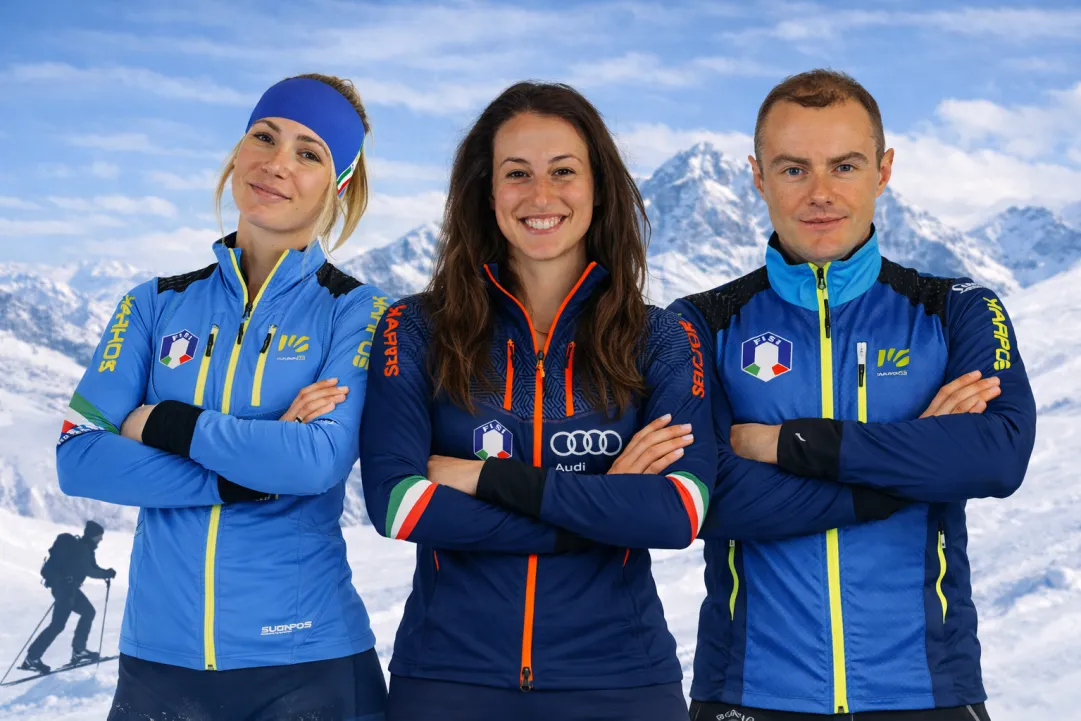
The discipline that has brought Italy great satisfaction and worldwide success for years will enter the Winter Olympic programme on Thursday. On the final section of Bormio’s legendary "Stelvio" piste, action begins with the Sprint, featuring Italy’s Valtellina trio, while on Saturday, February 21, Italy will rely on the married couple in an attempt to bring these Games to a triumphant close. Here is everything you need to know, along with the words of the Azzurri on the eve of competition.
Wednesday 18 February 2026 16 minutes reading time
Yesterday, Bormio hosted the dedicated opening ceremony, and now it is truly happening: Thursday, February 19 will mark a historic date for winter sports, with the Olympic debut of ski mountaineering at the Milano Cortina 2026 Winter Olympic Games. On the snow of the “Stelvio” piste, which over the past two weeks has hosted the fastest and most technical skiers in the world, everything is ready for two days promising pure adrenaline and the first eagerly awaited Olympic medals in a discipline that brings the perhaps most authentic essence of the mountains to the sport’s biggest stage.
The schedule for tomorrow’s Sprint is packed: the women’s heats begin at 9:50, followed at 10:30 by the men’s heats. In the early afternoon, from 12:55, the action will intensify with the two semifinals, followed by the six-athlete final that will bring a day destined to remain in history to a close. At the starting gates will be the 36 best specialists in the world, 18 women and 18 men. Emily Harrop (FRA) has been the dominant force in the discipline for the past couple of years and is now the clear favorite, while Oriol Cardona Coll (ESP) will have to defend his world and European titles from attacks by Thibault Anselmet (FRA) and the Swiss armada if he is to make history for the sport and for Spain.
Who are the Azzurri competing?
For Italy, the anticipation is doubled, as the Azzurri dream of starring in front of the home crowd. Italy was able to count on 3 Olympic quota places: 1 secured because Italy is the host nation, and the other 2 earned on the field. The excellent Italian performances in the women’s events during the season have not always been equally matched by the men, who are still struggling with the fast formats, but we can make the most of our chances.
All eyes on Thursday will inevitably be on Giulia Murada, the Valtellina athlete who has claimed 7 victories and 12 podium finishes in the World Cup. The daughter of a ski mountaineer—her father Ivan also competed at a high level—and third in this season’s ranking, she has reached the podium in every Sprint held so far, collecting one third-place finish and two second-place finishes and definitively returning to the high level that characterized the 2022/23 season, when she challenged for the Crystal Globe until the final race.
For the Mixed relay on Saturday, February 21, the couple—both in competition and in real life—of Alba de Silvestro and her husband Michele Boscacci will start without hiding their medal ambitions, attempting to turn around their season so far and reproduce the superiority they demonstrated the previous year, when the powerful Italian duo triumphed several times. The champion, who grew up in the Dolomites but is now based in Albosaggia, is refining her competitiveness in a format that does not yet fully showcase her endurance qualities, while the three-time overall World Cup winner will bring his experience, power and winning mentality to the race in an effort to put Italy on one of the podium steps that matter.
"I am very excited and proud to represent Italy’s ski mountaineering community at these Olympics,” Giulia Murada said on the eve of competition through the federation’s press office. “I hope the public will become passionate about our sport, which is beautiful. I started with my father when I was around 14. At first, I didn’t even like skiing, but then I discovered that I was drawn to the ascent, to working hard before enjoying the descent, and so I continued.
I joined the Army Sports Centre and can devote myself entirely to my discipline. I am from Albosaggia, but I do most of my training in Livigno, where there is always snow and also some altitude, which is always useful for our sport. I don’t want to hide: my start to the World Cup has been good, and I have reached the podium many times. Nothing is a given—the rivals are truly strong—but I want to play my cards and dream big. I would like to travel more peacefully and not only for competitions, but there will be time for everything. Ski mountaineering is already very popular in Italy; clearly, a medal would generate even greater attention.
The race’s total elevation gain will be around 70 metres, but that matters little because you cannot manage it in such fast race formats. You have to be very careful to execute the transitions well. I think both the Sprint and the mixed relay can be interesting for the public because they are fast and you don’t get bored.”
"Not everyone gets to compete with their husband, but it will be a wonderful experience to share,” said Alba De Silvestro. “It is better to experience this day of anticipation as a couple than alone in a room. We are not the outright favorites, but we have experience and we are a good pair. We have our chances in the mixed relay. Clearly, competing at home has advantages, but it is also a greater responsibility.
There is time for everything. In recent days we have attended more ceremonies than competitions. Finally, the time to compete has arrived, and I can’t wait. So many medals have been won at these Olympics, and many of them have been truly moving: I think Brignone gave everyone a lesson in life, and the same goes for Tabanelli and Lucia Dalmasso. Now we will give it a try.”
"Alba is a little more nervous than I am, and I try to keep her a bit calmer,” Boscacci added. “I imagine tomorrow will be even worse, but that’s understandable. After all, a home Olympics doesn’t happen every day. In any case, we help each other. If it weren’t for her, at 36 I certainly wouldn’t be here at the Olympics.
I won my last World Cup in 2022, and perhaps I became complacent. But having Alba at home, with her character and competitiveness, encouraged me to work on the formats that were then chosen for the Olympics, and now we are here to fight for it. I don’t dislike the formats, although they certainly do not represent everything ski mountaineering is. Still, they are very interesting for the public, and there can be overtakes and unexpected twists. So I hope the public will follow us and cheer for us.”
How the Sprint works | Thursday, February 19
This is a short, technical and extremely intense race. The course combines an uphill section with skins, a section on foot with the skis carried on the backpack, and a final descent, with very rapid transitions that often make the difference. The competition unfolds in three stages: heats, semifinals and final. In the heats, athletes start en masse in groups of six, with the winners of each heat and the two fastest times among the non-qualifiers (“lucky losers”) advancing to the next round. The same system applies to the two semifinals, leading to the six-athlete final that awards the medals. It is a challenge lasting just a few minutes but requiring power, technical precision and a cool head during the transitions—the true hallmark of modern ski mountaineering. The course built beside the finish of the “Stelvio” is 750 metres long and has a total positive elevation gain of 70 metres, with each heat lasting around 2:30 minutes.
How the Mixed Relay works | Saturday, February 21
Saturday, February 21, from 13:30 to 14:30, will see the Mixed relay, a mixed-pair relay: a fast, strategic format that highlights teamwork. Each nation fields a pair consisting of one woman and one man, who alternate in the order woman-man-woman-man.
After a mass start, each relay leg takes on two laps of a circuit, with one climb and one descent per lap. The changeover takes place in a dedicated zone, with a touch between teammates launching the next leg. It is a tactical race in which pace, effort management and synchronization between the two teammates are decisive, and where even a small mistake during a transition can prove extremely costly. The course is slightly longer, more uphill and has more transition zones than the Sprint, but it will still be set up at the Stelvio Ski Centre: the loop will be approximately 1500 metres long, with 135 metres of positive elevation gain.
Bormio is preparing to experience thrilling days, amid cheering, spectacle and the feeling of witnessing something unique: the world continues to look toward its snow-covered mountains, ready to be swept up by the passion for a sport that is, quite literally, entering Olympus. But there are few seats at the table of legends—who will earn one?
© ALL RIGHTS RESERVED
Social media engagement
Giochi Olimpici MiCo 2026 - SPRINT
statements
Thursday 19 February 2026
Sprint
Thursday 19 February 2026
the debut
Wednesday 18 February 2026Giochi Olimpici MiCo 2026 - MIXED RELAY

mixed relay
Saturday 21 February 2026
mixed relay
Friday 20 February 2026
the debut
Wednesday 18 February 2026Most read in Sport invernali
Fede, the shock announcement: Brignone retires. “My leg hurts too much, I’ve decided to end my career. I’ll open one last starting gate”
In a video released by FISI, the Italian champion announced that she had decided to call it a day: the two days on skis in Cervinia did not give her the answers she had hoped for, and Federica will compete in one final race to say goodbye to everyone. The most successful woman in the history of Italian skiing is leaving the sport.
120