
Alpine SkiingOlympic previews

Pentaphoto


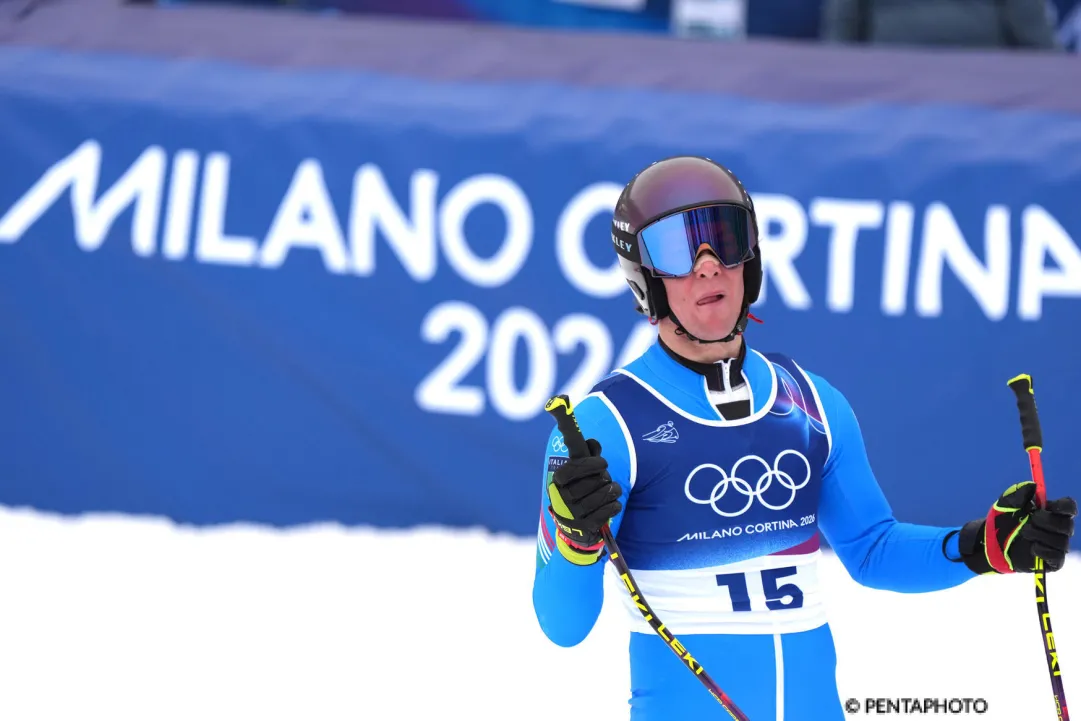
A focus on the five men’s events at these Olympic Games, starting with Saturday’s premier race, a downhill that will see the two leading speed nations, Italy and Switzerland, go head-to-head, although Kriechmayr and Cochran-Siegle are also formidable. Then the team combined, where the Azzurri could have good chances, a thrilling super-G on the "Stelvio" and, in the second weekend of competition, the giant slalom, where Odermatt will have to contend with some strong opposition. In the closing slalom... total spectacle!
Wednesday 4 February 2026 21 minutes reading time
With the first downhill training run taking place today, the Olympic alpine skiing programme got underway in Bormio, which will host all the men’s events at these Olympic Games, from Saturday 7 February, when the premier race will take place, through to Monday 16 February, with the traditional closing slalom.
So let’s analyse the five medal events in detail, looking at the Azzurri’s chances, the favourites and the outsiders.
DOWNHILL: SATURDAY 7 FEBRUARY (11:30 a.m.)
This is perhaps the race in which, also considering an extremely demanding technical setting like the Stelvio, where it is impossible to hide anything (even though the conditions are “softer” than in the traditional World Cup event at the end of the year), the predictions are fairly clear regarding the five athletes who can fight for a medal and the title.
We list them in the order in which we see the gold-medal contenders: Marco Odermatt, Giovanni Franzoni, Franjo von Allmen, Dominik Paris, Vincent Kriechmayr.
Are we heading towards a stellar battle between the super pairs from Switzerland and Italy? It is decidedly likely, given the form of those involved and their feeling for this piste; the World Cup dominator is missing, in addition to Kitzbühel, the Olympic downhill and little else, but the man who defeated him on the Streif is simply flying, and it was practically a given that, after his off-day in Crans-Montana, the phenomenal Franzoni seen in January would immediately feel at home in training in Bormio. World champion von Allmen is a monster capable of anything, but perhaps this is not absolutely the piste of his dreams in terms of its characteristics, whereas Dominik Paris has mastered it six times in his career and knows it better than anyone.
And can the “old” Kriechmayr, who has never stood on an Olympic podium, produce the kind of class act we saw from him, given that, apart from his off-day in Kitzbuehel, he has shown on such a technical slope that he has the confidence to perhaps even fight for the title?
Behind the “fantastic five” (allow us the “expansion”), we place Alexis Monney and Ryan Cochran-Siegle, who arrive with different seasonal records, since the Swiss has remained below standard while the American claimed a superb podium finish in Crans-Montana, but above all they won their only World Cup race precisely on the Stelvio, albeit in different disciplines.
The third and fourth Azzurri at the start, although it is not yet official that Innerhofer will remain on the sidelines, namely Mattia Casse and Florian Schieder, could certainly get close to the podium places, as could Cameron Alexander, who has not yet returned to his pre-injury levels but cannot be underestimated in a one-off race, and Nils Allegre.
TEAM COMBINED: MONDAY 9 FEBRUARY (10:30 a.m.-2:00 p.m.)
A maximum of four pairs per nation and, in the new event at the Games, which we have already seen at the World Championships in Saalbach, it will be really interesting to see which combinations the various coaching staffs choose.
There is no doubt that Switzerland, Italy, France and Austria have the athletes to be competitive both in the downhill and in the element that will then decide everything in the slalom. The Swiss powerhouse undoubtedly starts as the favourite, given that its three stars (Odermatt, von Allmen and Monney) can be joined by Hintermann or Rogentin, to be paired with Meillard, Nef, Yule and Iten, or Aerni himself.
Austria has fewer certainties, both because Feller could line up alongside Kriechmayr, capable of anything positive and… negative, and because with the other speed specialists, namely Hemetsberger, Babinsky, Haaser or Lukas Feurstein, they can choose Gstrein, Matt or Schwarz (in great difficulty in the slalom this year), but we are not talking about athletes who, despite their great experience, are currently at the top of the discipline.
Norway certainly has slalom skiers capable of winning, with Haugan, McGrath and Kristoffersen above all, but the problems in speed events are enormous, without Kilde and practically without Moeller, with Sejersted in precarious condition and then debutant Sellaeg.
France can field some interesting pairs (although there will be three), thinking above all of the quality between the rapid gates of Noel, Rassat and Amiez, but it has no “cracks” in speed events, although it could line up Nils Alphand, Nils Allegre, Maxence Muzaton and Alban Elezi Cannaferina.
And Italy? Well, the four Azzurri pairings could spring a surprise, regardless of how they are matched: Dominik Paris and Alex Vinatzer, already together in Saalbach, could represent “Italy-1”; then there are Franzoni, Schieder and either Casse or Innerhofer on one side, and Sala, Saccardi (excellent in the European Cup over the last two days in Baqueira-Beret) and Kastlunger on the other. There are certainly question marks in the slalom, but we must remember that this is a single run on a slope that is far from impossible, like the one in Bormio, where surprises in terms of performance can emerge.
SUPER-G: WEDNESDAY 11 FEBRUARY (11:30 a.m.)
It is fairly clear that the main medal contenders will be the same, or almost the same, as in the downhill.
Italy will, 99% of the time, field the quartet of Franzoni, who won in Wengen this season (his first-ever World Cup victory) and is above all “born” for this discipline, Paris, Casse (sixth in Kitz, his best result of the season, achieved precisely at the most recent super-G) and Innerhofer. Failing to reach the podium would be a disappointment, but the competition is broader than in the opening event of these Games.
The number-one favourite for gold is Marco Odermatt, although he has not been dominant this season, with his teammate Franjo von Allmen still experiencing some ups and downs in this discipline but possessing potential similar to that shown in the downhill. Alexis Monney and Stefan Rogentin will instead be pure outsiders, while almost all the Austrians belong among the “title contenders”. Kriechmayr needs no introduction; Raphael Haaser has never yet won in the World Cup, it is true, but if he gets everything right he has the potential to pull off a major upset, while Schwarz will target this race, along with the giant slalom. Apart from his victory in Livigno, he has shown that he can do beautiful things, although the lack of training and feeling on the Stelvio, where he has not raced since his fall in December 2023, could make itself felt.
And then there is Stefan Babinsky, twice on the podium this season and likely to leave out, barring surprises, a great talent such as Lukas Feurstein. He certainly cannot be forgotten as a podium contender. A medal is certainly feasible for Nils Allegre and Ryan Cochran-Siegle as well, while we will have to see what condition Sejersted arrives in. Clearly the same applies to Moeller (who would have been among the big favourites before his accident in Val Gardena), while former world champion James Crawford is in total crisis. Will he revive himself at the Games?
GIANT SLALOM: SATURDAY 14 FEBRUARY (10:00 a.m.-1:30 p.m.)
Odermatt and Meillard at the top of the pecking order?
Probably yes; after all, they dominated the last two giant slaloms, in Adelboden and Schladming, with Schwarz previously taking victory on the Gran Risa. In this 2025/26 winter, the absolute master of the discipline for years, namely the Nidwalden ace who is also the reigning Olympic champion, has had a much smaller margin over his rivals, to the point of “losing” on several occasions, such as in his duels with Brennsteiner and “Blacky” himself.
The former, who also wore the red bib at the start of the season, appeared to be fading in recent weeks, while the Carinthian is a guarantee and could be the third favourite alongside Lucas Pinheiro Braathen, who came close again in the night race on the Planai to returning to victory in the giant slalom, which he has been missing for more than three years. The Norwegians start one rung lower, with McGrath perhaps the most interesting option and Haugan, who currently seems livelier in the giant slalom than in “his” slalom, starting as an alternative to the big names alongside Kristoffersen himself.
World champion Haaser has not performed well over the course of the season, not to mention Tumler, Kranjec (Olympic silver medallist, reasonably consistent but always well away from the podium) and Zubcic, with Anguenot third at the temple of the Chuenisbärgli, but still with everything to prove in a contest at this level.
And then Radamus, Gratz, Maes and… the Azzurri: Alex Vinatzer reached his first World Cup podium in Beaver Creek, then experienced ups and downs, but aside from his mistakes in Adelboden and Schladming, his speed has hardly ever deserted him and a medal is not impossible. It seems a long way off, however, for the De Aliprandini seen this season, who is called upon to go all-in in the Olympic race. Then there will be Kastlunger and Franzoni, objectively without any particular ambitions.
SLALOM: MONDAY 16 FEBRUARY (10:00 a.m.-1:30 p.m.)
The grand finale with an all-out battle between the Norwegian aces, with McGrath and Haugan perhaps ahead of Kristoffersen, who is missing only the Olympic gold and returned to winning ways a few days ago in Schladming. But he will certainly have to surpass himself on a slope like Bormio’s, which does not suit him, even though HK94 has shown over the years that he can adapt to every situation (the snow surface could be the factor that makes the difference in terms of confidence for many of the big names).
Lucas Pinheiro Braathen could upset the established order and make history for Brazil, while Loic Meillard, unquestionably one of the four or five leading title contenders, will be seeking to add the Saalbach world title to his honours in a truly open race among these phenomenal athletes. That group also includes Clément Noel, the Beijing champion who is fully in contention and, finally showing consistency, is fighting for his first World Cup overall title.
France will have Rassat as its second spearhead, twice victorious in the season of his breakthrough. Switzerland will also field Tanguy Nef, never on the podium in the top-level circuit but a guarantee of solidity, while Austria will place almost all its hopes in Manuel Feller, the prince at home in Kitz. Germany will rely on the evergreen Strasser, while Finland and Belgium deserve maximum attention, meaning Eduard Hallberg on one side and Armand Marchant on the other, much more than mere wild cards.
If we name Fabian Ax Swartz as the biggest surprise candidate, also because of the characteristics of the Bormio piste, Italy has yet to reach the podium this season, although Alex Vinatzer came close with a superb comeback in Val d’Isère. The Val Gardena skier finished seventh recently in Schladming and is ready to invent something, as he did with his world podium in Courchevel, while Sala, Kastlunger and Saccardi are further options to tackle the race at full throttle, without any kind of pressure or expectation.
© ALL RIGHTS RESERVED
Social media engagement
Downhill Male Milano-Cortina (ITA)
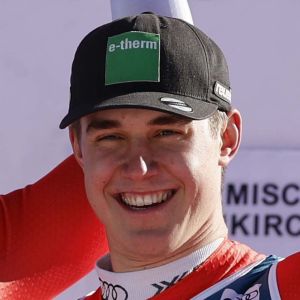 VON ALLMEN Franjo
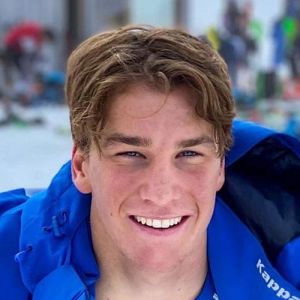 FRANZONI Giovanni
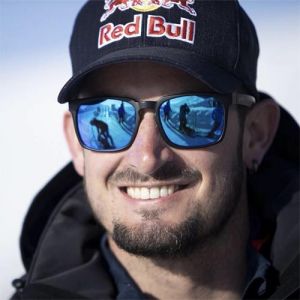 PARIS Dominik

men’s downhill
Saturday 7 February 2026
men’s downhill
Saturday 7 February 2026
men's downhill
There is only Franjo von Allmen ahead of an immense Italian team: Franzoni silver, Paris bronze!
Saturday 7 February 2026
men’s downhill
Saturday 7 February 2026
men's downhill
Saturday 7 February 2026
men's downhill
Friday 6 February 2026Super-G Male Milano-Cortina (ITA)
 COCHRAN-SIEGLE Ryan
 ODERMATT Marco

Men’s super-G
Wednesday 11 February 2026
men’s super-G
Wednesday 11 February 2026
women’s super-G
Wednesday 11 February 2026
men's super-G
Wednesday 11 February 2026
men’s super-G
Wednesday 11 February 2026
Men’s super-G
Wednesday 11 February 2026Male Milano-Cortina (ITA)

men’s team combined
Monday 9 February 2026
men’s team combined
Monday 9 February 2026
men's team combined
Monday 9 February 2026
Men’s team combined
Monday 9 February 2026
men’s team combined
Monday 9 February 2026
men’s team combined
Extraordinary Franzoni: Italy-1 lead the team combined, Vinatzer will have to hold off the Swiss
Monday 9 February 2026Giant slalom Male Milano-Cortina (ITA)
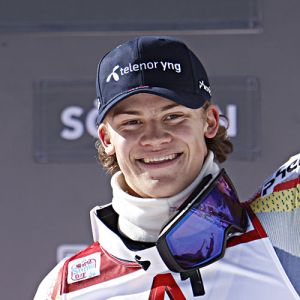 PINHEIRO BRAATHEN Lucas
 MEILLARD Loic
men’s giant slalom
Odermatt relinquishes the title, but what pride: “Three medals, I can be satisfied with these Games”
Saturday 14 February 2026
Men’s giant slalom
Saturday 14 February 2026
men’s giant slalom
Saturday 14 February 2026
Men’s giant slalom
In the hell of the Stelvio, Pinheiro Braathen holds off Odermatt and enters legend. Italian disaster
Saturday 14 February 2026
Men’s giant slalom
Saturday 14 February 2026
Men’s giant slalom
Saturday 14 February 2026Most read in Sport invernali
Fede, the shock announcement: Brignone retires. “My leg hurts too much, I’ve decided to end my career. I’ll open one last starting gate”
In a video released by FISI, the Italian champion announced that she had decided to call it a day: the two days on skis in Cervinia did not give her the answers she had hoped for, and Federica will compete in one final race to say goodbye to everyone. The most successful woman in the history of Italian skiing is leaving the sport.
17