
Alpine Skiingstatements

Pentaphoto



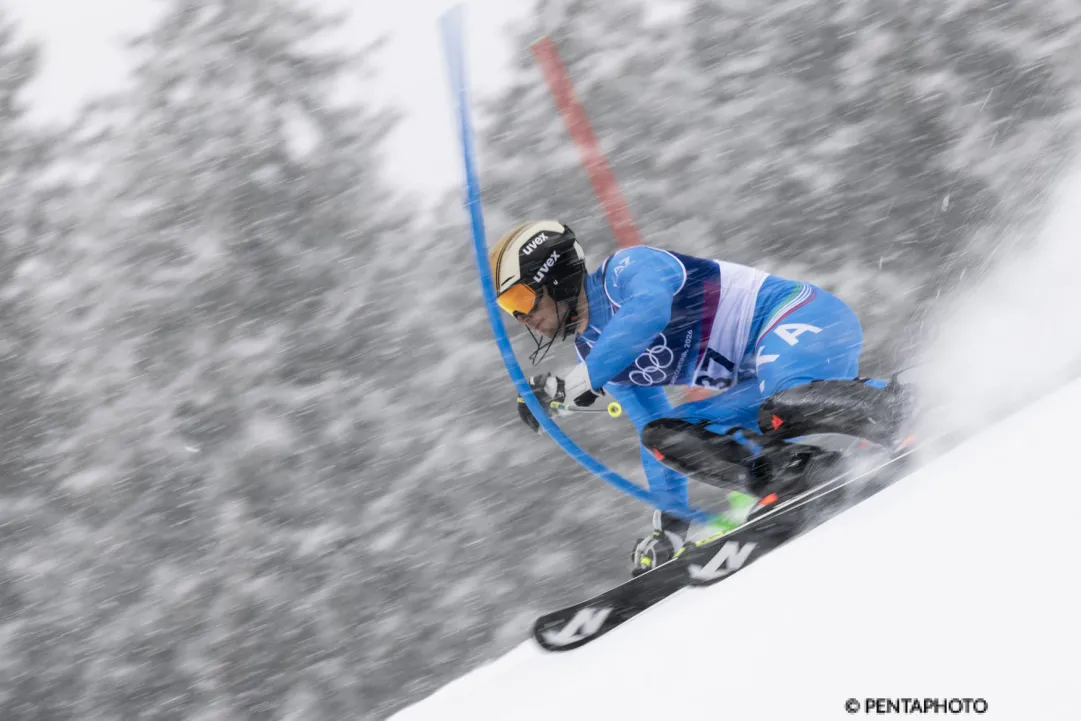
In the Olympic slalom on the “Stelvio,” the young skier from Parma finished 12th, while Vinatzer and Sala were left bitterly disappointed, and Kastlunger’s Games yielded nothing. The technical director takes stock, from Franzoni’s breakthrough to the disappointments suffered by the skier from Val Gardena, as well as praising Paris’s leadership.
Monday 16 February 2026 8 minutes reading time
The darkness surrounding Italian slalom remained unchanged even in the most important race of the season, and perhaps of the entire four-year cycle: the Olympic event, which began under heavy snowfall in the first run with Alex Vinatzer, Tommaso Sala and Tobias Kastlunger skiing out, and continued with the second run, which at least, as the weather improved, saw Tommaso Saccardi give Team Italia a solid result—one that can be described as more than excellent considering the ambitions of the 24-year-old from Emilia.
The 12th-place finish by the specialist from Parma, who had already made his debut in the team combined slalom and is enjoying an excellent season in the European Cup, certainly cannot erase another disastrous day—after the one in the giant slalom (where Franzoni was the only Italian in the top 30, finishing 24th)—for coach Pini’s men. Pini set the first run in the hope of overturning this winter’s hierarchy.
That did not happen, and the result in the technical events in Bormio is disastrous. Saccardi, who has yet to score World Cup points but earned his ticket to his first Games through his performances, deserves nothing but applause: “I’m very happy. At my first Olympics, I’m pleased with how I managed the tension that an event like this imposes on you,” he told Rai Sport after the race. “It was a good first run (wearing bib 37, with the 10th-fastest time—really outstanding, ed.), and when you start from the back, nobody expects you to do anything spectacular. It was snowing heavily too, but the surface was good and the time came.
“In the second run, I think I had an all-out attacking mindset. That’s the beauty of the Olympics: you have to push to the limit to fight for a medal. I didn’t manage that in terms of the result, but it remains a good race, and these are my first WCSL points. The strongest part of my skiing? For now, it’s the flats, while I struggle when you have to control the pressure and the slope pulls you downhill. We’ll work on that.”
The men’s team, unlike the women’s team (which still has the slalom to come, albeit without great ambitions), did not win any titles but nevertheless brought home two highly significant downhill medals, with Franzoni taking silver and Paris bronze, finally reaching the podium at his fifth Olympic appearance. Speaking once again to Ettore Giovannelli, technical director Massimo Carca took stock overall: “We started in the best possible way with a race that the downhill group really cared about. Since Val Gardena, our athletes have not been off the podium, and despite arriving as favorites, they were ready at the crucial moment.
“Giovanni (Franzoni, ed.) amazed everyone with the way he also handled the media pressure, having come off victories in Wengen and Kitzbühel: we have to protect him and remain focused on skiing. He is always himself, and he shows that in his statements too; he’s a straightforward person.
“I want to say that Dominik is truly a downhill legend. The Olympic medal was the one thing missing, and I, who have known him for almost 18 years, can say that he can be gruff at times and complain, but I thanked him personally because, during a difficult week weather-wise as well, he was always positive and a driving force, from the meetings to the slope.”
The biggest disappointment is certainly Alex Vinatzer’s performance: “We will carry out a detailed analysis. He definitely felt the pressure, and he told me so after the combined event: he had never before felt his legs go rigid and been unable to hold on. The giant slalom is the biggest disappointment because he had been fast all year; this is the third race in which he was skiing at a top-five level, as in Adelboden and Schladming, where he made mistakes.
“I have always believed in him, and the Federation will continue to invest in Alex, but we need a thorough analysis, not only on a mental level, because that aspect is also a consequence of a training method that we need to reflect on.
“It’s a shame about Sala’s clear straddle today; he was having a good race after his performance in the combined event. Saccardi, on the other hand, is a gamble we took because he has been fast all year. At the start of the season he was making a lot of mistakes, but he qualified in Wengen and won in the European Cup. It’s a shame about the serious mistake in the second run, but he reacted immediately, with an Olympic spirit and by giving 100%.”
© ALL RIGHTS RESERVED
Social media engagement
Slalom Male Milano-Cortina (ITA)
 MEILLARD Loic
 GSTREIN Fabio
 KRISTOFFERSEN Henrik

men’s slalom
Monday 16 February 2026
Men’s slalom
Monday 16 February 2026
statements
Monday 16 February 2026
men's slalom
Monday 16 February 2026
men’s slalom
Monday 16 February 2026
men’s slalom
Monday 16 February 2026Latest in Sport invernali
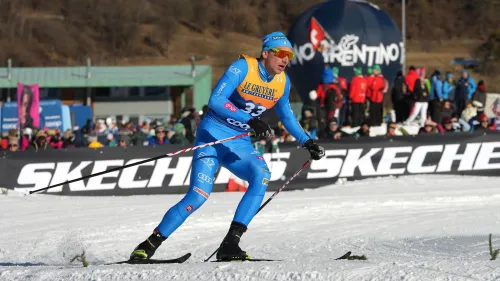
Klaebo seeks to join Bjoergen at 114 World Cup wins. Mocellini and the Italian women start as outsiders: start list for the Ruka classic sprint
Saturday will see the second day of racing in the Finnish opening triple, with the classic sprint on the programme. Norway are targeting another victory, with Johannes Klaebo the overwhelming favourite (he has Marit Bjoergen's World Cup wins record in his sights). For Italy, the best card to play is Simone Mocellini, followed by Elia Barp and Davide Graz. Among the women, the Swedes are in the front row, but the young Italians will give it a try. Qualifying starts at 8:45 a.m. Italian time (9:45 local time), with the final stages from 11:15 a.m.
64