
CompaniesEnvironment

primavess.com


The white week of four people who are 700 kilometers from the ski slopes produces 0.27 tons of CO2. A drop compared to the emissions of the ten main French ski resorts, equal to 160 million tons. But many small drops make an ocean. This is the philosophy behind the Respect program, launched in 2020 by the Rossignol Group, a leader in the production of winter sports items under the Rossignol, Dynastar, Lange, Look and Kerma brands.
Friday 11 December 2020 9 minutes reading time
Respect is the new social & environmental responsibility plan with three ambitious objectives: to reduce the production of waste from plants by 40% by 2025, by 30% the environmental footprint by 2030, reaching carbon neutrality in 2050, and to promote a lifestyle in harmony with nature.
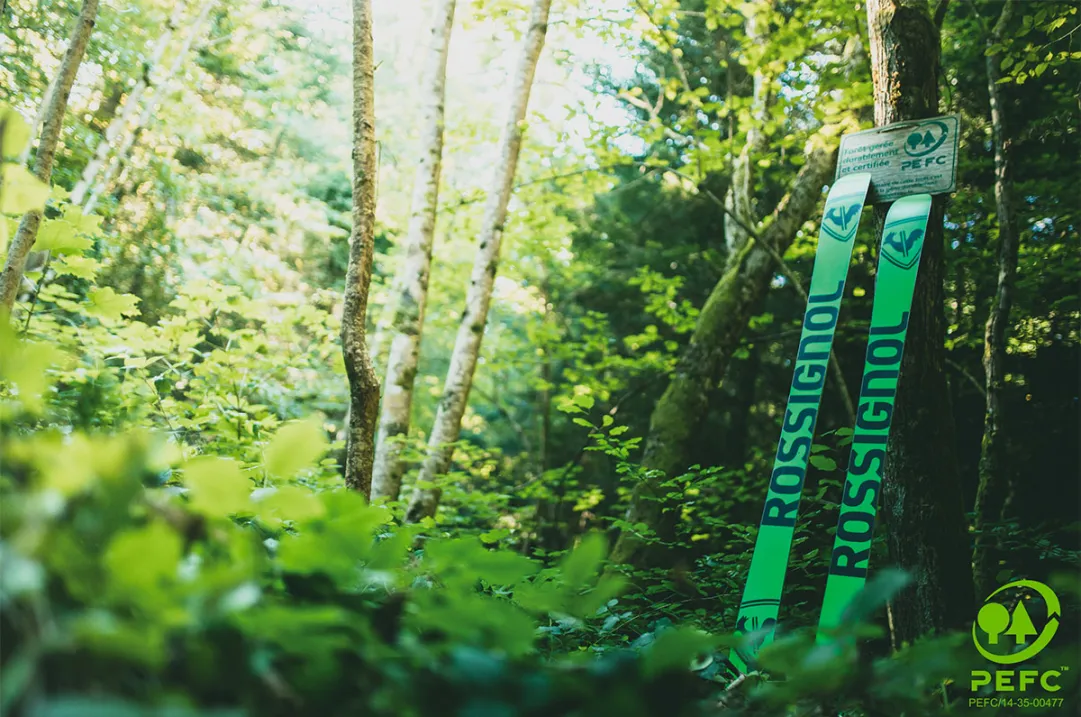
These are objectives that are pursued starting from the products, for which there are four imperatives: use natural and recycled materials, certified, avoid materials whose production does not respect animal welfare and reduce the use of original products as much as possible chemical or fossil. The 'eco' design is in the brand's DNA (the first eco-friendly ski was produced in 2009, the Attraction Echo, which used linen fibers) and found its maximum expression in the new Blackops Sender TI ski. The top of the range of the freeride line uses only poplar and paulownia wood from FSC or PEFC certified forests, foils with recycled steel, insoles with 30-70% recycled components and topsheets with 15% reuse material. The electricity used in the plants comes only from renewable sources and the factory has obtained ISO 14001 certification. The production is less than 600 kilometers from the logistics platform.
The other flagship products from the point of view of environmental sustainability, for example the Atelier clothing line (which uses the Sympatex membrane, 100% recyclable, and is waterproof without the use of PTFE and PFC) are made close to the logistics platform. , less than an hour. Most of the fabrics used have the Oeko-Tek Standard 100 certification which guarantees safety and non-toxicity for users. Animal fur has been banned since 2018, 64% of the range uses synthetic fillings, 19% “Duvet du Faubourg”, a French down jacket raised in a responsible and eco-sustainable way. In relation to the cruel practices used in angora wool and mohair farms, the former is not used and the latter will be eliminated by 2021. In any case, feathers, down and skins are waste from the food supply chain. As for the packaging, in addition to the commitment to limit the use of plastic as much as possible (the elimination of polybags is planned for 2030) and paper, in 2020 a new cardboard package for ski boots was introduced. FSC certified and with minimal ink usage.
However, the impact of a product on the environment is measured throughout its life cycle and so in Rossignol they are working to simplify the construction of skis, boots and bindings, in order to make them more easily removable and recyclable in the various parts, but also promoting repair or reuse. The “Collecting & recycling” program, launched in 2015 in France, Switzerland, Italy and Austria, has reached 10,000 products collected on an annual basis. The "Rental New Deal" operation in collaboration with Tri-Vallées saw over seven tons of skis, boots, poles and snowboards collected and recycled every year.
Environmental sustainability is a path that starts from afar, starting from the headquarters in Saint Jean de Moirans, near Grenoble, in France, an architectural jewel built in 2009 with eco-sustainability criteria. But the first ISO 14001 certification of a manufacturing plant was in 2003 for the St. Etienne de Crossey site in France. All production plants are powered 100% by renewable energy and other objectives have already been achieved such as the reduction of 51% of consumption for lighting in Sallanches and Nevers in France and Artès in Spain, of 97% of water consumption for the cooling systems of the Sallanches site, at the foot of Mont Blanc. In all the factories, in the logistics platform and at the headquarters in 2020, 600 photovoltaic panels were installed capable of producing 200,000 kWh / year, the equivalent of the needs of 87 homes. The Italian branch of the Rossignol Group in Formigliana (VC), in the Piedmontese plain between Biella and Vercelli, also covered the roof surface with photovoltaic panels capable of producing 700,000 kWh / year of clean energy, equivalent to the average annual consumption of approximately 260 Italian families. One of the major negative externalities is linked to the transport of products and the Rossignol Group controls two factories in France, one in Italy (in Montebelluna) and one in Spain where 80% of the equipment is made, in the same Europe that absorbs the 61% of sales.
On the institutional level, Rossignol Group has joined the Fashion Pact presented at the G7 in Biarritz in 2019 and the United Nations Fashion Industry Charter for Climate Action and has abolished plastic tableware within its offices since 2017, as well as having installed 12 beehives in the open spaces. There is no shortage of initiatives to support athletes and ambassadors committed to social issues or support for organizations such as POW (Protect Our Winters) which are committed to fighting climate change to save the winter season and the winter sports economy. In 2019 Rossignol transformed Black Friday into White Friday, converting part of the proceeds into a donation of 35,000 euros to the association. Paraphrasing Rossignol's motto, one could say: so that tomorrow will be “another best day” too.
© ALL RIGHTS RESERVED
Social media engagement
ROSSIGNOL, SCELTI DAI LETTORI
MAXISPORT
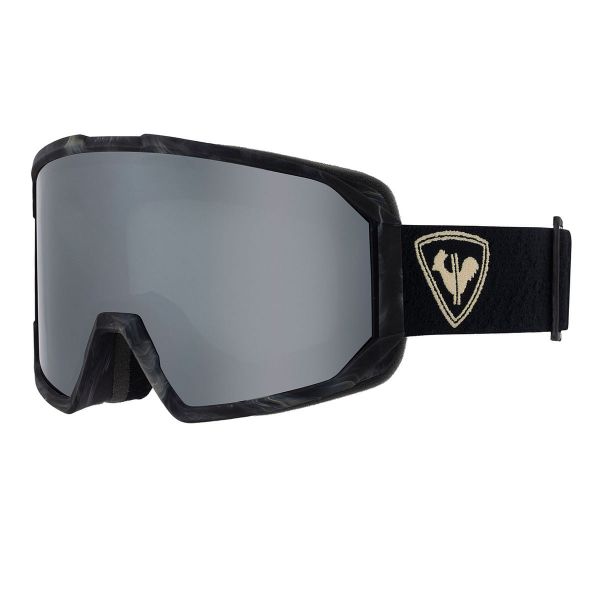
ROSSIGNOL - maschera essential black s2
2