
Alpine Skiingwomen’s World Cup

GEPA Pictures

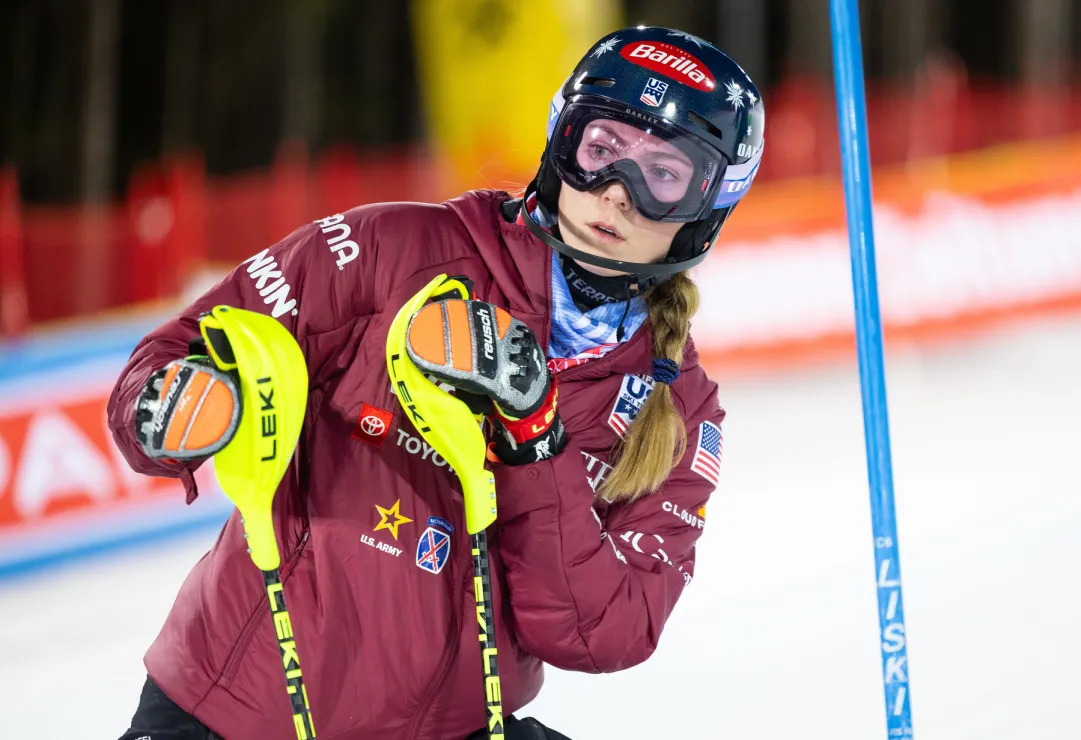
The World Cup leader speaks out once again, explaining in detail what happened on Sunday, including the situation surrounding the change made at the end of the second run. “I will continue to speak out when there are safety risks.” Paula Moltzan adds: “The FIS needs a clear standard; throughout the entire weekend, these were the most extreme conditions I have ever seen.”
Tuesday 30 December 2025 8 minutes reading time
The “Semmering case” is still open, as is only right, after what we saw in the final race of 2025: the slalom on the “Panorama” course, literally destroyed in the first run, with 39 racers skiing out among the 79 starters and a course setting that sparked controversy. Things went somewhat better in the second run, but overall it was a spectacle that fell well below the standards expected of the World Cup.
There was also the unusual situation involving the alteration to the final combination in the second run, made when only Mikaela Shiffrin and a couple of other athletes were still on the course for inspection, following a report from the circuit leader herself, who would then win from behind ahead of Camille Rast and Lara Colturi.
As other coaches and athletes later explained, a video was sent to everyone to analyze that change, but this too contributed to the post-race debate, particularly on the Swiss side. So last night, via social media, Shiffrin herself returned to the “Semmering case,” once again acting as a leading voice in the ski-racing world, as she had immediately after the race (although she was certainly the only one to speak out in this way straight away, which is certainly an issue). In addition to first congratulating Rast, who in her comments certainly did not support Mikaela’s clear protest, and Colturi (who applauded the American’s post on Instagram), she stressed the following.
“This sport is beautiful, and my hope is that everyone watching can experience the side of ski racing that we all know and love,” wrote the winner of the season’s first five slaloms. “Unfortunately, Sunday’s race was not a good representation of our sport.
A combination of decisions and superficial preparation during the week led to a very unstable slope. The first run held up reasonably well for the early bibs, but after 15-20-30, the deterioration became extreme. Completing the course was very challenging, and I spoke with several athletes who were frustrated, shaken and even scared at the start, given what they were about to face.
Safety was one of the main concerns; the rate of DNFs was nearly 50%—I’m told it is the highest since 1999—with 39 athletes out of 79 failing to finish the first run and a six-second qualification gap. This does not reflect the beauty of ski racing, or why so many of us love this sport and work so hard for it.
Fortunately, there were no serious injuries, but in a sport with so many uncontrollable variables, we have to ensure that courses are as safe and fair as possible. Forty-four DNFs across two runs is not something fun; it is brutal and, honestly, difficult to watch. I believe that we athletes, federations, coaches and the FIS itself can work together to do better in the future.
The adjustment to the second run was another example of a situation that became reactive rather than proactive. The change made by the FIS was necessary for safety, but this should have been addressed before the inspection opened—not while the athletes were already carrying it out—which led to confusion, delay and questions about whether it was handled properly.
None of this was about gaining an advantage; it simply should have been done earlier, so everyone could inspect the same, corrected course. One thing is certain: I will continue to speak out in situations where safety is at risk, and I hope that the conversations that follow can lead only to constructive improvements.
Thank you all for your support. I am taking this season one race at a time, and so much is happening. I am grateful every day to be able to experience the beauty of this sport.”
Last night, Paula Moltzan had also spoken out on Instagram. She was coming off two heavy crashes in giant slalom (with plenty of bruises from the impact when she fell in the second run) and then the same slalom, when she had once again been in a good position midway through the race. The veteran American struck a similar tone to her compatriot. “This weekend brought some of the most challenging racing conditions I have ever experienced in the World Cup. In my view, the FIS needs a clearer and more consistent standard, so that preparation is uniform at every venue.
This is not just about the fairness of the race; it is about protecting athlete safety.”
© ALL RIGHTS RESERVED
Social media engagement
Slalom Female Semmering (AUT)
 SHIFFRIN Mikaela
 RAST Camille
 COLTURI Lara

live neveitalia
On the eve of Campiglio, we open the new year with Paolo De Chiesa: “Ghiaccio Verde” at 6:30 p.m.!
Tuesday 6 January 2026
live neveitalia
The final... “Green Ice” of 2025: live with Paolo De Chiesa from 6:30 p.m. for a great episode
Tuesday 30 December 2025
women’s World Cup
Tuesday 30 December 2025
the cup standings
Sunday 28 December 2025
women’s World Cup
Sunday 28 December 2025
Women’s World Cup
Sunday 28 December 2025Latest in Sport invernali

Klaebo seeks to join Bjoergen at 114 World Cup wins. Mocellini and the Italian women start as outsiders: start list for the Ruka classic sprint
Saturday will see the second day of racing in the Finnish opening triple, with the classic sprint on the programme. Norway are targeting another victory, with Johannes Klaebo the overwhelming favourite (he has Marit Bjoergen's World Cup wins record in his sights). For Italy, the best card to play is Simone Mocellini, followed by Elia Barp and Davide Graz. Among the women, the Swedes are in the front row, but the young Italians will give it a try. Qualifying starts at 8:45 a.m. Italian time (9:45 local time), with the final stages from 11:15 a.m.
263