
Tourism#federalberghi #settimane bianche
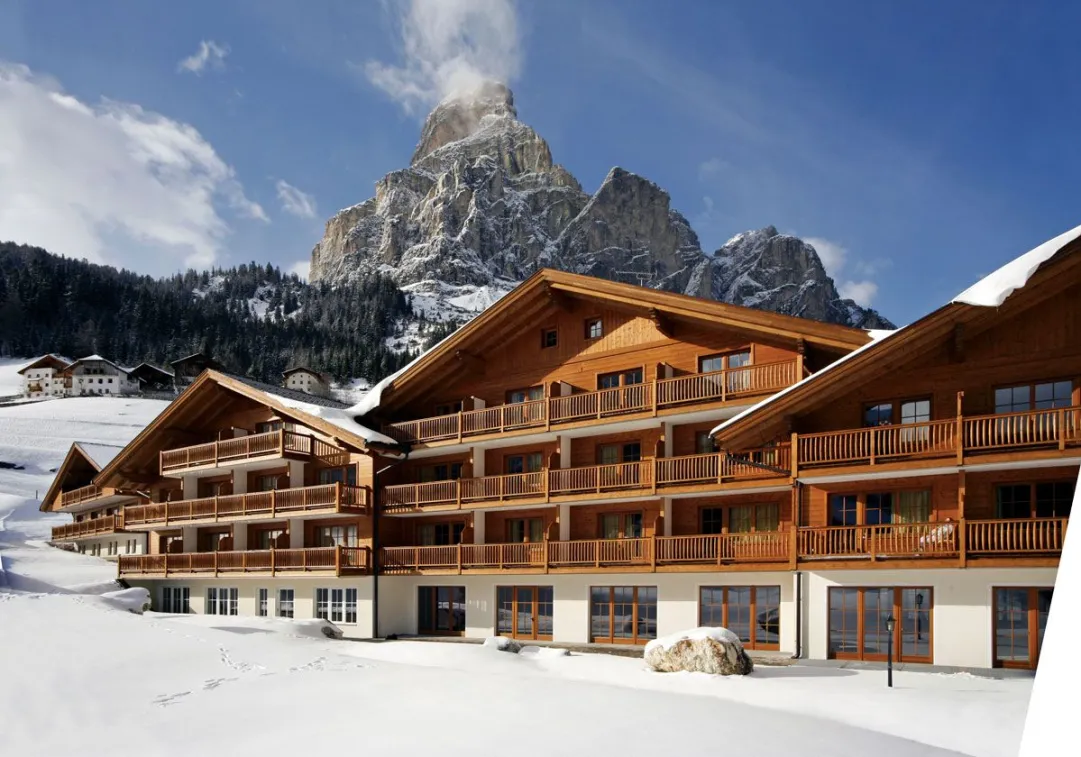

Despite the '2015/2016 winter has had a difficult start, the "white tourism" is growing in the desires of the Italians, who always choose more & ugrave; homegrown Alps for skiing holidays, especially the Trentino. & nbsp; According to the 'investigation dell''Istituto ACS Marketing Solutions for Federalberghi, over 9.7 million Italians have done or will do at least one weekend from January to March in the resort & agrave; ski (in Italy or all''estero); one million in pi & ugrave; compared to 2015, with a dell''11,9% growth.
Saturday 12 March 2016 5 minutes reading time
The tour of 'total business sar & agrave; 6.64 billion euro (compared to 5.95 billion in 2015) for a dell''11,6% increase. The real stars of the season were the weekend in the mountains: about 5 million Italians who opted for the weekend, compared to 4.54 million in 2015, for a 10.1% increase; these should be added other 901,000 fans who have also made a long stay. To make white the week were 4.72 million, 14% more '' last year (4.14 million). The tour of 'business of a skiing holiday and' 'estimated at 3.31 billion (compared to 2.76 billion in 2015) for an increase of 19.6%; one generated by the weekend will be '' of nearly 3.4 billion (compared with 3.2 billion in 2015) for an increase of 5.1%. The average expenditure per capita and '' of 701 € for the ski holidays (against 668 last year), 428 € for the weekend who also did the week (against 423) and € 315 (against 329) of those who did not make the holiday week.
Among the pi & ugrave regions; popular Trentino-Alto Adige which remains the leading region with 25% of demand (compared to 24% in 2015), followed by Piedmont with 12.6% (11.5% in 2015), from the Valle d' 'Aosta with the '11, 9 (7.6% in 2015), Lombardy with 7.2% (6.4% in 2015), from Tuscany with 7.1% (3.2% in 2015), Friuli Venezia Giulia with 6.4% (5.1% in 2015), from Lazio with 5% (as in 2015), Veneto with 4.5% (5.1% in 2015) and by ' 'Emilia Romagna with 4.2% (3.2% in 2015). & nbsp; Finally, the 95% & egrave; remained in Italy (compared all''86% in 2015) and 5% (compared to 14% in 2015) & egrave; gone or will go & agrave; abroad.
"The gratifying increase of a skiing holiday and the weekend on the snow, made by the Italian record in the winter quarter from January to March, equal to an increase of almost 12% over the same period last dell''anno, demonstrates how the mountain tourism system the Bel Paese has become such an organization and plant capable of overcoming even the seasons, such as this one in 2016, characterized by a natural snow-saw "comments Bernab memorize options Bocca, president Federalberghi. "Organization and & nbsp; plant - continues Mouth - made of welfare centers set up now in almost all hotel facilities, the gastronomic traditions of the most '' rich and varied in the world and the ski lifts and snowmaking able to meet the needs and the peculiarities '' of any Italian or foreign tourists. " "All this - he concludes - accompanied by un''attentissima policy of the Italian hoteliers prices alone have implemented promotional initiatives and offers that can, in the light of the results, to reverse the general trend dictated by an economic crisis even l & agrave; & nbsp ; dall''essere exceeded. "
#FEDERALBERGHI #SETTIMANE BIANCHE
© ALL RIGHTS RESERVED
Social media engagement
Più letti in Turismo
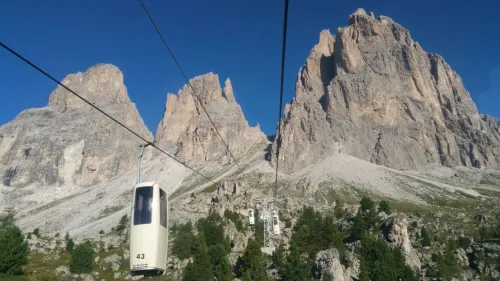
Dolomiti UNESCO, il bilancio di Banca d'Italia: +9% di pernottamenti senza consumare più territorio
Il paper di Banca d'Italia analizza gli effetti sui flussi turistici e sull'ambiente nei 4 anni successivi all'iscrizione delle Dolomiti nella lista dei Patrimoni Mondiali dell'Umanità, avvenuta nel 2009. A fronte di un incremento delle presenze, il numero di strutture turistiche non è cresciuto e quello di posti letto si è ridotto. Ai maggiori flussi turistici non si è associato né un aumento del consumo di suolo né una maggiore produzione di rifiuti, dimostrando il potenziale del riconoscimento UNESCO nel generare benefici economici locali senza compromettere la qualità ambientale, a condizione che siano in atto un efficace coordinamento istituzionale e solide garanzie normative.
2