
VenetoVerena, Melette, Kaberlaba, Val Formica, Cima Larici
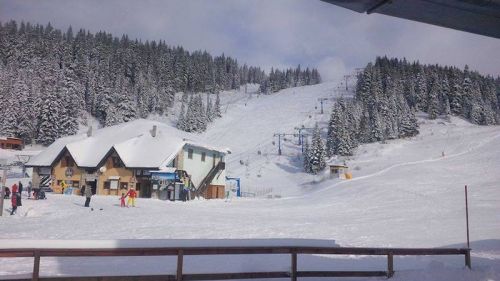
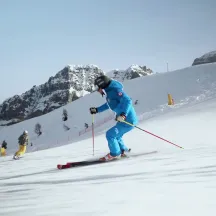
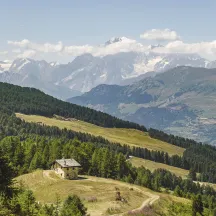
The Asiago Plateau of the Seven Municipalities, in the Vicenza Pre-Alps, is not one interconnected ski area, but a vast winter territory made up of several ski areas. Slopes, snow-covered pastures and fir forests alternate across an open, bright landscape, with views that on the clearest days stretch towards the Dolomites, the Lagorai and the Veneto plain.
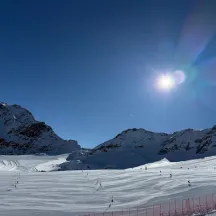
The Plateau’s tourist portal lists a total of more than 80 km of alpine skiing slopes, distributed, however, among separate areas that cannot be reached on skis. Skiable elevations range approximately from 1,000 metres at Kaberlaba to 2,020 metres on Monte Verena. The amount of terrain actually available can vary considerably during the season: the lower sectors depend more heavily on temperatures and artificial snowmaking, while Verena and Val Formica benefit from their higher elevations.
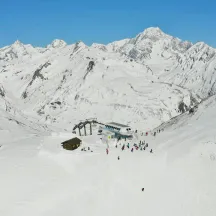
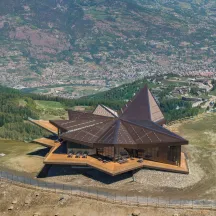
Monte Verena 2000, in the municipality of Roana, is the highest ski area on the Plateau. From the Verenetta base area, at approximately 1,640 metres, the lifts reach an elevation of 2,020 metres, just below the First World War fort that dominates the mountain. Five lifts serve twelve slopes, ranging from the beginner area runs to more challenging trails such as Direttissima, Canalon and Carbonara. The recently built Forte Verena six-seater chairlift provides faster access to the upper section, while some slopes and variants retain a more traditional character and require natural snow.
At the Melette di Gallio, skiing is available between approximately 1,400 and 1,750 metres on 25 km of slopes. This is the most varied sector in terms of terrain, with blue and red runs suitable for intermediate skiers and several black runs that can entertain even more advanced skiers. The ski area has four chairlifts, including the modern Busa Fonda–Meletta detachable six-seater, alongside older lifts. Snowmaking, a beginner area, snowpark and mountain huts on the slopes complete the offering.
Val Formica–Cima Larici offers four blue runs, a snowpark and modern, fast lifts, including a four-seater chairlift. It is particularly suitable for children, beginners and families, thanks also to its beginner area and Winter Park. Kaberlaba, a few kilometres from the centre of Asiago, is another major learning hub, with easy slopes, magic carpets and a renovated snowmaking system. The small Biancoia area, when conditions allow, also offers easy runs and a quiet setting suited to first experiences on snow.
Overall, alpine skiing on the Plateau is recommended above all for families, beginners and intermediate skiers. Verena and Melette nevertheless offer more technical descents, while anyone seeking major vertical drops and long sequences of connected slopes should bear in mind that the different resorts are not linked. Before setting out, it is therefore important to check the snow report and the opening status of the individual lifts.
The Plateau’s true speciality, however, is cross-country skiing. The regional network extends to more than 500 km of trails, groomed for both classic technique and skating and distributed among seven centres. Campomulo, with more than 150 km of trails, Campolongo, Enego-Marcesina, Monte Corno and the Asiago Golf Arena are some of the main reference points. The routes pass through forests, clearings, mountain farms and sites connected with the Great War, offering trails suitable both for beginners and for more highly trained cross-country skiers. Here too, the opening of the entire network depends on snow conditions.
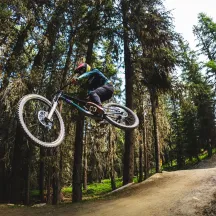
The winter offering also includes snowshoeing, sledging, snowboarding, ice skating and ice hockey, a sport deeply rooted in Asiago’s tradition. In summer, the Plateau becomes a destination for hiking, mountain biking and e-biking, golf and walks among the mountain farms. Routes to Forte Verena, Forte Campolongo, Monte Ortigara and Monte Cengio combine nature with historical memory, while local cuisine, Asiago DOP cheese and Cimbrian culture complete the identity of a region to be enjoyed all year round.
© ALL RIGHTS RESERVED
19
Social reactions
19

© ALL RIGHTS RESERVED
Latest news from Asiago Altopiano

Veneto
Made in Malga 2026: Asiago celebrates mountain cheeses over two September weekends
Redazione Turismo, Wednesday 19 August
Ice Hockey
Azzurri towards the Olympic qualification tournament: meeting in Egna for the national hockey team
Fabio Poncemi, Monday 9 August 2021
Alpine Skiing
Fabio Poncemi, Tuesday 6 July 2021
Grass Skiing
Meeting in Sansicario for the Azzurri of the World Cup. The European Cup group in Asiago
Fabio Poncemi, Thursday 20 May 2021


19