
Ski Touring

scialpinismo

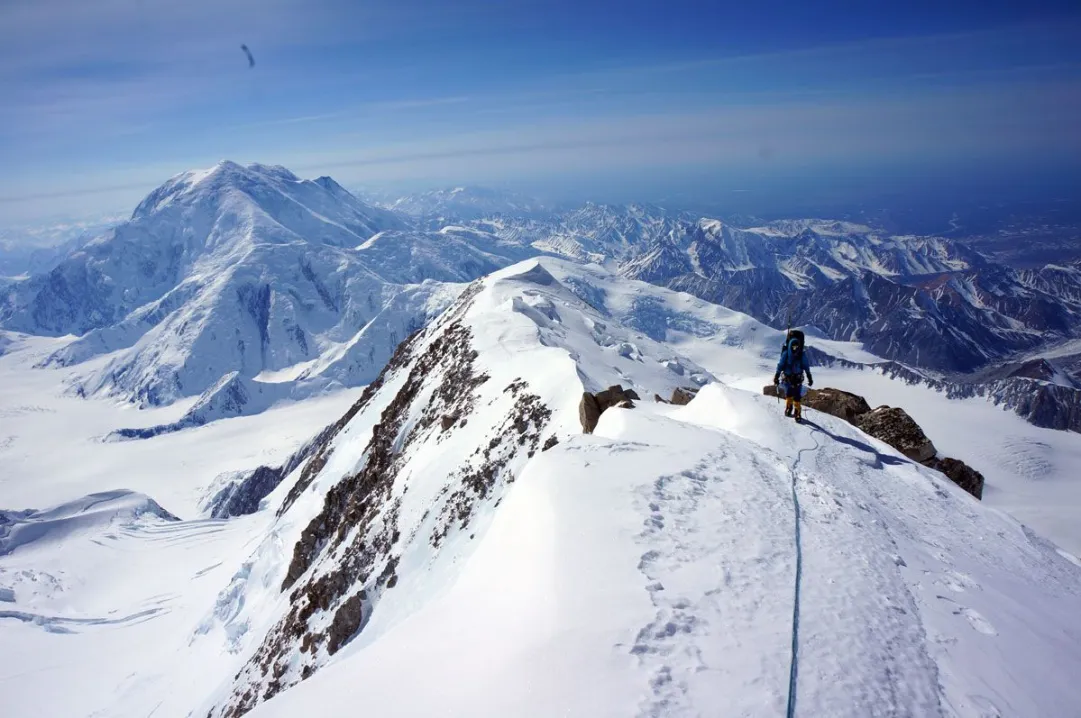
Three climbers Italian Alberto Bolognesi, Emanuele Francesco Torre and Leaf, last May have completed their enterprise to reach the summit of Mount McKinley or Denali, the summit more & ugrave; high dell''America North.
Monday 10 November 2014 12 minutes reading time
When choosing a destination for a shipping sometimes has difficulty & agrave; to identify the & rsquo; s exact reason that drives us all & rsquo; s business. & nbsp; & nbsp; & Egrave; something that starts to take you from the belly, growing inside, instinctively you feel ready to & rsquo; s meeting with that particular mountain. Then he goes up to the heart and slowly you fall in love of & rsquo; s idea, you think, the caress, the dreams. Can you imagine just you and the mountain. And you talk to her, open your mind to perceive what he has to say, what he has to advise you. Only later did the & rsquo; s idea takes shape in the head, in your rational side. Then you know you have to leave, preparing and planning for the expedition. & Egrave; the moment when it all becomes real.
L & rsquo; s initial input can & ograve; from you or your companion, and in the case of & rsquo; s ascension to the & nbsp; Denali & egrave; Frans was Francesco Torre the culprit.
A day like many others, while & egrave; engaged in his daily life & agrave ;, mountain guide Alberto Bolognesi receive a call from & rsquo; mountaineer friend Francesco Torre: & ldquo; why & eacute; we do not do the Denali Ski Quest & rsquo; s year? Let's start at the end of April, before it reaches the world, and we reach the top. Twenty days and we manage. & Ldquo;
Very little is needed to convince Albert and also Lele (Emanuele Leaf mountain guide of the group ALTox), young, full of enthusiasm and energy he decided to tag along.
Alby knows South America, Chile, Bolivia & hellip; but for him the & rsquo; Alaska & egrave; a bit & rsquo; as the & rsquo; s final frontier. & Egrave; a land of contrasts, wild, where & rsquo; s men measure their own limits through the mountain, cold, wind and loneliness, only nature lonta from civilization.
The McKinley & egrave; l & rsquo; s only mountain where there are n & eacute; provided n & eacute; permit holders; all the material needed to be & ldquo; dependent & rdquo; members of the expedition and & egrave; that's what makes it unique, difficult and almost inaccessible. Here is reborn l & rsquo; atavistic struggle between the & rsquo; man and mountain. This is the mountain ugrave & more; of high & rsquo; & egrave and North America; the third-ever ascent, that & egrave; of 5400 meters. From base camp 4200 m are to be overcome and 60 km of distance to cover. The estimated time for the climb & egrave; 10 days, that for the descent of 3.
The Italian expedition estimated 14 days at high altitude, free standing, carrying with S & egrave; all the & rsquo; equipment and food for 3 weeks, the Limete required by federal law. That translates to about 70 kg each, 20 and 50 in the backpack on his back on the sled, the pulka. The three climbers are also willing to accept the fact that, in the event of an accident, probably no one will go & agrave; to look for. For them, the dead line & egrave; written permission on 24 June. Until that day, no ranger Move & agrave; a finger to look for them. After maybe s & igrave ;. But by then it's too late. Accepted this fact & egrave; forbidden to have an accident or get sick!
Fields are safe areas but where there & rsquo; & egrave; nothing. You have to build the pitch in which monteras the tent, build walls around the tents to shield you from the wind, whipping violent, dig holes in the ice that will become your kitchen and your bathroom. You're just with your fellow expedition.
The three Italian Alby, Lele and Frans meet Swiss Lucas and David, they decide to deal with the & rsquo; s business. L & rsquo; s & igrave plane abandons them; East Kahiltna Glacier Forth. At the exact moment when you see it and you remain the ridecollare & igrave ;, a tiny dot in the white sea boundless, & nbsp; you realize how small your ego is crazy and you wonder who made you do? And you know that, from that moment on, your ability & agrave; and your strength are the only things that you can count on. You look around and you begin to feel how massive is vast and distant goal.
From the first movement, fatigue clear your mind. Are you aware that for many days suffer from the cold, wind, fatigue. Doubt and fear are playing with your mind in a constant waltz of thoughts. A & ugrave more; shooting you will show up & agrave; before the & rsquo; s idea of ​​renunciation. It is only ever lucidly and clearly choose whether to continue or go back.
The size of the travel & egrave; a lens that distorts the experience: you will not be pi & ugrave; the same as before when you return.
The first three days time & egrave; mild and relatively little salt. The slides are worn with ease & agrave ;. For the boys shipment fields become familiar with the construction of kitchens in ice. They are cut with the saw large blocks of ice and off to make walls, shelves and shelters just like the Eskimos do with the igloo.
The fourth and fifth day Alby, Lele and Frans remain stuck at field3 in 3300 but due to the storm. Sleeping with -15 to & rsquo; & egrave not inside the tent; some sleep.
Pi & ugrave; are more salt & ugrave; the Pulke become a problem. The ultimate difficulty & agrave; also points the maximum of & rsquo; ingenuity. Among field3 and Field4 c & rsquo; & egrave; & nbsp; the MotorCycle Hill, a steep stretch of more than 300 m and with sleds put to the test. Unique to continue Medo & egrave; use the techniques of relief: after a break-equipped anchor mounting a pulley with self-locking, and thanks to & nbsp; 60 feet of rope, he hoists the counterweight pulka doing with your body. The shipment must understand that to continue to decrease the loads, so & igrave; are too heavy. The McKinley non & egrave; A short stroll right: it's cold and when it goes well the thermometer indicates the & nbsp; 26 degrees below zero. Once in the field 5 you have to dress with tutoni. Otherwise it would be impossible to resist. At night, even inside the tent down to -26 degrees. Down jacket, sweater and cap ever worn, but & nbsp; ice forms even in the sleeping bag.
& Egrave; May 12 and depart from the Field5 two ropes, Lele & egrave; Lucas tied to one of the Swiss, while Frans with Alby. David, the secndo Swiss climber, & nbsp; is not well suffer from altitude sickness and will have & agrave; give up. the two rope teams arrive at the summit on 12 May at 15.10. Too tired to leave.
The next morning we start the return to the field4, and along the way he gets up a storm. The Mountaineers have had no luck this time and took advantage of a favorable weather window perch & eacute ;, in the following weeks, more & ugrave; no & egrave; managed to climb.
At the end of the & rsquo; s company three Italian climbers Alberto Bolognesi, Emanuele Francesco Torre and Leaf are 3 of the 12 people who came to the summit of a total of 354 mountaineers who have undertaken the climb.
On May 18, 21 days after departure, return home. Time & egrave; time that the Denali bestow his foot to the other men that respect and willful attempt its conquest.
© ALL RIGHTS RESERVED
Social media engagement
More details
Più letti in Turismo
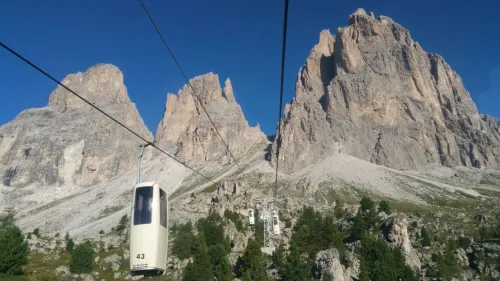
Dolomiti UNESCO, il bilancio di Banca d'Italia: +9% di pernottamenti senza consumare più territorio
Il paper di Banca d'Italia analizza gli effetti sui flussi turistici e sull'ambiente nei 4 anni successivi all'iscrizione delle Dolomiti nella lista dei Patrimoni Mondiali dell'Umanità, avvenuta nel 2009. A fronte di un incremento delle presenze, il numero di strutture turistiche non è cresciuto e quello di posti letto si è ridotto. Ai maggiori flussi turistici non si è associato né un aumento del consumo di suolo né una maggiore produzione di rifiuti, dimostrando il potenziale del riconoscimento UNESCO nel generare benefici economici locali senza compromettere la qualità ambientale, a condizione che siano in atto un efficace coordinamento istituzionale e solide garanzie normative.
2