
Nordic SkiingCross Country - Italy

Getty Images


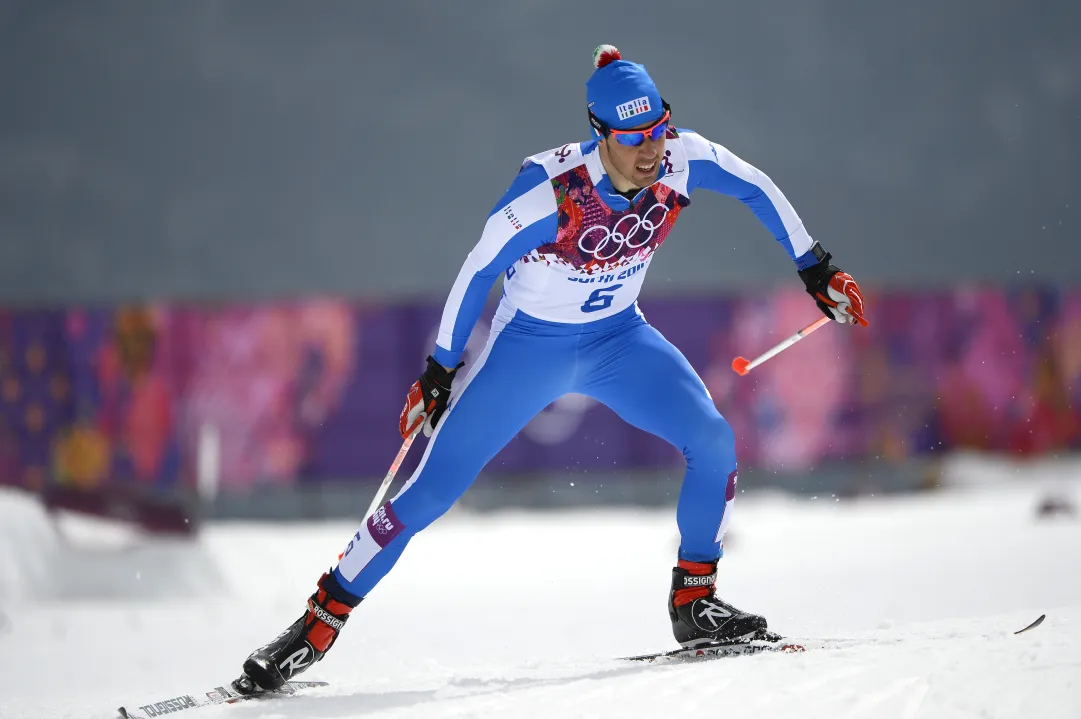
The Olympic Games in Sochi have ended a run of seven consecutive Olympics in which Italy conquered cross-country skiing at least one medal.
Monday 24 February 2014 14 minutes reading time
From 1988 Calgary are in fact arrive 33 medals, 8 golds, 12 silvers and 13 bronzes that he had been elevated to one of the most prolific for the color blue in winter sports. Not to mention, however, that the historic first gold medal was won by Franco Nones in 30 km in Grenoble 1968.
These medals brought home from Italy at the Olympics cross-country skiing
GOLD Franco NONES (30 km - Grenoble 1968) Stefania Belmondo (30 km TL - Albertville 1992) Manuela DI CENTA (15 km TL - Lillehammer 1994) Manuela DI CENTA (30 km TC - Lillehammer 1994) Maurilio DE ZOLT, Mark ALBARELLO, George VANZETTA, Silvio Fauner (4x10 km Relay - Lillehammer 1994) Stefania Belmondo (15 km mass start TL - Salt Lake City 2002) Gabriella Paruzzi (30 km CT - Salt Lake City 2002) Fulvio VALBUSA, Giorgio DI CENTA, Peter Piller, Cristian Zorzi (4x10 km Relay - Torino 2006) Giorgio DI CENTA (50 km mass start TL - Torino 2006)
SILVER Maurilio DE ZOLT (50 km - Calgary 1988) Stefania Belmondo (10 km pursuit TL - Albertville 1992) Mark ALBARELLO (10 km TC - Albertville 1992) Joseph POULIE, Marco ALBARELLO, George VANZETTA, Silvio Fauner (4x10 km Relay - Albertville 1992) Maurilio DE ZOLT (50 km TL - Albertville 1992) Manuela DI CENTA (5 km TC - Lillehammer 1994) Manuela DI CENTA (10 km pursuit TL - Lillehammer 1994) Stefania Belmondo (30 km TL - Nagano 1998) ALBARELLO Marco, Fulvio VALBUSA, Fabio MAJ, Silvio Fauner (4x10 km Relay - Nagano 1998) Stefania Belmondo (30 km CT - Salt Lake City 2002) DI CENTA Giorgio, Fabio MAJ, Peter Piller, Cristian Zorzi ( 4x10 km relay race - Salt Lake City 2002) Peter Piller (15 km TL - Vancouver 2010)
BRONZE Bice VANZETTA, Manuela DI CENTA, Gabriella Paruzzi, Stefania Belmondo (4x5 km Relay - Albertville 1992) George VANZETTA (15 km pursuit TL - Albertville 1992) George VANZETTA (50 km TL - Albertville 1992) Stefania Belmondo (10 km TL tracking - Lillehammer 1994) Bice VANZETTA, Manuela DI CENTA, Gabriella Paruzzi, Stefania Belmondo (4x5 km Relay - Lillehammer 1994) Mark ALBARELLO (10 km TC - Lillehammer 1994) Silvio Fauner (15 km pursuit TL - 1994 Lillehammer ) Silvio Fauner (30 km CT - Nagano 1998) Karin MORODER, Gabriella Paruzzi, Manuela DI CENTA, Stefania Belmondo (4x5 km Relay - Nagano 1998) Stefania Belmondo (10 km CT - Salt Lake City 2002) Cristian Zorzi (Sprint TL - Salt Lake City 2002) Peter Piller (Double Tracking - Torino 2006) Arianna Follis, Gabriella Paruzzi, Antonella CONFORTOLA, Sabina VALBUSA (4x5 km Relay - Torino 2006)
Italian cross-country skiers have therefore won in every type of race, from 5 km to 50 km male female, from sprint to relay, the free technique in stride. Yet before he left for Sochi you already knew that this strip of podiums would have stopped.
THE WOMEN'S MOVEMENT The women had no chance of a medal. It is true that Manuela Di Centa and Stefania Belmondo not many are born, but also girls from the name emblazoned were less capable of giving great satisfaction in the past, and not only in the Games. From collection of contemporary Arianna Follis, Marianna Longa and Magda Genuin, dated spring 2011, the female sector of skiing was, however, a generation gap that has not yet been filled. The girl who was to take the reins of the team, Silvia Rupil, you are completely lost after showing something good especially in the third leg of the relay in Vancouver, then closed in fourth place.
Yet something seems to move on the horizon, especially among the specialists of the sprint this year Vuerich Gaia, born in 1991, just missed the podium in the World Cup in Nove Mesto, and scored in Sochi the best placement of an individual Italian (seventh in the sprint). Behind her are slowly growing other girls, Greta Laurent (1992), Frances Baudin (1993) and Julia Stuerz (1993, and only medal team in the World Junior and U23 Val di Fiemme). Something is missing with regard to race distance: girls to bet on are called Ilaria Debertolis (1989), Lucia Scardoni (1991) and Deborah Agreiter (1991), all three assets with different appearances in the World Cup but still far from the top position.
The next four years will be crucial for reaching Pyeongchang with more credentials than Sochi. If the federation and technicians will work well, the girls set out above will certainly not emulate Di Centa and Belmondo, but type less than a competitive team in the two relays.
THE MOVEMENT MEN Someone before Sochi was deceived Federico Pellegrino could aspire to a medal in the sprint. Pellegrino, born in 1990, was in fact presented to Russia's strong second place in the ranking of specialties, but ranking liar for two reasons: the first is that the strongest sprinter in the world have deserted most of the races (*) The second is that the path of Laura Cross-country Ski & Biathlon Center was anything but favorable to the Val d'Aosta, with great explosiveness, but still struggling on the resistance, at least compared to rivals most quoted, So & rsquo it is that in the pre-Olympic twelve months ago could not even get past the hurdle of qualifications. If we add the many responsibilities that have saddled him as the only long-distance runner theoretically capable of winning a medal, that's the eleventh place finish can not be seen as a disappointing result, but perfectly in line with expectations.
Pellegrino is still a great talent that can only get better even though maybe in distance races, as to the course of modern cross-country skiing, it would be more useful to a specialist in the sprint. Along with other guys like him can grow Maicol Rastelli (1991), Domenico Salvatori (1992) and especially Francesco De Fabiani (1993), the best blues in the 15 km classic technique of Sochi and perky even in the 50 km. And do not forget Dietmar Noeckler, which, though now a staple of the Italian national team has only 25 years old and has a knack for getting better.
MENTALITY THE ITALIAN Finally a remark is in order concerning the Italian mentality. In Sochi - Pellegrino in part - the more credentials were placed in David Hofer (30 years), Roland Clara (nearly 32 years) and even Giorgio Di Centa (41 years). The three, along with Noeckler, who also composed the blue relay, relay race that had no chance of medals and still managed to finish in fifth place. Since it was impossible to get on the podium, why not deploy a quartet of twentysomethings so as to make their experience for the future, rather than a team with an average age of 34 years who can not give anything to skiing Italian background? The speech is naturally extended to the women, which however has a generational gap even more obvious as to be in the Navy Piller (29 years old), the veteran of the team.
Perhaps this is the big problem not just of skiing, but Italian sports general: lack of confidence in young people. Rather than launch a teenager you prefer to bet on the veteran hopeless with the excuse of not wanting to "burn" the young man. Yet if we look abroad this excuse does not hold, and the results are there for all to see. If something changed in that sense, perhaps the future of skiing Italian would not be as bright as the past, but not as dark as this.
(*) In season, including the World Cup and Events Multistages, have played eight games sprint. Pellegrino has participated in all eight, finishing second twice as best result. The gold medal Ola Vigen Hattestad, former world champion in Liberec 2009, and twice winner of the cup of specialty, has participated in five sprints, winning in Dobbiaco, the silver medal Teodor Peterson, winner of the cup specialty in 2012, has participated in five sprint, reaching four times in the final, the bronze medalist Emil Jönsson, who is the athlete who has the most wins in the sprint World Cup, has participated in three sprint, with the fifth best finish of Asiago, the fourth-ranked Anders Gløersen participated in three sprint, winning in Davos, the fifth-ranked Sergei Ustiugov participated in three sprint, winning in Nove Mesto, the sixth-ranked Marcus Hellner Finally, he had not taken part in any sprint, but we're talking about the world champion in Oslo 2011. Therefore, before loading pressure of a boy of 23 years before the Olympics, it would be better informed and positively accept the eleventh place finish.
Social media engagement
Più letti in Sport invernali
Il derby azzurro nei quarti di finale del KW Fall Classic è di Spiller e compagni: battuto il Team Retornaz
Curling: la fase finale del torneo internazionale di Waterloo vede la compagine trentina di Cesare e Stefano Spiller, Amos Mosaner e Sebastiano Arman volare in semifinale. Ko di misura contro King per il Team Zisa.
2