
Nordic SkiingCross Country Skiing - analysis
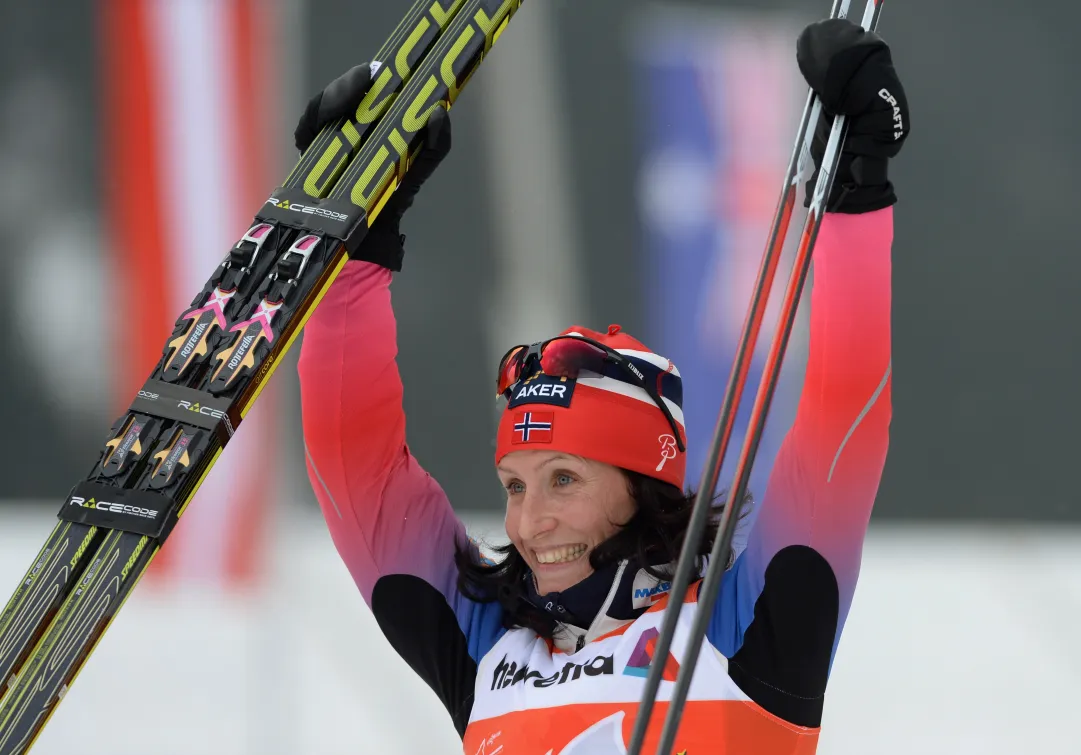

Getty Images

It discusses and often you encounter about l & rsquo; atavistic litigation relating to the calculation of the victories of the World Cup cross-country skiing.
Tuesday 6 January 2015 9 minutes reading time
The situation is very intricate because of the difficulty & agrave; FIS while following a unique policy founded on principles of logicit & agrave ;.
On the sidelines, should be stressed as the & rsquo; meaning & ldquo; wins World Cup & rdquo; Let the time that is because in the past the Olympics and World Cup competitions assigned points for the general classification, that does not happen more & ugrave; for nearly three decades.
In this regard, when it comes to victories or podiums individual cross-country skiing, it would be to use the terminology & ldquo; success or podium finishes in top-level competitions & rdquo ;.
With the first level refers to five distinct categories: A) the usual competitions of the World Cup B) large or small & ldquo; & rdquo laps; (Tour de Ski, Tour closing, Tour opening) C) the stages of the great or small turns D) the individual competitions of the World Championships E) the Olympic competitions Ci & ograve; Accordingly, when we speak simply of victories or podiums of the World Cup, can not & ograve; come the distinction between "stages of the World Cup" and & ldquo; stages of large or small tours & rdquo ;. Analyzing what happened in recent times, is known as just the & rsquo; release into the so-called & ldquo; Tour & rdquo; has generated an unprecedented confusion because & eacute; you & egrave; posed a problem of classification of podiums and victories without the international federation was able to provide a unique solution.
SOLUTIONS TO PROBLEMAOvviamente, in a system that respects, the basis of all reasoning must be based on logic, unless completely lose credibility & agrave ;.
It goes without s & eacute; that the final victory in the overall standings of the Tour is to be considered as a success of the World Cup (as regularly happens always in the statistical section of the FIS website). As regards, however, the classification of podiums and stage wins in the & ldquo; Big or Small Giri & rdquo ;, it would be enough to follow two trivial criteria can unravel departing doubt A) The victory in a stage of multistages goes to whoever collects 50 points
B) If the last leg of multistages you can not & ograve; attribute the victory of the day to those who cut the line first because & egrave ;, in this case, would get two wins, unless he has the fastest time. So, for a consistent system, that victory can be attributed to those who make the fastest time, even if they are not awarded points to the World Cup. He would not, in fact, makes sense to follow different criteria for climbing Cermis (last act of the Tour de Ski) and for the final stages of Tour of opening and closing of the World Cup.
& Nbsp; EXAMPLE OF CONTRADICTION NELL''ATTUALE SYSTEM
At this point, considering that explained what is obvious and elementary need to ask where and why & eacute; poses the problem.
L & rsquo; & egrave actual confusion; result of a & rsquo; misinterpretation of the FIS or, alternatively, a programming flaw in the system of data storage.
The examples of apparent contradiction are numerous, but, to make a & rsquo; & pi idea ugrave; precise situation, & egrave; need to dwell on what appears l & rsquo; absolute error pi & ugrave; striking. From the 2013 season, unlike what happened in previous years, the victory in & rsquo; last leg of the finals of the World Cup is automatically assigned to those who cut the finish line first. However, following this modus-operandi (unless it is a programming error), it happens that l & rsquo; athlete crossed the line gets to be a success in the final standings of the Tour that a victory in a Tour stage. As shown in Previously, logic would dictate that the stage win is attributed to those who actually do the fastest time as happens at the Tour de Ski and the Mini Tour of the season.
CONCLUSIONS
The pi & ugrave; surface or, in any case, those who do not have the time or ability & agrave; to deepen the discussion end up assigning 86 wins in World Cup Marit Bj & oslash; rgen slavishly following what appears on the personal file of the FIS website. However, one need only analyze the statistical section of the same portal to see how the World Cup victories of the Norwegian cross-country skier become 70. Of course, the number 70 does not include successes in various stages of the "Tour", but bens & Igrave; victories in the final standings of the Tour in question.
Moreover, the number 86 (since upgraded to Monday & Igrave; January 5) leaves the time it is because you hold mistakenly consider the victory in & rsquo; last leg of the finals of the World Cup of 2013. In reality & agrave ;, at that & rsquo; occasion not the best time was clocked by Bj & oslash; rgen, but Johaug, who, then, would be the winner of the stage of the Tour. A Bj & oslash; rgen would remain, however, success in the stage of the World Cup.
Obviously, the cases to be analyzed are varied, but the moral of that is derived from the situation & egrave; simple: & ldquo; if you claim to have credibility & agrave; not & egrave; can change the allocation criteria of podiums and victories in the race. Moreover, no explanation is the fact that an official site of a federation, depending on the section considered, refer to two different criteria for calculating & rdquo ;.
The 'only solution & egrave; take head standardizing the situation once and for all the criteria used in a manner such as to attribute to the system that essential logicit & agrave; currently missing.
© ALL RIGHTS RESERVED
Social media engagement
Più letti in Sport invernali

Il derby azzurro nei quarti di finale del KW Fall Classic è di Spiller e compagni: battuto il Team Retornaz
Curling: la fase finale del torneo internazionale di Waterloo vede la compagine trentina di Cesare e Stefano Spiller, Amos Mosaner e Sebastiano Arman volare in semifinale. Ko di misura contro King per il Team Zisa.

2