
Tourism
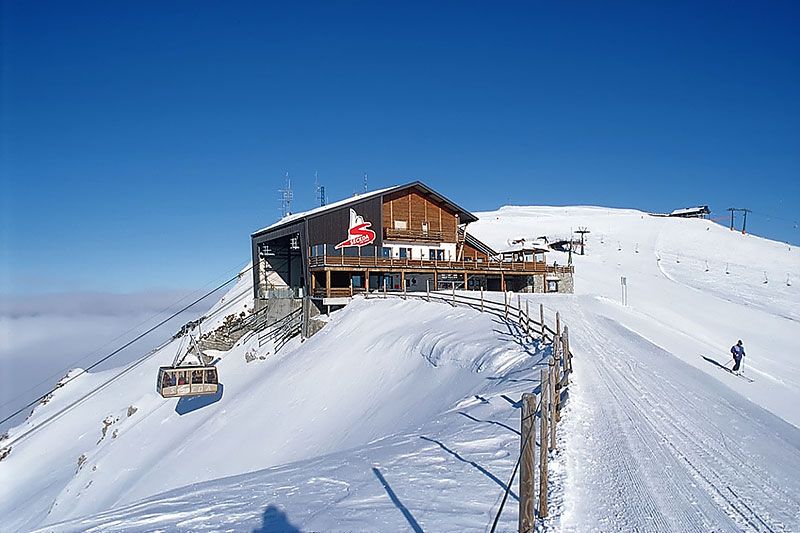

The company & agrave; Facilities Management raking in the first win of the season 2015/2016. From Rome came the news that the Ministry of Infrastructure and Transport, Graziano Delrio, signed the 'expected decision that it passes the legislation on the technical life of the lifts, adapting it to the rest of Europe'.
Thursday 3 December 2015 5 minutes reading time
Under the law in force until now, chairlifts, cable cars, & nbsp; ski lifts and ski lifts had to be demolished and replaced by new plants, the agreed maturity by law, regardless of the real and effective conditions of functionality & agrave; and safety of the individual plants.
A standard, this, made obsolete by technological progress, particularly in terms of safety, and gi & agrave; superseded by a law of the Autonomous Province of Bolzano and in the rest of & rsquo; Europe. It was, therefore, to ensure that all company & agrave; the same conditions, avoiding distortions to competition and millions invested in many cases unsustainable without public support. The concept of "service life" was introduced 30 years ago by Italian law (Decree of January 2, 1985). In 2000 & rsquo; EU had passed a directive to define the security requirements required in the cableways carrying persons. L & rsquo; Italy had implemented the Directive in 2003 (Legislative Decree n. 210), by deleting the deadline for plants built after that date and they are CE, but keeping all the previous ones. & Nbsp; & nbsp; With the new decree will exist & agrave; pi & ugrave; a fixed term but it will be scheduled reviews and audits on real safety conditions, in order to assess whether the 'system is still usable. If a plant & egrave; yet safe and running will not have & agrave; pi & ugrave; be replaced just because & eacute; "expired".
& Laquo; It & rsquo; the decree expected for years & ndash; Valeria says Ghezzi, national president of Anef, l & rsquo; association of entrepreneurs cableway and recognized member of Confindustria & ndash; and for which we have worked with perseverance and determination. I can only express great satisfaction and thank the government for the & rsquo; attention shown towards us. This measure, while ensuring maximum security for users, eviter & agrave; to put in serious difficulty & agrave; numerous companies & agrave; a sector that, & egrave; should be remembered, & egrave; essential to the development of tourism in the mountains. According to European statistics, in fact, every euro of sales of our company & agrave; generates five to seven in & rsquo; induced (hotels, restaurants, ski schools, shops), with similar effects also on & rsquo; occupation: for each employee of the plants there are five in the chain. For us & egrave; a victory, in short, & egrave; a & rsquo; confidence boost on the eve of the new season which will hopefully be rewarding & raquo ;.
Cableways in Italy are more & ugrave; 400, with a & nbsp; around d & rsquo; business nearly one billion Euros, about the & nbsp; 10% of the value of & rsquo; full & ldquo; snow boots Italian & rdquo; & nbsp; who last season & egrave; rose to 10.1 billion euro, up 3.3% according to surveys of "Ski Pass Panorama Tourism".
© ALL RIGHTS RESERVED
Social media engagement
Più letti in Turismo
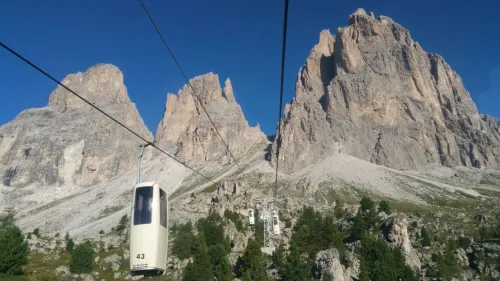
Dolomiti UNESCO, il bilancio di Banca d'Italia: +9% di pernottamenti senza consumare più territorio
Il paper di Banca d'Italia analizza gli effetti sui flussi turistici e sull'ambiente nei 4 anni successivi all'iscrizione delle Dolomiti nella lista dei Patrimoni Mondiali dell'Umanità, avvenuta nel 2009. A fronte di un incremento delle presenze, il numero di strutture turistiche non è cresciuto e quello di posti letto si è ridotto. Ai maggiori flussi turistici non si è associato né un aumento del consumo di suolo né una maggiore produzione di rifiuti, dimostrando il potenziale del riconoscimento UNESCO nel generare benefici economici locali senza compromettere la qualità ambientale, a condizione che siano in atto un efficace coordinamento istituzionale e solide garanzie normative.
18