
Tourismfocus


getty images (getty images (Ph

In recent years, Italy has paid great attention to its tourist vocation: the summary of a choral action that has seen sport as an opportunity to redevelop mountain areas.
Monday 18 April 2022 7 minutes reading time
How have winter sports developed in Italy in recent years? Investments in structures, networks and services, we try to understand how things have changed.
https://pixabay.com/photos/ski-race-world-cup-sport-man-speed-2246889/
Winter sports in Italy have grown in popularity, so much so that the best online bookmakers, as they already do for football sporting events, offer their users the opportunity to bet on competitions and athletes of these disciplines. This should give us the measure of how important they have become not only in Italy, but in the world.
THE ORGANIZATIONS MAKE SQUARE TO GROW THE SNOW SECTOR
Before the 2021 Alpine Ski World Championships, the Ministry of the Environment, CONI and local administrators signed the "Cortina Charter" to push on the accelerator of renewal, whose programmatic foundations will not only have an effect on the Dolomite territory , but they will spread to all mountain areas of the country.
There was talk of guaranteeing the sustainability, safety and quality of winter sports; above all, finally we start talking about the environment, and put it in relation with sport. A programmatic document that reflects a broader political orientation, expressly citing a UN resolution of 2013, 68/217, which speaks of sustainable development of the mountains, and the UNESCO program "World Heritage and Sustainable Tourism", for to have a mountain suitable not only for sportsmen, but for families looking for a different and more authentic relaxation experience.
THE IMPORTANCE OF THE MOUNTAIN SYSTEM
The progressive decentralization of work is involving an ebb of people towards the more neighboring areas of the country, and in this movement there are very interesting prospects for the redevelopment of the mountain territory and the recovery of areas that had been abandoned to move to the city.
Today, the descendants of families who had abandoned their places of origin are progressively returning to their valleys, recovering the existing real estate assets, and giving way to a new "sweet" accommodation based on the recovery of local traditions, with small bed and breakfast and widespread hotels, and a less aggressive sport, which does not need the large infrastructures typical of mega ski areas, but only back in the bosom of nature.
The statistical data cited in the premises of the Cortina Charter are very clear: the pre-mountain and mountain environment, once seen as hostile and unproductive, offers great potential for development, and in any case constitutes a slice of the country that certainly deserves more than how much I have received so far. Faced with a sixth of the Italian population who live there constantly, it receives about 120 million visitors every year: a tourist flow that can be developed by providing modern support infrastructures, which still exist today.
ALTERNATIVE SPORTS FOR THE DEVELOPMENT OF THE TERRITORY
A big hand in the development of mountain sports has been the change of attitude on the part of the athletes themselves. Although alpine skiing and related disciplines such as snowboarding are always in great fashion, today other types of sporting activities are spreading that require leaner and less invasive structures for the territory.
In part, this is also due to the increase in the average age of people, who to stay fit abandon more physical disciplines such as alpine skiing, for alternative "calmer" sports activities, such as cross-country skiing, ski mountaineering. , snowshoeing, trekking, climbing, carried out independently in these small towns, perhaps far from the main areas.
A phenomenon is characterizing this real green revolution which is spreading horizontally in all age groups, and which leads us to foresee a bright future for our valleys.
© ALL RIGHTS RESERVED
Social media engagement
Più letti in Turismo
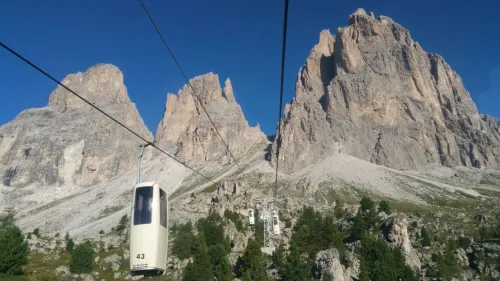
Dolomiti UNESCO, il bilancio di Banca d'Italia: +9% di pernottamenti senza consumare più territorio
Il paper di Banca d'Italia analizza gli effetti sui flussi turistici e sull'ambiente nei 4 anni successivi all'iscrizione delle Dolomiti nella lista dei Patrimoni Mondiali dell'Umanità, avvenuta nel 2009. A fronte di un incremento delle presenze, il numero di strutture turistiche non è cresciuto e quello di posti letto si è ridotto. Ai maggiori flussi turistici non si è associato né un aumento del consumo di suolo né una maggiore produzione di rifiuti, dimostrando il potenziale del riconoscimento UNESCO nel generare benefici economici locali senza compromettere la qualità ambientale, a condizione che siano in atto un efficace coordinamento istituzionale e solide garanzie normative.
7