
Sustainable Holidays
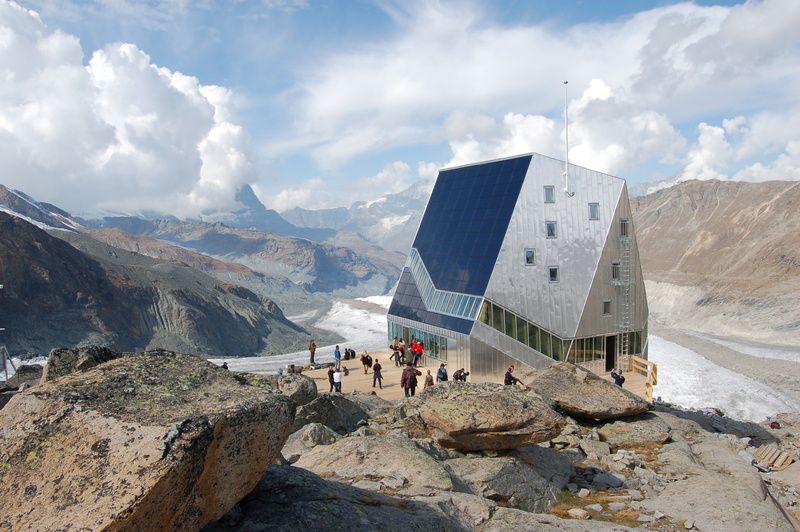


The new Monte Rosa Hut is located at 2.883m on the Glaciers of the Rose, above Zermatt, and was inaugurated in 2009 by replacing the old structure dating back to 1895. The building has a special focus on environmental sustainability and thanks to cutting-edge architecture and high technology has managed to reduce by one third of CO2 emissions compared to the old shelter.
Tuesday 17 April 2012 5 minutes reading time
The new structure, a true eco-retreat, it has a sophisticated system that makes energy self-sufficient energy to 90%. Designed from the Polytechnic University of Zurich, is distinguished from the architectural point of view for a structure to irregular polygon where the external walls are covered with a layer of aluminum and by large windows that are joined to the roof, creating a form similar to that of a crystal. The interiors are made entirely of wood-style mountain.
energy independence is achieved thanks to the two fundamental resources on the ground, the sun and water. To improve the energy efficiency of the building has also installed a computerized management system directly supervised at ETH Zurich, which include information on weather, number of guests and the level of available energy that can act directly on different parameters.
The large windows are also designed so as not to dissipate heat and absorb the most sunlight to warm the inside of the shelter, which has a capacity of 120 people and produces most of the electricity needed to it works thanks to solar panels integrated into the south facade. The energy can be stored in batteries to be used if necessary.
The additional energy requirements (due to peaks in demand and / or weather conditions are not suitable for solar energy) is instead derived from a system based on rapeseed oil.
In summer the water of melting glaciers is collected and stored in a reservoir located 40 meters from the hut. Keep the water for more than a year without it freezing at these temperatures has been a great challenge, won by the idea of ​​storing it behind the layer of permafrost in rock. A microfiltration system based on bacteria can also purify water before using it for bathing and cooking.
To reach the shelter you have to walk for 2 hours and 30 'from the station Rotenboden (2815 m.) of the Zermatt-Gornergrat railway, through the Gorner glacier (in German Gornergletscher). The refuge is open and guarded by mid-March to mid-September but has local winter, always open.
Nearby are several peaks that has always stimulated the imagination of mountaineers and that make up the beautiful view from the shelter that you can admire: the Dufour (4634 m.), Punta Nordend (4609 m.), the Gnifetti (4554 m.), the Jagerhorn (3970 m.), Lyskamm (4527 m.), the Castor (4228 m.), the Pollux (4,091 m.) and the Cima di Jazzi (3804 m. ). Possible also several crossings to reach the refuge Gandegghütte (3029 m.), The John Gnifetti Hut (3647 m.) For the Colle del Lys or Britanniahütte (3030 m.) For Adlerpass.
Social media engagement
More details

Più letti in Turismo
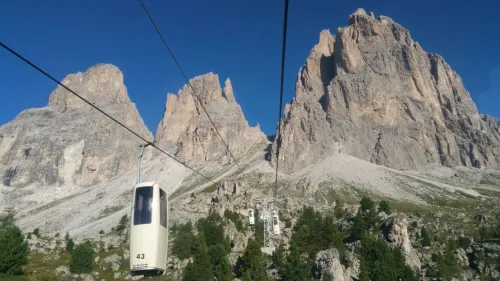
Dolomiti UNESCO, il bilancio di Banca d'Italia: +9% di pernottamenti senza consumare più territorio
Il paper di Banca d'Italia analizza gli effetti sui flussi turistici e sull'ambiente nei 4 anni successivi all'iscrizione delle Dolomiti nella lista dei Patrimoni Mondiali dell'Umanità, avvenuta nel 2009. A fronte di un incremento delle presenze, il numero di strutture turistiche non è cresciuto e quello di posti letto si è ridotto. Ai maggiori flussi turistici non si è associato né un aumento del consumo di suolo né una maggiore produzione di rifiuti, dimostrando il potenziale del riconoscimento UNESCO nel generare benefici economici locali senza compromettere la qualità ambientale, a condizione che siano in atto un efficace coordinamento istituzionale e solide garanzie normative.
102