
Lombardy
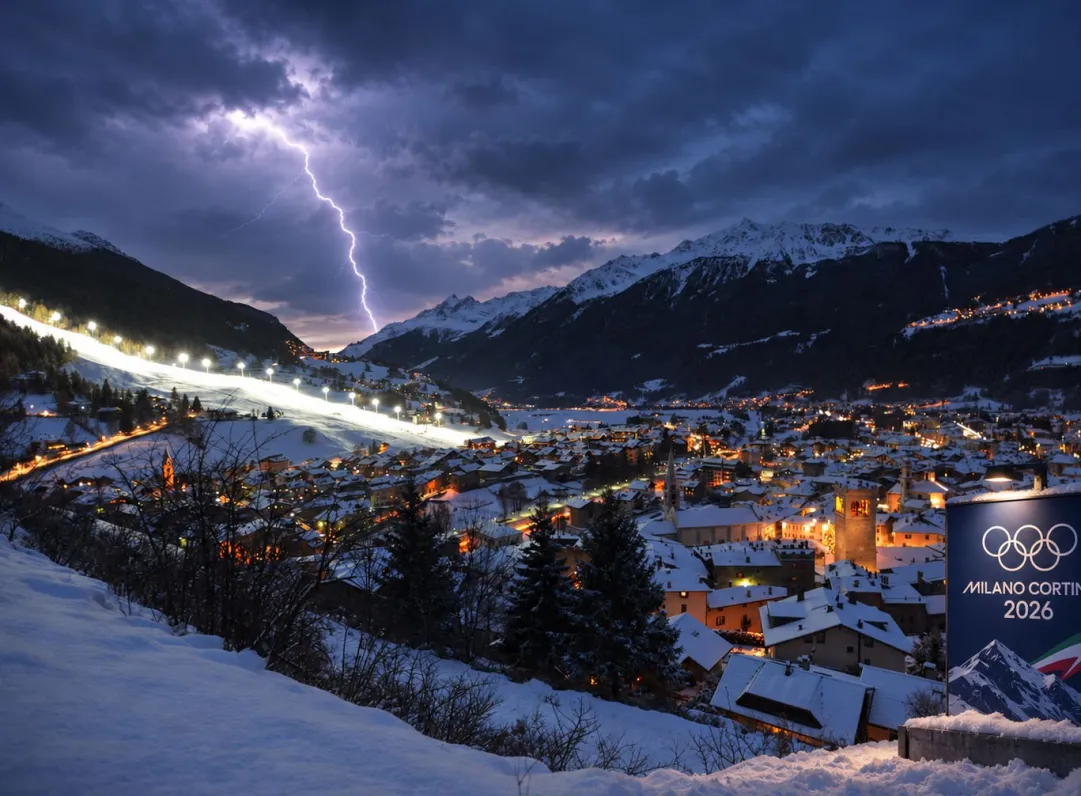

E.Pozzi edit AI



Società Impianti Bormio reports the damage suffered during the Olympic season and calls for clarity over the future of the Bormio-Ciuk and Ciuk-La Rocca lifts. The protest has reopened a broader issue: in Alta Valtellina, not all available funding opportunities have been turned into new ski connections.
Saturday 5 September 13 minutes reading time
Seven months before the Milano Cortina 2026 Winter Games, Società Impianti Bormio has broken its silence, issuing a strongly worded statement about the Olympic legacy left to the Valtellina resort. At the heart of the protest are the lifts announced ahead of the event but never brought into operation, as well as the economic consequences suffered by the ski area during the 2025/2026 season.
Bormio was one of the Games’ major protagonists, hosting the men’s alpine skiing competitions and ski mountaineering events on the Stelvio slope. According to SIB, however, the sporting and media success was not accompanied by a corresponding infrastructural legacy for the ski area.
Only 275,000 first-time entries during the Olympic season
The company describes the 2025/2026 season as the worst ever in terms of slope attendance. The total stood at 275,000 first-time entries, around 100,000 fewer than the ski area’s historical average.
SIB attributes the result to a series of factors linked to the Olympics: the forced closure of lifts during the competitions, higher accommodation prices and the reduced transport capacity of the ski area following the dismantling of the Fontanalonga-Valbella chairlift.
The company also highlights its contribution to organising the event. Under the agreement signed on 28 October 2025 with the municipalities of Bormio and Valdisotto, SIB made its lifts and slopes available free of charge to Olympic athletes and staff, and also undertook to produce the programmed snow required on the Stelvio slope in accordance with the standards requested by the IOC.
In exchange, the concessions were extended until 30 April 2036, replacing the previous system of annual or two-year renewals, which had long limited the company’s ability to plan and invest.
Fontanalonga-Valbella dismantled, but the new lift never arrived
The most controversial point concerns the Fontanalonga-Valbella chairlift, which SIB says it was forced to dismantle in spring 2025. The work was supposed to allow SIMICO to build the new Ciuk-La Rocca lift in time for the Olympic season.
However, the new chairlift was completed neither for the Games nor during the following summer. Bormio is therefore preparing to face a second winter season without the replacement lift.
According to the company, the consequence will be heavy pressure on the Bormio 2000-Cimino chairlift, which will remain the only available lift for transporting skiers to the upper part of the ski area, with the risk of queues and disruption during the busiest periods.
Award of the Olympic lifts cancelled
In June, Società Impianti Bormio learned from the press that the contract awarded to Graffer for the construction of the lifts planned under the Olympic programme had been cancelled.
In addition to the Ciuk-La Rocca chairlift, the project included the Bormio-Ciuk connection. Months after the event, SIB argues, no clear strategies have yet been communicated for the future of the two projects.
The company is therefore asking the municipal authorities to clarify their intentions and identify a solution to the economic and operational damage caused to the ski area.
The paradox of the Bormio-Ciuk lift
However, the statement also reveals a significant point. While disputing the failure to build the promised facilities, SIB itself states that the Bormio-Ciuk connection, considered essential during preparations for the Games, would no longer be a priority after the event’s conclusion.
According to the company, the resources currently available should instead be allocated to different measures that would be more useful and sustainable for the ski area’s future development.
SIB’s stated priority is the replacement of the Bormio 2000-Cima Bianca cable car, whose technical lifespan will end in July 2029. The lift serves the slopes between 2,000 and 3,000 metres and is also considered strategic with a view to a future connection with Santa Caterina Valfurva.
The connection to Valfurva project that fell through in 2026
Società Impianti Bormio’s protest must be viewed within a broader context. In Alta Valtellina, opportunities offered by public funding have not always been enough to turn cableway projects into reality.
In spring 2026, the municipality of Valfurva abandoned the construction of the Sant’Antonio-San Nicolò-Cimino lift, which would have provided direct access from lower Valfurva to Bormio’s slopes.
The project, worth more than €9 million, had initially received a €4.5 million contribution through the Fondo Comuni Confinanti, later increased to €5 million. To complete the investment, however, at least a further €4.5 million would have had to be raised through a private partner.
As Valfurva mayor Luca Bellotti explained to Neveitalia, no investor had expressed an interest in developing the project financing. The parties that had shown no interest also included the companies operating the Bormio and Santa Caterina lifts.
The financial problem was compounded by a particularly complex authorisation process, with assessments by the Province of Sondrio still to be completed and environmental issues linked to a slope bordering a Special Protection Area.
To avoid risking the loss of the contribution, the municipality therefore removed the lift from the project and allocated the funds to other public works. The municipal administration described the decision as painful but inevitable.
The Alta Valtellina connection remains a distant goal
SIB is now putting forward a highly ambitious vision: creating a system of ski connections in the future between the resorts of Livigno, Bormio and Santa Caterina Valfurva.
The prospect is certainly appealing and could profoundly change Alta Valtellina’s tourism offering. The events of recent years, however, show how difficult it is to turn this vision into concrete projects.
On the one hand, there are the Olympic lifts that were promised and awarded but never built; on the other, a connection to Valfurva that had substantial public funding but failed to secure the authorisations and private resources needed to move forward.
The issue therefore concerns not only the availability of funds, but also the ability to plan in good time, agree on priorities among authorities and operators, and develop projects that are economically and environmentally sustainable.
Bormio Ski’s statement has the merit of bringing the issue back to the centre of the debate. After the major international exposure provided by the Games, Alta Valtellina must now decide what tourism and infrastructural legacy it genuinely intends to build and, above all, through which projects that can actually be delivered.
Neveitalia’s in-depth coverage
© ALL RIGHTS RESERVED
Social media engagement
Ultimi in Regioni
Frabosa Soprana
Frabosa Soprana è la località più storica del Mondolè Ski e si sviluppa sulle pendici del Monte Moro, nel cuore delle Alpi Liguri. A differenza delle vicine stazioni nate espressamente per lo sci, Frabosa è un vero paese di montagna, posto a circa 900 metri di quota e circondato da boschi, borgate e panorami aperti sulle valli monregalesi.
34