
Aosta Valley
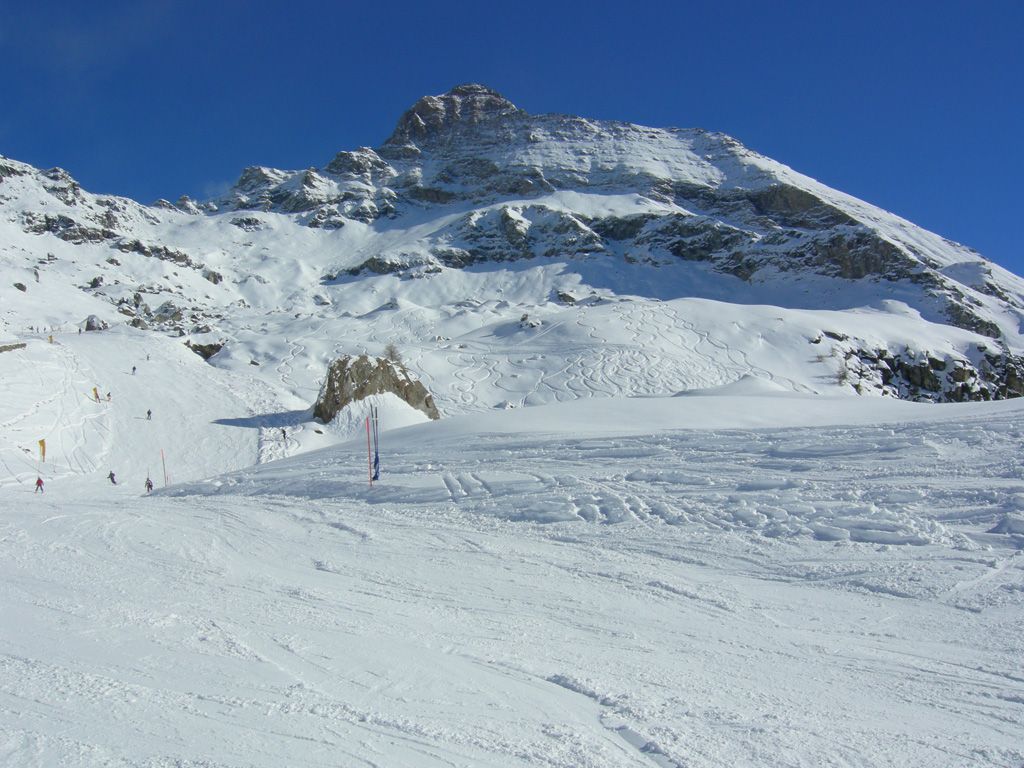
Gressoney-La-Trinité occupies the central position in Monterosa Ski and is the main crossroads of the ski area. The resort lies at 1,637 metres in the upper Lys Valley, at the foot of the Monte Rosa glaciers, in a setting characterised by ancient Walser villages, traditional wooden and stone houses, and views of the Lyskamm, Castor and Vincent Pyramid peaks.
The Gressoney-La-Trinité ski area offers approximately 34 km of pistes, stretching from the village at 1,638 metres to the 2,970-metre Passo dei Salati. Punta Indren, reached by lifts at an altitude of 3,275 metres, is the highest point, but is mainly intended for freeriding and ski touring and does not serve regular groomed pistes.
The local piste report lists 24 main pistes, plus the two inter-valley connections: 2 blue, 19 red and 3 black runs. The clear predominance of intermediate-difficulty slopes makes Gressoney particularly suitable for intermediate skiers, who can tackle long and varied pistes on both sides of the valley.
Gressoney-La-Trinité is the heart of the three interconnected valleys. To the west, via the 2,727-metre Colle della Bettaforca, skiers can reach Frachey and Champoluc in Val d’Ayas; to the east, Passo dei Salati provides access to the Piedmontese sector of Alagna Valsesia. The entire Monterosa Ski area officially offers 180 km of pistes, including the large interconnected circuit and the satellite resorts.
The Gressoney ski area is served by 11 lifts: two cable cars, two gondolas, five chairlifts and two conveyor belts. The main connections from Stafal to Sant’Anna, Bettaforca, Gabiet and Passo dei Salati are fast and make it possible to change sides of the valley without lengthy transfers. The Punta Jolanda, Bedemie-Seehorn and Gabiet-Lago chairlifts, on the other hand, are fixed-grip lifts and are slower.
The most recent addition is the Moos chairlift, which began operating in 2024. The lift facilitates the passage between the Moos piste and the Stafal access lifts, eliminating the section that previously had to be walked and making the journey across the ski area from Alagna to Champoluc smoother.
From the centre of Gressoney-La-Trinité, the Punta Jolanda chairlift reaches an altitude of 2,238 metres. The Jolanda pistes cross open slopes and wooded sections, offering varied skiing and panoramic views. The Jolanda 1 is one of the valley’s most interesting black runs, thanks to a succession of steep pitches and changes of pace that require confident technique.
Continuing uphill, the sector served by the Bedemie-Seehorn chairlift offers red runs such as Seehorn and Alpe Ricka. These slopes are generally uncrowded, with sustained gradients and beautiful views over the valley floor. The Moos piste allows skiers to descend towards Stafal, but includes a steep section and may prove challenging for less experienced skiers.
From Stafal, the western side is reached by cable car to Sant’Anna and the automatic chairlift to Bettaforca. The Pistone Betta is one of the longest and most representative descents in the ski area: it alternates between broad high-altitude slopes, moderately difficult pitches and smoother sections down to the valley floor. The same sector also includes the Nera, Diretta Stafal and Sant’Anna Village pistes.
Sant’Anna is also the main area dedicated to children and beginners, with conveyor belts, a ski school area, a fun slope and a dedicated facility. However, there are relatively few easy pistes for the size of the ski area, and reaching the other sectors often requires skiing red runs. Gressoney is therefore better suited to those who have already acquired a reasonable degree of independence than to complete beginners taking their first steps on snow.
On the eastern side, the Stafal-Gabiet gondola reaches the Gabiet lake area, where a short chairlift serves the easiest pistes and the Castore Snowpark. The next gondola continues up to Passo dei Salati, overcoming approximately 660 metres of vertical gain. The Salati piste is a long, high-altitude red run, wide and panoramic, with a succession of steep pitches and flatter sections that make it particularly enjoyable for intermediate skiers.
From Passo dei Salati, skiers can continue towards Alagna via the pistes on the Valsesia side or reach Punta Indren with the Funifor. At an altitude of 3,275 metres begin some of Monte Rosa’s best-known off-piste itineraries, including La Balma, Valle Perduta, Canale dell’Aquila and the routes towards the Indren and Bors glaciers.
Gressoney is one of Italy’s most important destinations for freeriding and ski touring, but Punta Indren should not be considered a normal extension of the pistes. The itineraries cross glacial terrain and uncontrolled slopes, with very substantial vertical drops. Complete avalanche-rescue equipment, experience and, for those unfamiliar with the area, the accompaniment of a mountain guide are therefore essential.
Its central location makes Gressoney the most balanced base for exploring the entire Monterosa Ski area. From Stafal, it is possible to head quickly towards both Champoluc and Alagna, choosing the side according to snow, wind and visibility. The Bettaforca and Passo dei Salati connections are, however, exposed and may be closed in unfavourable weather conditions.
Cross-country skiing is available on the valley floor on the Gressoney-La-Trinité track, which runs near the village and the Punta Jolanda lifts. When conditions allow, a high-altitude loop is also prepared at Sant’Anna. The winter offering also includes snow walks, snowshoeing, ski-touring routes and the Murmeltier toboggan run, served by the Moos chairlift.
Further down the valley, Gressoney-Saint-Jean has its own Weissmatten ski area, which is not connected to Gressoney-La-Trinité by ski lifts or pistes. The small ski area offers 11 km of pistes and can be reached by car or by the valley buses. It is particularly appreciated for the Leonardo David piste, night skiing and its more intimate atmosphere, but its kilometres are not included in the 34 km of the main sector.
During the summer, the lifts from Stafal provide access to Sant’Anna, Bettaforca, Gabiet, Passo dei Salati and Punta Indren. These locations are the starting points for excursions to Rifugio Quintino Sella, Rifugio Mantova and Capanna Gnifetti, as well as easier routes among lakes, alpine pastures and Walser villages. Gressoney-Saint-Jean complements the valley’s cultural and natural attractions with Castel Savoia and Lake Gover.
Gressoney-La-Trinité is recommended for intermediate and advanced skiers looking for long pistes, major vertical drops and the possibility of crossing the entire Monterosa Ski area every day. The learning areas are well organised, but easy pistes are limited. Its central location, fast connections, Walser environment and direct access to the major Punta Indren itineraries make it the most complete and strategically positioned sector of the three valleys.
© ALL RIGHTS RESERVED
24
Social reactions
24

© ALL RIGHTS RESERVED
Latest news from Monterosa Ski

Aosta Valley
Redazione Turismo, Thursday 30 July 2026
Aosta Valley
Angelo Bonorino, Wednesday 27 May 2026
Freeride
Cora Bettoni, Friday 27 March 2026
Freeride
Cora Bettoni, Monday 23 March 2026
Freeride
Cora Bettoni, Friday 20 March 2026Ultimi in Regioni
Valle Vigezzo
Situata a pochi chilometri da Domodossola e facilmente raggiungibile dalle principali città della pianura lombardo - piemontese, la Valle Vigezzo vanta un'offerta turistica ampia e diversificata: agli splendidi scorci montani si accompagna un importante patrimonio artistico e culturale che caratterizza i paesi presenti nell'ampio e verdeggiante fondovalle.
Conosciuta come la “Valle dei Pittori” per la sua tradizione artistica, alterna borghi curati, boschi e montagne che dalla parte alta del comprensorio regalano belle vedute verso il Monte Rosa.
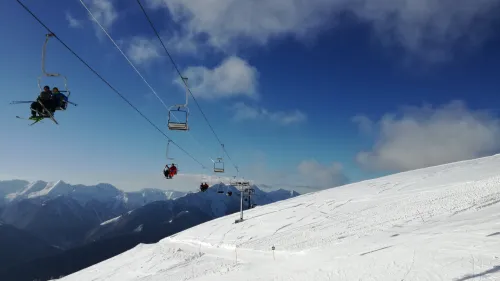
Principale centro turistico è Santa Maria Maggiore, punto di partenza di un apprezzato anello per lo sci di fondo. Nel vicino abitato di Prestinone (frazione di Craveggia), parte la moderna cabinovia ad 8 posti che consente di raggiungere la Piana di Vigezzo, dove gli sciatori troveranno una soleggiata area sciistica, con piste per tutti i livelli di difficoltà, servita da 2 seggiovie biposto, 1 skilift e 1 tapis roulant. A Druogno si trova invece la seconda area sciistica della Baitina, con uno skilift e un tapis roulant ideali per principianti. Nella località è, inoltre presente un secondo tapis roulant che consente di accedere a una zona adibita a bob e slittini.

24