
Mountain Flavours
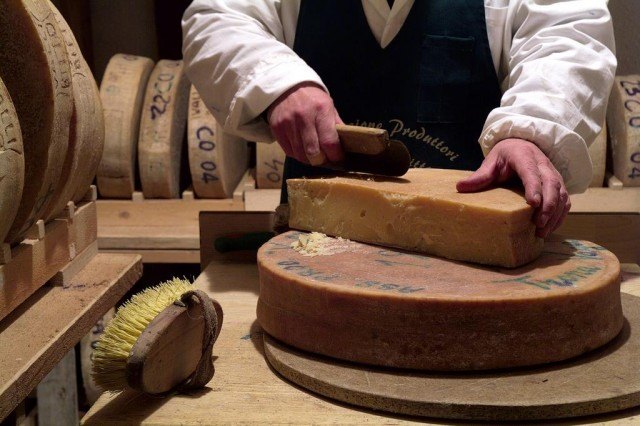


Bitto historic & egrave; a fat cheese d & rsquo; alpine raw milk that has a leading role in the history of alpine cheese production. This cheese has ancient origins: it seems to be born among the Celtic people who inhabited the Valtellina. The term may in fact derive from the Celtic Bitto & nbsp; & ldquo; & rdquo ;, which means bitu & nbsp; & ldquo; & rdquo ;. perennial Maybe the 'etymology indicates that the processing of milk allowed to store the cheese for a long time. & Nbsp;
Friday 6 November 2015 5 minutes reading time
Cheese Bitto valleys was known in Valtellina, in the neighboring Val Brembana and also marketed in Bergamo, Como and Milan, gi & agrave; in the fifteenth century.
The first written record, reached today, dates back to the sixteenth century: "the Valley of Bitto cheese" is in fact mentioned in various documents relating to business transactions. Set within these documents was also attests to the quality & agrave; Cheese and the high price, due primarily to capacity & agrave; aging Bitto than other cheeses.
Known throughout Italy and also all''estero, Bitto has its characteristics and its quality & agrave; the geographical and cultural area where it is produced. The biodiversity & agrave; the Alps Orobie & egrave; In fact, at the base of the aromas and flavors of this product.
For this, & egrave; born l & rsquo; Producers Association of Bitto valleys: to maintain the characteristics of a unique product. And again for this on the market today & egrave; You can find two different types of Bitto: the historic Bitto (that of tradition, which has stakes rigid and respects the ancient techniques) and the Bitto DOP, or new Bitto for purists (that allows the 'power to feed for cows , the 'use of enzymes and other variations in production).
Bitto is historical fact produced in 12 pastures in summer only: cattle, consisting of dairy cows bred brown Alpine breed goats orobica & nbsp; native, is conducted on the pastures and stayed there for the whole summer period. The 'exhibition, the' abundance of rivers' water and the wide variety & agrave; flora of the Alps Orobie allow give the milk properties & agrave; unique nutritional and organoleptic characteristics unique.
The product specification of Bitto Storico does not allow to integrate the & rsquo; feeding cattle and goats with feed and silage: the quality & agrave; pastures and livestock dell''alimentazione keeps almost intact the property & agrave; milk mountain.
The forms of historical Bitto mature have a diameter of 40-50 cm and weigh between 9 and 20 kg. Pasta & egrave; compact and comes with a color varying between white and pale yellow. All processing takes place according to tradition, handed down from father to son. The product specification of Bitto Storico not allow the 'use of lactic acid bacteria during the cheese, this characterizes the variability & agrave; organoleptic cheese.
In Cas & egrave; ra maturation Gerola high Bitto town, which obtained the Slow Food Presidium, pu & ograve; also be aged over 10 years.
Always in Gerola Alta, in the province of Sondrio, the headquarters of the Consortium Protection Bitto Storico and the center of Bitto Storico, with a tasting room, the shop and the maturing cellar which houses over 3,000 forms of this precious cheese.
& Nbsp;
© ALL RIGHTS RESERVED
Social media engagement
Ultimi in Turismo
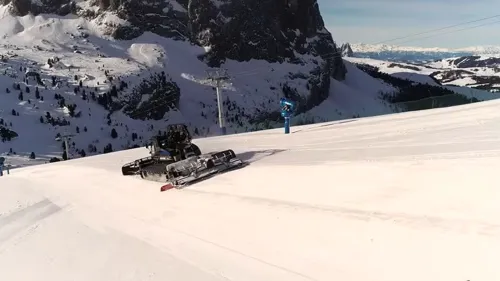
Stazioni sciistiche tra rincari e sostenibilità: l'efficienza energetica coniuga equilibrio economico e tutela ambientale
Venerdì 26 giugno a Luino, nel corso dell'evento Destinazioni in quota: costruire strategie condivise per il sistema montagna organizzato da MMA Studio, in collaborazione con SPM SpA Società Benefit, Davide Franchi, Senior Advisor Business Strategy e Referente MMA per le Alpi Centro-Occidentali, nonché collaboratore di Neveitalia, ha presentato un'analisi sullo stato attuale del Turismo di Montagna. In questo terzo e ultimo articolo approfondiamo l’impatto sul consumo di gas serra delle stazioni sciistiche riprendendo le evidenze emerse da una ricerca condotta, nel 2022, dal Politecnico di Torino, nell’ambito del progetto italo-francese ALPIMED CLIMA.

3