
Mountain Flavours#genepi
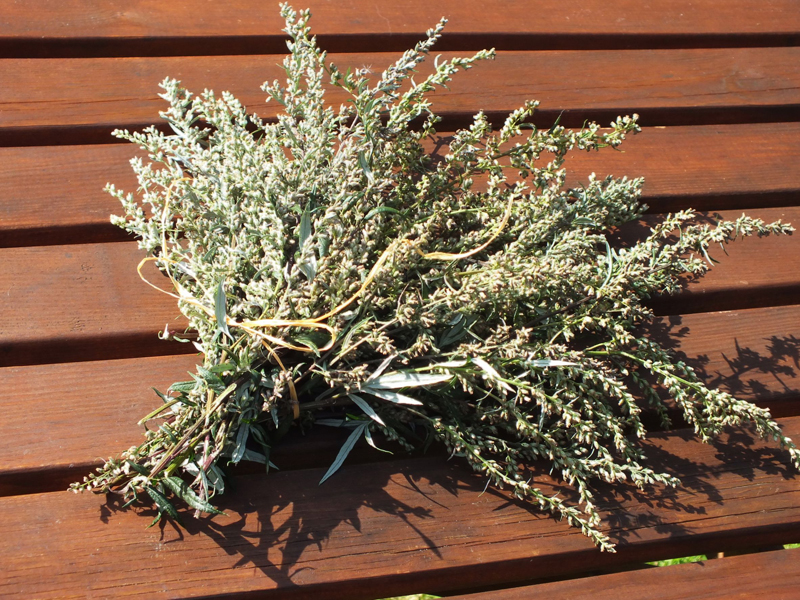


There are mountain tradition that will never abandon. Valle d' 'Aosta the production of distillates of mountain herbs & egrave; It has always been very active and following recipes handed down from generation to generation. The herbs that flourish in high altitude, are pure and have properties & agrave; very useful therapeutic. Among the many herbs that characterize the spirits of the Valle d' 'Aosta, the pi & ugrave; known & egrave; certainly the 'artemisia, the main component of the g & eacute; n & eacute; pi Aosta.
Wednesday 30 March 2016 4 minutes reading time
The recipe for g & eacute; n & eacute; pi has ancient origins. The liquor, thought as a digestive, & egrave; made from a raw material by quality & agrave; unique: the 'mugwort, which grows wild between 2000 and 2500 meters above sea level, between the rocks or gravel, in inaccessible areas and often inaccessible. This aromatic plant & egrave; present with many different species, but they are mostly the 'Artemisia spicata, the' Artemisia Umbelliformis and 'Artemia Glacialis to be used to realize the g & eacute; n & eacute; pi. The 'Artemisia & egrave; a rare plant, for this collection & egrave; controlled and occurs with a particular attention. In antiquity & agrave; This aromatic plant was gi & agrave; known for its properties & agrave; beneficial: digestive, bittering and neurotoniche.
The liquor is obtained with ingredients chosen with care: Alpine herbs that grow where the 'Air & egrave; pi & ugrave; pure, spring water, sugar and pure alcohol. The methods to realize the g & eacute; n & eacute; pi are two: for infusion (the herbs are immersed for about 45 days in a hydroalcoholic solution, to obtain an infusion which is then mixed with the other ingredients) or for suspension (the plants are placed on special grids above the water-alcohol solution, set within large containers closed in this way the 'alcohol acquires the aromatic components, the process & egrave; pi & ugrave; slow but allows to produce a very pure liquor).
Essential extracts directly from wild aromatic plants oils allow to distinguish the true g & eacute; n & eacute; pi-industrial: the unique flavor of the alpine herbs & egrave; difficult to reproduce, and the difference from that produced by plants grown & egrave; evident.
Since September 2014, the g & eacute; n & eacute; pi des Alpes got the 'Geographical dell''Indicazione important recognition, which can recognize the product as a representative of a territory and of protecting the production of quality & agrave ;.
& Nbsp;
(Image - lesaporie.com)
#GENEPI
© ALL RIGHTS RESERVED
Social media engagement
Ultimi in Turismo

Stazioni sciistiche tra rincari e sostenibilità: l'efficienza energetica coniuga equilibrio economico e tutela ambientale
Venerdì 26 giugno a Luino, nel corso dell'evento Destinazioni in quota: costruire strategie condivise per il sistema montagna organizzato da MMA Studio, in collaborazione con SPM SpA Società Benefit, Davide Franchi, Senior Advisor Business Strategy e Referente MMA per le Alpi Centro-Occidentali, nonché collaboratore di Neveitalia, ha presentato un'analisi sullo stato attuale del Turismo di Montagna. In questo terzo e ultimo articolo approfondiamo l’impatto sul consumo di gas serra delle stazioni sciistiche riprendendo le evidenze emerse da una ricerca condotta, nel 2022, dal Politecnico di Torino, nell’ambito del progetto italo-francese ALPIMED CLIMA.

69