
Mountain Flavours
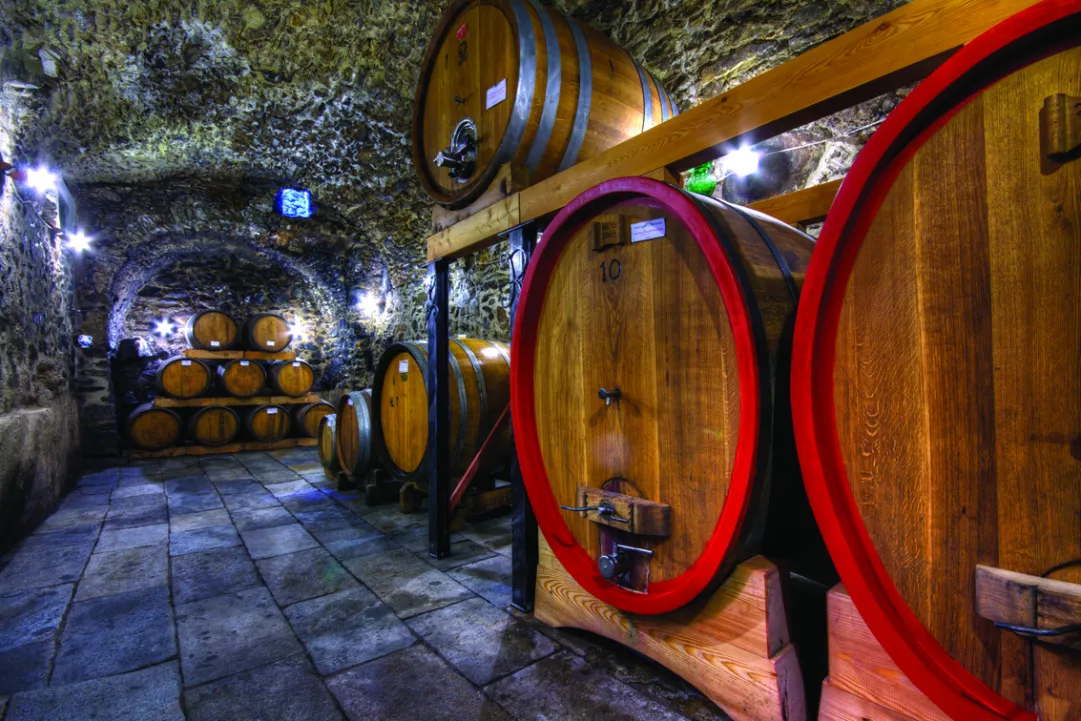

Last week you & egrave; held on the twenty-fourth edition of Open Cellars, unmissable un''occasione, which allowed hundreds of onlookers and wine and mountain enthusiasts to discover new wineries, listen to new stories and taste excellent wines.
Friday 3 June 2016 5 minutes reading time
Among the many participants quest''anno, as usual, c''ero anch''io, as a correspondent for Snow Italy, but especially curious, who like to listen to the passion of winemakers and wine producers, in ' 'moisture & agrave; with a cellar. The chosen destination & egrave; It was obviously a mountain destination: the Valtellina, where the heroic viticulture became possible to use perfumes of a very difficult area to cultivate. Including a second breakfast on the way, a plate of pizzoccheri, four wineries to visit, always with his eyes turned toward the terraced vineyards that bad weather did not allow me to visit, I found a cellar to report, for the quality & agrave; production, for the passion of the daily work and for the 'attention to the territory, the real and genuine, that only few people know have. All this is contained in the Giop Wines, Gianluigi Rumo, in Villa di Tirano.
The winery is located in a district of medieval origins and & egrave; divided into two parts: a pi & ugrave; Modern dedicated to winemaking and an underground aging cellar, with thick walls of rocks exposed ceilings and round again, as it once was. Gianluigi Rumo has recovered since 2000, the uncultivated vineyards of his family and now cultivates 60,000 square meters of vineyards, all distributed in & nbsp; the slope terracing retico & nbsp; the town of Villa di Tirano. The working in the vineyard are all hand made, the rest of the mountain does not allow many alternatives, given that the gradients that reach even 70%.
[Instagram: 6m_DNYKlMi]
In addition to producing wines of high quality & agrave ;, Gianluigi Rumo has un''attenzione particular for the territory, which is expressed in the choices made in the vineyard and in the cellar: it does not use herbicides and are switching to organic farming; prefer to avoid the 'use of oak barrels in order that & eacute; the wine keeps the scents and flavors of his homeland. & Egrave; a pleasure to hear him talk about his work, in his words there '' & egrave; a set speech or un''ottima marketing strategy, but the passion, the real one, who is often a difficult task, but in which puts all of himself.
Wines of Giop produces the Sforsat (Sforzato di Valtellina DOCG), the Gi memorize options Wine; (Nebbiolo IGT & ndash; Terraces Rhaetian & nbsp; without sulfites), the Pgnolino (IGT white - Terraces Rhaetian), the Filine (Valtellina Superiore DOCG), the IGT Nebbiolo, Bagai (Rosso di Valtellina DOC), Al Regiur (DOCG & ndash; Valtellina Superiore Riserva).
[Instagram: 6nNL-YKlF6]
If you pass in Valtellina, a stop by & nbsp; Wines of Giop & egrave; recommended ...
You can find more information on the production and sull''azienda farm on the site http://www.vinideigiop.it/
© ALL RIGHTS RESERVED
Social media engagement
Ultimi in Turismo

Stazioni sciistiche tra rincari e sostenibilità: l'efficienza energetica coniuga equilibrio economico e tutela ambientale
Venerdì 26 giugno a Luino, nel corso dell'evento Destinazioni in quota: costruire strategie condivise per il sistema montagna organizzato da MMA Studio, in collaborazione con SPM SpA Società Benefit, Davide Franchi, Senior Advisor Business Strategy e Referente MMA per le Alpi Centro-Occidentali, nonché collaboratore di Neveitalia, ha presentato un'analisi sullo stato attuale del Turismo di Montagna. In questo terzo e ultimo articolo approfondiamo l’impatto sul consumo di gas serra delle stazioni sciistiche riprendendo le evidenze emerse da una ricerca condotta, nel 2022, dal Politecnico di Torino, nell’ambito del progetto italo-francese ALPIMED CLIMA.

2