
Mountain Flavours
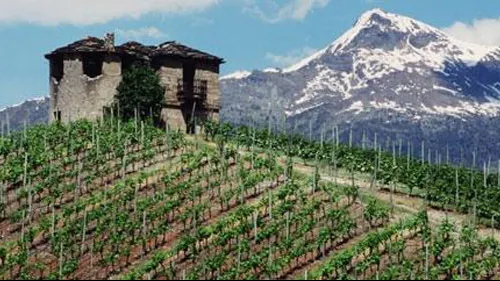

Grow vines in mountain areas not & egrave; a simple job. There are indeed places where particular climatic conditions, the 'exposure, slope and soil characteristics make life difficult for the growers. But the recovery of an ancient tradition and enhancing the local viticulture became BACKGROUND also & agrave; where it seems impossible: Valle d''Aosta. Coming from the south the 'image of the vine varieties on the slopes, just a step away from heaven, remains etched. And & egrave; for what the Valle d''Aosta is an example of heroic viticulture.
Friday 31 July 2015 5 minutes reading time
The cultivation of grapes in the Valle d''Aosta has a tradition thousands of years, it seems that the screw has come in the area even before the Roman legions. Some remains of 'amphora showing the presence of the vine already & agrave; from the fifth century BC After leaving and resumed pi & ugrave; Sometimes growing grapes, because of the barbarian invasions and the Saracens in the Middle Ages were retrieved and disseminated local vines.
& Egrave; at the end of '' 800 that viticulture in Valle d''Aosta sees its greatest expansion, with 3,000 hectares of land planted with vines. After the outbreak of the diseases imported from overseas, that weakened the indigenous grapes, the vines were introduced French and Piedmont. From here viticulture Aosta Valley has seen a noticeable decline.
Since the '70s, however, the "vignerons" in the area, have begun to turn the grape growing and wine production. The viticultural landscape in Valle d''Aosta & egrave; spectacular: the vine is grown on terraces supported by dry stone walls. Often the slopes make the job almost impossible, but fascinating, for those coming to visit the area.
Today already are about 600 hectares and the production Aosta Valley is 0.1% of the Italian one. But are the quality & agrave; the final product and the difficulties & agrave; production to make a difference.
The terroir valdostano & egrave; varied, the & nbsp; main white grape varieties grown in the Valle d''Aosta are: Pri & eacute; blanc, white Moscato, M & uuml; ller-Thurgau, Chardonnay, Pinot Grigio, Petite Arvine. While red grapes are: Petit rouge, Nebbiolo, Pinot Noir, Gamay, Fumin, Cornallin, Mayolet and Syrah. The wealth of viticulture in the Aosta Valley lies native vines rediscovered and replanted especially in recent years. Thank Qusta attention to basics today & egrave; still you can taste wines from ancient vines as & nbsp; Cornalin, Gros Vien, Muscat Rouge and Premetta.
Over the years' 70s came the first Appellations of Origin for wines Donnas and Enfer. Since 1985, however, the DOC "Valle d''Aosta" or "Vall & eacute; and of' Aoste" includes all quality wines & agrave; products in the valley, which today & egrave; represented by seven sub-denominations of the area and 19 sub-denominations of variety.
Discover this wonderful area, the flavor of the many wines and the charm of terraced crops & egrave; possible following the road of wines of the Valle d''Aosta.
The routes shall be 5:
& Nbsp;
the wines of Mont Blanc, the wines of Gran Paradiso, the wines of Mount Emilius, the wines of the Matterhorn, the wines of Monte Rosa.
& Nbsp;
For more information http://www.routedesvinsvda.it/
& Nbsp;
© ALL RIGHTS RESERVED
Social media engagement
Ultimi in Turismo
Stazioni sciistiche tra rincari e sostenibilità: l'efficienza energetica coniuga equilibrio economico e tutela ambientale
Venerdì 26 giugno a Luino, nel corso dell'evento Destinazioni in quota: costruire strategie condivise per il sistema montagna organizzato da MMA Studio, in collaborazione con SPM SpA Società Benefit, Davide Franchi, Senior Advisor Business Strategy e Referente MMA per le Alpi Centro-Occidentali, nonché collaboratore di Neveitalia, ha presentato un'analisi sullo stato attuale del Turismo di Montagna. In questo terzo e ultimo articolo approfondiamo l’impatto sul consumo di gas serra delle stazioni sciistiche riprendendo le evidenze emerse da una ricerca condotta, nel 2022, dal Politecnico di Torino, nell’ambito del progetto italo-francese ALPIMED CLIMA.

2