
TourismSial_Paris #sial2018 Regione_Calabria #food

A massive representation of Italian companies took part in the 2018 edition of the Sial in Paris. Among the 7,000 exhibitors from 119 different countries, 208 represented Italy occupying the 2800 square meters of Pavilion 1 made available by ICE Agency.
Monday 12 November 2018 2 minutes reading time
Between a show cooking and the other, between a taste of delicacies and a business meeting, the most important Italian agro-food companies have been able to show off for 5 long days, presenting their products in front of an audience of about 155 thousand visitors from all over the world.
The excellence of traditional Italian cuisine has been highly appreciated by the French public, so much so that in recent years Italy has become the fifth largest exporter of foodstuffs in France.
Within the mountain and in particular the snowfood at SIAL 2018, Italian meats and cheeses represented by many companies coming from all over Italy were the protagonists. In particular, a large investment was made by the Calabria region that presented many new features.
The 2018 edition has therefore crowned the Parisian fair which, thanks to the massive investment of the last few years, has recorded a strong growth of international exhibitors that has led SIAL to support the Cologne Anuga in the first place among the most important food 'Europe.
SIAL_PARIS #SIAL2018 REGIONE_CALABRIA #FOOD
© ALL RIGHTS RESERVED
Social media engagement
More about Tourism
Mountain Tourism
Davide Franchi, Tuesday 4 August 2026
Mountain Tourism
Davide Franchi, Friday 24 July 2026
San Martino di Castrozza
Davide Franchi, Wednesday 22 July 2026
Mountain Tourism
Davide Franchi, Wednesday 15 July 2026
Mountain Tourism
Angelo Bonorino, Monday 13 July 2026Più letti in Turismo
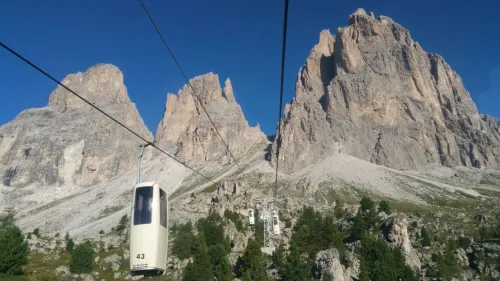
Dolomiti UNESCO, il bilancio di Banca d'Italia: +9% di pernottamenti senza consumare più territorio
Il paper di Banca d'Italia analizza gli effetti sui flussi turistici e sull'ambiente nei 4 anni successivi all'iscrizione delle Dolomiti nella lista dei Patrimoni Mondiali dell'Umanità, avvenuta nel 2009. A fronte di un incremento delle presenze, il numero di strutture turistiche non è cresciuto e quello di posti letto si è ridotto. Ai maggiori flussi turistici non si è associato né un aumento del consumo di suolo né una maggiore produzione di rifiuti, dimostrando il potenziale del riconoscimento UNESCO nel generare benefici economici locali senza compromettere la qualità ambientale, a condizione che siano in atto un efficace coordinamento istituzionale e solide garanzie normative.
20