
Mountaineeringthe interview
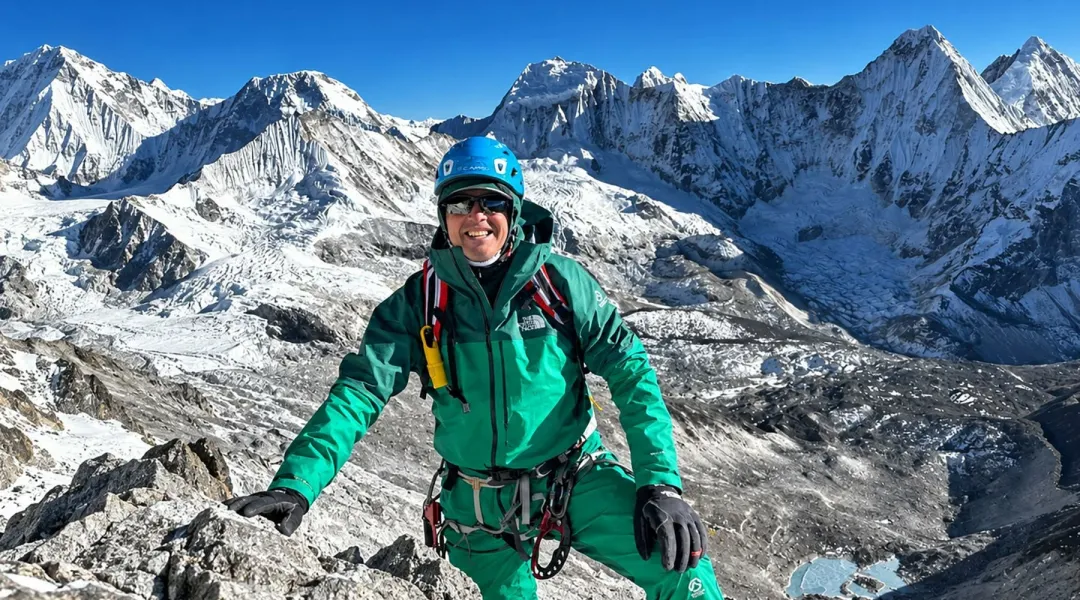

Simone Moro / Valle dell'Evere

The legendary mountaineer from Bergamo, who is in the region hit by the devastating floods three weeks ago, helps us understand how the Himalayan country is already reorganizing.
Thursday 17 September, 09:30 4 minutes reading time
Last August 26, a series of floods began in Nepal, devastating part of the country’s north, with hundreds of deaths in the iconic areas of major climbs.
And so, given that the issue of climate change is more topical than ever, including with regard to the glaciers of the Alpine arc (and not only those, of course), editor Dario Puppo spoke with Simone Moro, who is currently in the heart of the Himalayan mountains.
In your view, Simone, how has what happened already changed people’s attitude toward Nepal?
“It shocked everyone here, but at the same time I have to say that we need to put it into the proper perspective in terms of scale. It is as if a dam had collapsed in Val Brembana, one of the thousands of valleys in the Alps. So Nepal has not become dangerous to visit, and I’m not saying this to downplay what happened, but to provide a sense of proportion.
I am here as a volunteer; there is no rescue unit, and initially they used all the helicopters available, as well as the military. Now, all the money coming in from tourism must go hand in hand with setting up some kind of crisis unit. All the roads are on the surface—there are no tunnels—and the roads through some valleys leading to the border crossings collapse every day, as in Pakistan.
Nepal will continue to attract many visitors. There are powerful political interests between China and India, and they are now trying to work out how to build roads to limit situations like this. But I don’t think everything will change that quickly, because equipment and resources are needed.”
How do you assess climate change based on what you see in Nepal and in general?
“It is happening; there is no point denying it. And I don’t want to get bogged down in debates over how much humanity is capable of influencing the climate. Whether it is our fault or a natural cycle, the reality is the same, and since we live on this planet, we have to deal with it.
Here in Nepal too, glaciers are retreating extremely quickly; at an altitude of 4,800 metres, it is raining and there has been no snowfall. Our actions can help us deal with disasters more than prevent them. The Dolomites are crumbling. We are spectators to all this, but what we should do is become more deeply in love with the planet.”
© ALL RIGHTS RESERVED
Social media engagement
Più letti in Sport invernali
Primo giorno sulle nevi di El Colorado per Odermatt, via alla missione... Soelden, dove il 25 ottobre cercherà il 4° hurrà
E' cominciato con i gigantisti il camp in Cile per il campionissimo nidvaldese, che si dividerà poi con la velocità a Valle Nevado nelle tre settimane oltreoceano. Al termine, mancherà meno di un mese all'opening di Coppa del Mondo dove Odi cercherà di presentarsi già al top dopo il problema avuto all'anca visto che la concorrenza, e lo storico recente lo dimostra, non mancherà sul Rettenbach...

0