
Alpine Skiingworld cup 2022/23
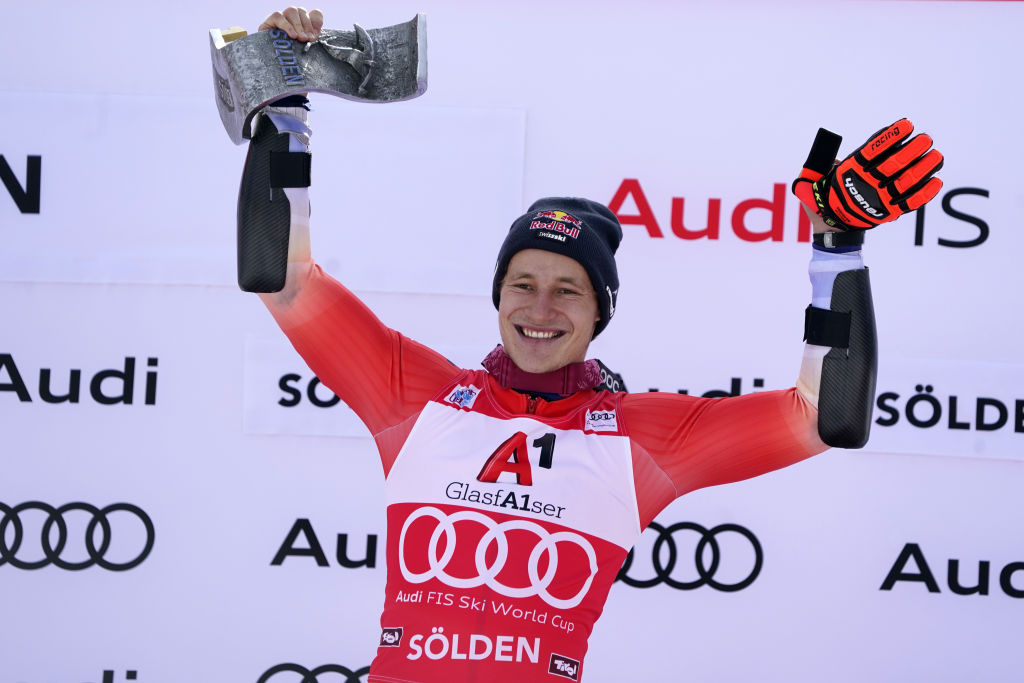

2022 Getty Images

The seven races (six of which are permanently canceled) out of eight planned and not played, from Soelden to Zermatt-Cervinia up to the parallels in Lech, require a serious reflection on the future. The precedents of Las Lenas (Argentina) in the 80s, the problems of costs but also the need not to reduce an entire season of great skiing to just under 4 months.
Monday 7 November 2022 9 minutes reading time
It had never happened before that the World Cup lost so many races at the start of the season, with a series of cancellations, the last in order of time that arrived yesterday for the parallels of Lech / Zuers, which clearly represent a damage economic and sporting important for all those involved in the white circus.
The four skipped descents for the Speed Opening of Zermatt-Cervinia were the most painful, but also the most discussed on the need to innovate with this type of risk, that is to try to compete at the end of October on the new "Gran Becca" that has not been managed to snow completely. It is true, it was an exceptional autumn period in negative terms in terms of temperatures, but the general trend is equally evident and all this will have to lead to a choice, by the FIS, between trying to set up a season long almost 5 months ( if not more, but we will get there later) or "fill in" the calendar between December, January, February and the first half of March, as more than that, in terms of number of races, it is not possible do seeing that the athletes are already in a real vortex of travel, training and competitive appointments.
If we think of the dawn of the World Cup, the first season even began in January (the 5th of the inaugural month in 1967, Berchtesgaden men's slalom), then basically it has always been competed from the end of November / beginning of December, with the Critérium de la Première Neige as a symbolic event of the opening of the maximum circuit.
Is it really possible to think, with all the interests currently at stake, to leave so late to guarantee a “safe” calendar? Objectively no, but to avoid disasters such as that of this start of the season, there may be some alternatives: in reality the opening in Soelden was almost always safe, from 2000 to today after the `` alternation with Tignes of the years '' 90, although it is evident that the Rettenbach glacier itself suffers more every year.
And then, to guarantee 4-6 certain races "freeing" the month of November, where it is now difficult to compete even in a place beyond the Arctic Circle like Levi (where this year everything will be ok, but the temperatures are always more alarming for a decade now), could we return to South America or possibly between Australia and New Zealand, taking advantage of the winter season there?
The problems would clearly be many, first of all finding locations with a budget and a solid multi-year project, finding a logistics suitable for what the World Cup currently requires, as well as having to reset a certain type of preparation for the athletes, given that currently many are starting. with the first days of ski training of the new season directly overseas (like Lara Gut-Behrami in Chile this year, for example).
Ushuaia, in the heart of Tierra del Fuego in Argentina, is the reference center for many national teams and generally, in those parts, there have been few snow problems, with the pandemic that instead stopped the transfers in 2020 and 2021. Everything returned, or almost everything, to normal in the last summer lived, certainly now the FIS leaders and the president Johan Eliasch, who strongly wanted the double North American trip, bringing back in March two men's stages such as Palisades Tahoe and Aspen (clogging the men's calendar in an almost insane way, it must be said), they will have to sit down again at a table to bring skiing to the homes of fans for the longest possible period, while at the same time guaranteeing the right recovery to the athletes who remain the main players in a sport which, like no one else, has to deal with climate change.
In Argentina he began the season on three occasions, in 1985, 1986 and 1989 always on the snows of Las Lenas with the fast races which, in the latter case, were then combined with the techniques of Thredbo, in Australia, shortly after August 15th. And in 1990 we set off from Mt. Hutt, in New Zealand, before returning to the classic start under the winter, then anticipated from 1993 with the first time in Soelden (30-31 October, while in 1992 in Sestriere they began to end of November).
In all this, it is also possible to review a block of Asian competitions, between Japan, which has written very important pages in the world skiing scene, and China of which, after the Beijing 2022 Games, there was talk of wanting to create a fixed stage ? Questions to which Eliasch and his men will have to answer in these months of work, in the meantime they cross their fingers for the North American appointments which, even if some doubts exist for Killington, should be regularly staged between the end of November and the beginning of December, given that the climate has given a hand in those parts.
In any case, the 2022/23 season will already count on six fewer races (three for women, who have lost four but will recover the Soelden giant in Semmering on December 27, and three for the men's sector), with the cup female who will therefore have 39 with 10 giants, 11 slalom, 9 downhill and 9 super-g, while the men will compete along 40 trials (12 downhill, 8 super-g, 10 giants and 10 slalom).
© ALL RIGHTS RESERVED
Social media engagement
Ultimi in Sport invernali
Scheib rientra in Europa dopo 29 giorni tra Argentina e Cile: Un lavoro molto buono. Sarà lei la favorita a Soelden
La detentrice della Coppa del Mondo di gigante, che proprio dall'opening sul Rettenbach ha iniziato a costruire lo scorso anno quel trionfo, ha diviso a metà il lavoro tra focus sulla sua disciplina a Ushuaia e poi velocità sulle nevi cilene pensando al super-g. Rifinitura a Pitztal e poi direttamente a Soelden, il set-up finale lo definiremo in quel momento.

113