
Nordic SkiingWomen's Special Jump

Getty Images

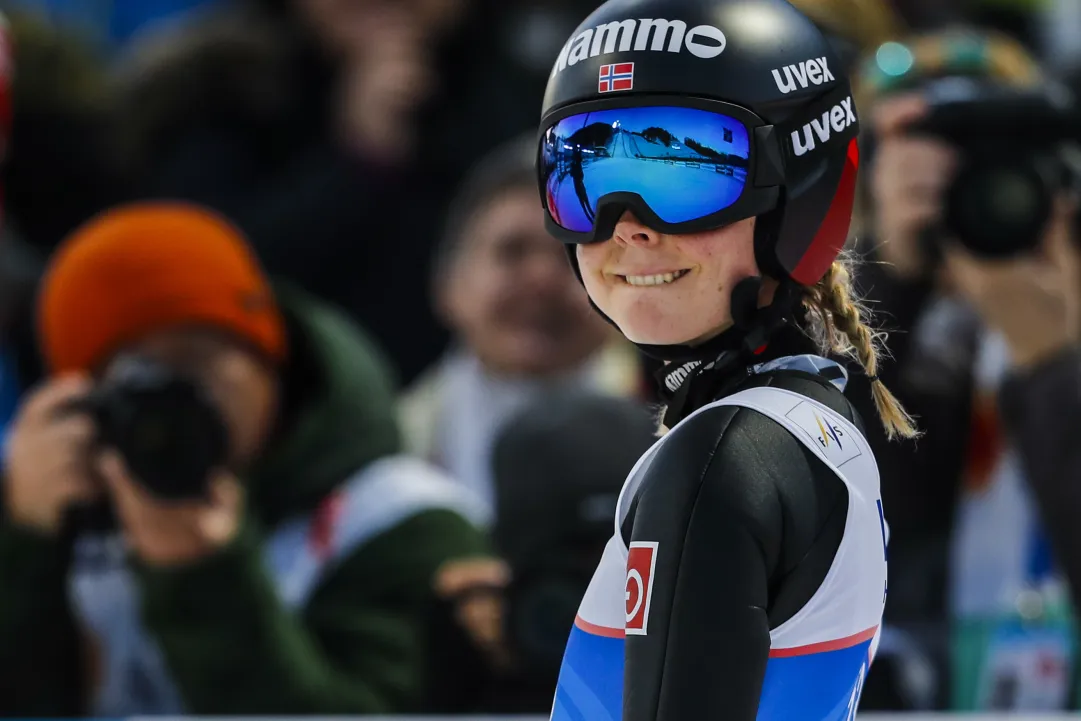
The first weekend of women's jumping competitions in Lillehammer saw the undisputed domination of the hostess Maren Lundby, but behind her the novelty is a decidedly fluid classification. The Austrian team is in great shape, the Germans in trouble.
Monday 9 December 2019 12 minutes reading time
On the weekend spent at the archives in Lillehammer, the ninth edition of the Women's World Cup in special jumping was held. The discipline came from a two-year period dominated by Maren Lundby and in the seasonal opening the film continued to be the same: the landlady proved to have the form of the best days and there was never any match with the rest of the world .
In race-one the Norwegian champion has established himself with 24.4 points ahead of the second classified, having achieved the best score in both series, while the following day of "sun" 15.3 lengths accomplices complex wind conditions in the second run. Precisely at this juncture Lundby failed for a short time to score the best score, the classic exception that confirms the regularity of his excessive power.
It must be said that the Norwegians, like a bit in all the Nordic disciplines without sex difference, can take advantage of perfectly snow-covered implants for several weeks, when the competition is still jumping on plastic with possible sporadic withdrawals in Nordic places. All this, combined with the usual physical dominance and the materials that are usually among the best in the world in Scandinavia, has made Lundby another category, with the adversaries who have run thinking only of the place of honor.
It goes without saying that in the last two years the twenty-five-year-old from Gjøvik has had the lowest return just in the first month of competitions: in perspective, what has been done on the Lillehammer snows is even more scary, because when you enter the season you risk having an athlete who literally does another sport. At the moment, the first milestone achieved by the holder of the crystal ball in terms of statistics was that of the 52 podiums in the World Cup, leaving Daniela Iraschko-Stolz by two units and taking the second all-time position.
For the discipline fortunately positive signs also emerged from the rest of the world, albeit largely limited to Saturday when it was possible to jump constantly in ideal conditions: overall the team to beat in the Norwegian overture was Austria, which grew exponentially of blows compared to the last seasons, while the Germans have shown a delay of condition higher than expected.
In the Rot-Weiß-Rot house Chiara Hölzl was extremely pleased, not surprisingly at the moment second only to Lundby in the general, who in the second competition even managed to improve the third place in the Saturday trial. The talent of the twenty-two years old Schwarzach im Pongau has never been questioned, thanks to her having arrived in the Oppland in weight form and above all in showing a mental solidity that very often she had missed in her career so far.
Austria has experienced an idyllic stage overall, recalling the line-up capable of winning the Nations Cup in the 2014-2015 vintage by dispersion: Eva Pinkelnig has shown an even higher level than that of her Salzburg companion, but a series of circumstances not particularly favorable made her lose several points on the final day (having closed in fifth place); in the end the Vorarlberg veteran had to settle for picking up the career-best in race one, having finished in the place of honor.
Marita Kramer, eighteen-year-old of Dutch origins, was curiously awaited, who actually proved to be very solid technically, managing to collect a couple of top-ten and the best career results (10th and 9th respectively). Signs of life in the Austrian house also by Jacqueline Seifriedsberger (7th and 11th) and by the other young Lisa Eder (21st and 24th), while Daniela Iraschko-Stolz (23rd and 15th) struggled more never running for positions that matter.
That Germany's record of 2018-'19 could not be repeated was largely established due to the plethora of athletes swelling the infirmary, but such an opaque opening was difficult to predict: the best in Lillehammer was once again Katharina Althaus, author of two sixth places but never in the heat of battles for the podium, while Juliane Seyfarth (15th and 21st) appeared faraway from the athlete capable of winning on these snows twelve months ago. Some positive signs came from the girls in the first real season in the maximum circuit but they will have to be weighed more in competitions on smaller trampolines where on paper they should find more bread for their technique.
It is only a matter of time that Ema Klinec returns to the podium: the results of the autumn have been anything but a bluff, in fact the Slovenian liked very much in Norway, having collected a couple of fourth places on which she would also have something to complain . With luck, the twenty-year-old of Ziri has historically had a huge credit, who knows if this season is not the right one to put all her talent to good use. Slightly further back are the other representatives of the Tricorno, in particular that of Nika Kriznar who is seen by many as a possible contender to the crystal ball, not to have gone beyond the 11th and 7th places.
Contrasting signals from the Japanese team. All in all, every Japanese has collected an important result which, however, was preceded or succeeded by a not-so-positive one: overall, it was not particularly appreciated by Sara Takanashi who in Saturday's race, in conditions of equal wind for all, did not go beyond a ninth place , while in the Sunday competition she managed to get on the third step of the podium but taking advantage of a series of questionable decisions of the race direction that gave her a great hand; overall Yuki Ito (fourth ex aequo with Klinec and twelfth) stole the eye more than Takanashi, but in his case the blindfolded goddess was not so benevolent.
Lillehammer opening with the handbrake on for the Italian team and also for the Russian team. The Italians expressed themselves on good levels in training jumps, but without being able to bring equal quality jumps into the race: the leader of the movement Lara Malsiner still managed to take home points in both races, finishing 20th and 26th , Elena Runggaldier obtained as best result a 30th place in race-one after being disqualified in the decisive round, while Manuela Malsiner predictably made more effort without being able to collect points and even missing the qualification on the last day. In any case, the Val Gardena are not the only ones still far from the best, in fact the Russian team - which was in reduced ranks - collected little compared to what was done in the last season, at least it bodes well for the renewed competitiveness of Irina Avvakumova (14th and 16 ^).
The women's World Cup of the special jump is now moving to Klingenthal to face a joint stage in the men's sector: women will start to jump in the Sparkasse Vogtland Arena on Friday 13th on the occasion of qualifying for the Saturday race.
LILLEHAMMER I - HS 140
1. LUNDBY Maren (NOR) 280.8 2. PINKELNIG Eve (AUT) 256.4 3. HÖLZL Chiara (AUT) 255.3 4. ITO Yuki (JPN) 250.6 4. KLINEC Eva (SLO) 250.6 6. ALTHAUS Katharina (GER) 247.4
Click here for complete results.
LILLEHAMMER II - HS 140
1. LUNDBY Maren (NOR) 267.1 2. HÖLZL Chiara (AUT) 251.8 3. TAKANASHI Sara (JPN) 251.5 4. KLINEC Eva (SLO) 248.9 5. PINKELNIG Eva (AUT) 240.5 6. ALTHAUS Katharina (GER) 228.7
Click here for complete results.
© ALL RIGHTS RESERVED
Social media engagement
Ultimi in Sport invernali
Rulfi rassicura sulla situazione di Goggia: Non sentiva di potersi allenare, ma non c'è stato nulla di traumatico
Alla Gazzetta dello Sport, il direttore tecnico della nazionale femminile ha aggiunto qualche dettaglio sui motivi del rientro anticipato di Sofia dal Sudamerica, rinunciando al blocco in Cile che era previsto dopo quanto di buono fatto per due settimane abbondanti a Ushuaia specialmente sul gigante. Nelle prossime ore gli accertamenti medici: Non li abbiamo fatti in Argentina perchè non c'era la possibilità di approfondire al meglio.
16