
Nordic Skiingcross country skiing
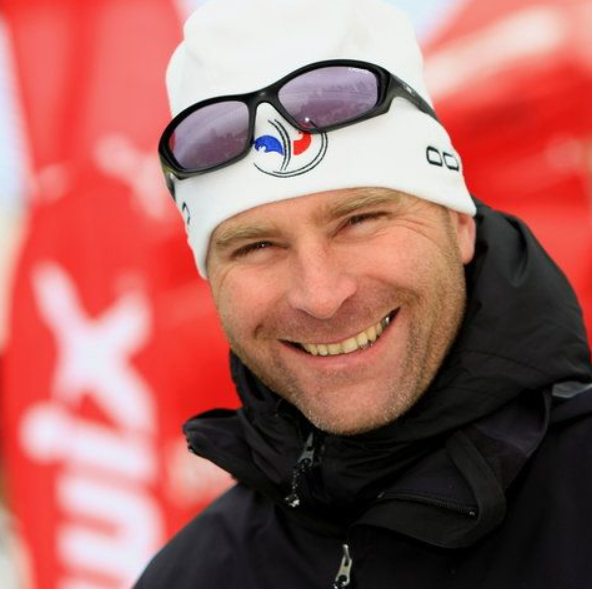

Pierre Mignerey Facebook

A week from beginning of the Race Director of the FIS Cross-Country World Cup presented to NeveItalia the main news '' that lie ahead: the future of the discipline, the Tour de Ski and what will happen in the next FIS congress.
Wednesday 16 November 2016 16 minutes reading time
Having coached in the past, the French team of cross country skiing, having been the Sports Director and then the responsibility for Nordic disciplines for the French Federation, in 2010 Pierre Mignerey and '' was chosen by the FIS to develop cross-country skiing at the international level .
First as an assistant Jorg Capol. Then in May 2012 with the passage of the Swiss to FIS marketing, Mignerey holds the position of Race Director of the FIS cross-country level.
Always avid proponent of the success that the Tour de Ski has led to cross-country skiing now its more '' great concern and '' to revive a discipline and '' more '' in the balance between trying to innovate year after frantically year and the demands of keeping alive the centuries-old tradition of the sport.
Mr. Mignerey we are now close to un''altra season of cross-country skiing with the 'opening of the Ruka World Cup next weekend. What are the main changes and new rules introduced this season? And what we should expect of our many viewers?
"First, there will be no revolutions. We are trying to improve our system step by step and most of the changes will not have a direct impact in the coming winter, but in the long term. One of the biggest challenge in the future of cross-country was '' the predominance of only one or two .Ovviamente nations have no direct control over the results of the teams but at least our system must not only be in favor of the biggest teams.
This and '' the reason why '' we have changed the financial support and reviewed in more '' efficient distribution of prizes to the teams by the organizers: less for nations greater and '' for mid-level teams with more nations who can access it.
Even the new shares of WRL will go in this direction. We will now have the same basic rate of 6 athletes for the top 8 nations and less for the two dominant nations. This will ensure better opportunities for more nations to get points in the World Cup and then prepare their successful athletes in future generations.
The calculation of this ranking and '' also changed and will give the opportunity to the nations "small" to promote their participation in our event team.
Un''altra great challenge for our discipline is the development of the double poling and the gradual disappearance of the traditional alternating technique. After two years of discussions it was time to make decisions.
Our committee has reached an 'agreement that competitions with only double poling were no longer sustainable and has decided to establish new rules in order to safeguard the future of classical technique.
The 'introduction of zones in which the thrust step will be banned will be tested in the levels below, but not yet in the World Cup or the World Cup. Limiting the length of the sticks RELATED TO THE al''83 dell''altezza% of athletes will take effect already this season in all FIS competitions. None of these, however, '' solutions will solve the problem in the long term, but it was necessary to act immediately and try something if we want to preserve the technique alternately. "
Along with the World Championships in Lahti the Tour de Ski will be '' the main event of the season. You are studying something new in this edition or in the future with the 'intent to reduce the' high number of athletes who start to wave start nell''ultima leg of Cermis, reduce the number of withdrawals, and to have more '' athletes / and fighting for the ultimate success of the tour?
"That and '' wrong. The Tour de Ski has quickly become the premier event in the calendar of the World Cup. We did not major new features planned for the moment. The Tour de Ski has always been interesting so far and its final classification can not never be written in advance.
Some editions have been the most interesting men in the field, others in women. Some stages are interesting a year and less the next. But it '' impossible to write in advance the scenario in which we will see. Certainly our will and '' to make it more exciting as possible, but we must also be careful with quick and hasty analysis.
 The 'high number of "Did not finish" not' 'non-issue for us, and this'' a logical thing in the long internship events at that time of the season. And '' natural that some athletes do not end the tour if you are a bit '' sick or if you do not expect anything in the remaining steps for the general classification. The Tour de Ski is a month and a half before the World Cup and the athletes have to follow their competition programs.
Having fewer athletes in wave start and cross-country skiers in good position for the general and '' certainly a focus for us. But the success of the tour is not '' just one employee dall''ultima leg of Cermis. The other stops, and the bonus seconds are also very important. Our desire '' to find the right balance, but as mentioned earlier, and '' could not write the story in advance. The bonus system and '' was much criticized during the Tour de Ski, but it worked well during the ski tour Canada. "
During last summer cases Sundby and Johaug have inflated the front pages of newspapers, magazines and not. While little space and '' was reserved for racing and training of athletes. What is your feeling compared to this situation?
"I feel very sad and disappointed. These cases are damaging the very 'image of skiing and sports in general. The' Media attention over the past months is not '' was no doubt where it should be due. That is of summer and preparation races. I do not have to give any other comment. I am not a doctor and I'm not part of the Anti-doping Committee. I was surprised to read so '' many comments from coaches, athletes and commentators who do not have the necessary knowledge and sufficient information to give an opinion. "
Can you tell us more about the three new locations quest''anno introduced in the calendar of the World Cup? We refer to Ulricehamn, Pyeong Chang and Tyumen for the finals?
"Yes. We will have three new locations' 'quest''anno. First of all we will test for the first time the new Korean Olympic tracks. The buildings will be finished very soon and can not wait' to try new race rings.
Two years ago we decided to move the Swedes events in January in order to strengthen our calendar between the Tour de Ski and World Cup. Ulricehamn and practitioners have been chosen by the Swedish Federation and included in these two weekends. We expect many viewers to Ulricehamn and because '' situated in an area highly populated with great interest and passion for cross-country.
Tyumen is an amazing ski resort located in Siberia. They will host the World Cup is in both biathlon and cross-country skiing this winter and this is a perfect location for our final of the World Cup. "
During the conference in Cancun it was decided that up to the Korean Olympic Games of 2018 the current format will remain unchanged as they have been presented over the last 5/6 years. But by the next four years you expect big changes in the competition format?
"We are working on the future of skiing and the format of the races are a central issue. The world is changing; the spectators, the expectations of television, new technologies, climate change, the expectations of the sponsors, the new gear and athletes' skills are always in constant evolution. at the same time we have the traditions and the core of our sport remains the same as it was in the past.
We are convinced that we need to strengthen our race format and find the right balance between tradition and modern factors. At the end of September we set up a new working group at its meeting in Zurich. This group will have to make concrete proposals next spring taking into account the 'opinion of all. At the end of this, the Committee will take the final decisions. "
Last June the FIS launched an online poll asking fans an opinion about the future of the discipline and the preferred format. What was the result that the 'has surprised you most and conversely the most disappointing?
"Two surprises for me. First of all I was surprised to see that a large majority of viewers do not think that we have too many format. Instead, I was expecting the 'opposite. The second surprise was seeing responses from Italian. We knew that people around the world have different views than the format but it '' was surprising to see that the Italian fans are very close to the Swedes and the Finns than the rest of the fans central Europe.
Nothing in the survey was really disappointing but I would say that our biggest challenge is that not c''è a common view from country to country. This will make our future more difficult decisions but I hope that we will find the right direction. "
Last question: From 1 to 100 how many chances you give the reintroduction of gundersen held in two days of competition and the men's 50km and 30km women starting at intervals as in the past?
 "Oh! This is a difficult question. The gundersen in two days is not '' been really popular in our survey, but we will do more sull''interesse format of the assessments. I would say 50% chance.
The 30/50 km intervals and '' a challenge for broadcasters and organizers. Both sides have not really interest in changing from mass start at interval start. At the same time the majority of viewers are satisfied with the current situation. So '' I'd say it has only 10% chance. "
© ALL RIGHTS RESERVED
Social media engagement
Ultimi in Sport invernali
Due settimane ad Anterselva per la nazionale maschile, c'è anche Giacomel per il raduno in quota
Nel sito olimpico, da lunedì 14 a sabato 26 settembre ecco gli azzurri del biathlon impegnati in un blocco di lavoro cruciale: il trentino, nell'ultima fase del suo recupero, con una preparazione mirata ma di nuovo assieme ai compagni.
2