
Nordic SkiingCross-country skiing - Norway

Getty Images

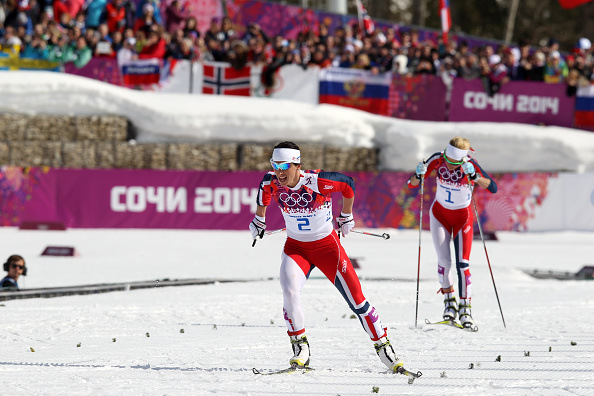
Among the many issues that in recent months have generated controversy around the movement of the Norwegian cross-country skiing, one of the latest is that concerning the frequency with which the stars of the national have been subjected to doping controls. An intervention in defense of Norway on this front arrived today, perhaps surprisingly, from Sweden.
Sunday 6 November 2016 4 minutes reading time
X. Matt Richardson, head of Swedish Anti-Doping Agency, has thus explained the four months without controls Therese Johaug and five Marit Bjørgen: "Norway is the country with the youngest skiers that look at high levels. It is natural that the priority is the control of new levers. Historically, it is the higher the risk that a doped athlete who looks at elite sport, moving from the youth categories in the senior, or from amateurism to professionalism. Exceptions are athletes nearing the end of his career, for which the risk to grow back. "
A second reason is the existence of biological passports: "For the big stars are the biological passport data, which allows a greater degree of control than newcomers. It is natural, therefore, that the majority of the resources are used to test the latter ".
If athletes as Bjoergen and Johaug are most often not controlled, according to Richardson, it is thus due to the high degree of credibility acquired over the years, and the availability of the biological passport data, covering a long period of time.
The phenomenon is of course not only the Norwegian: "Here in Sweden, the sport with the most practitioners are football and hockey. I think that we, in these disciplines, it is acceptable that applies to the Fund in Norway. "
Informed of Richardson's statements, the Norwegian equivalent Anders Solheim commented: "The biological passport is the most significant element, in my opinion, to understand the number and frequency of inspections. They are the most effective tool to find out the use of doping in endurance sports such as cross country skiing, of course together with tests for EPO ".
In Norway, 140 are, as stated by Solheim, biological passports still active athletes. "In general, there is a passport to all those who obtain high-level results in disciplines where the use of doping away from competition improves their performance significantly," said Solheim. "This is the case of cross country skiing, but also, for example, the long distance track and field".
#FISCROSSCOUNTRY FISCROSSCOUNTRY #SCIDIFONDO
© ALL RIGHTS RESERVED
Social media engagement
Più letti in Sport invernali
La nazionale azzurra di combinata nordica perde Greta Pinzani: rotto il crociato del ginocchio sinistro
Combinata nordica: come capitato ad Annika Sieff ad inizio estate, l'Italia si ritrova con un altro grave infortunio, quello della giovanissima tarvisiana che si è procurata il danno in allenamento a Predazzo.
2