
Snow and Weather Forecasts
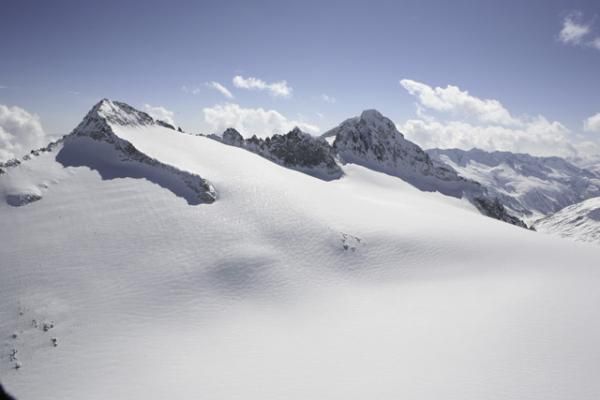

'' Into During last winter, there were no significant snow accumulation, an average of 300 inches of snow on the glaciers of the eastern Italian Alps, slightly more on the western side. For a low snow accumulation was followed by a particularly hot summer'' that led to melting most of the snow in winter and much of the underlying ice. The largest glacier of Italy'','' one of the Adamello, at 3,000 meters above sea level have lost more than 3 feet thick ice, as well as the winter snow.
Wednesday 3 October 2012 3 minutes reading time
Into A to this report tutt'' nothing but positive Christian Casarotto the Science Museum of Trento: "'' Also this year, therefore, the financial statements of the Italian glaciers are strongly negative: the amount of water lost - has continued Casarotto - melt during the summer'' far exceeds the accumulated snowfall winter. "
Into "In the long term - continued Casarotto - with the disappearance of the glacier, we deal with a water crisis. should not be forgotten that many reservoirs used for the production of electricity are filled with glacial melt water. In addition, we are witnessing an increase in hydrogeological instability. With the changes of the glaciers also changes the mountain. "
Into To understand the situation and can take part in the events planned in La Planet Earth Week, held October 14 to 21 with 136 events throughout Italy, the Italian Federation of Earth Sciences.
Into "Up to October 30, 2012, interested parties may log on to the site and try www.ghiacciaidiunavolta.it in recognition of 75 Italian glaciers immortalized in photographs. Once these mountain ranges - concluded Casarotto - where the glacier belongs, participants should go to the site and photograph from the same vantage point. The photographic comparison between the historical and current images of glaciers, portrayed by the same geographical location, is a method of research useful to conduct qualitative assessments of the state of health of our glaciers.
Social media engagement
More about Snow and Weather Forecasts
Weather and Snow Forecasts
El Niño strengthens: probability of a historic event in winter 2026/2027 rises to 75%
meteo@neveitalia, Friday 11 September, 16:42
Weather and Snow Forecasts
El Niño strengthens further: NOAA forecasts a possible historic event in winter 2026/2027
meteo@neveitalia, Thursday 27 August
Weather and Snow Forecasts
Nuova Zelanda, irruzione di freddo artico: l'Isola del Sud si imbianca
meteo@neveitalia, Tuesday 4 August 2026
Weather and Snow Forecasts
NOAA: El Niño returns—how could it affect the 2026–2027 winter in the Alps?
meteo@neveitalia, Friday 10 July 2026
Weather and Snow Forecasts
Una grande nevicata di fine stagione sulle Alpi: anche oltre mezzo metro di neve fresca nel weekend
meteo@neveitalia, Friday 13 March 2026
Weather and Snow Forecasts
Inverno protagonista sulle Alpi: nevicate diffuse da Ovest a Est, accumuli importanti nel Cuneese
meteo@neveitalia, Tuesday 16 December 2025Più letti in Meteo e neve

NOAA: torna El Niño, come potrebbe influenzare l'inverno 2026-2027 sulle Alpi?
La NOAA (National Oceanic and Atmospheric Administration) ha pubblicato il 9 luglio il nuovo aggiornamento sul fenomeno climatico ENSO (El Niño-Southern Oscillation), confermando che El Niño è ormai in pieno sviluppo e che continuerà a rafforzarsi nei prossimi mesi. Secondo i climatologi statunitensi, il fenomeno dovrebbe raggiungere il proprio massimo proprio durante l'inverno boreale 2026-2027, con una probabilità del 97% di persistere fino alla primavera 2027 e con possibilità sempre più elevate di raggiungere un'intensità tra le più elevate osservate dal 1950.
2